
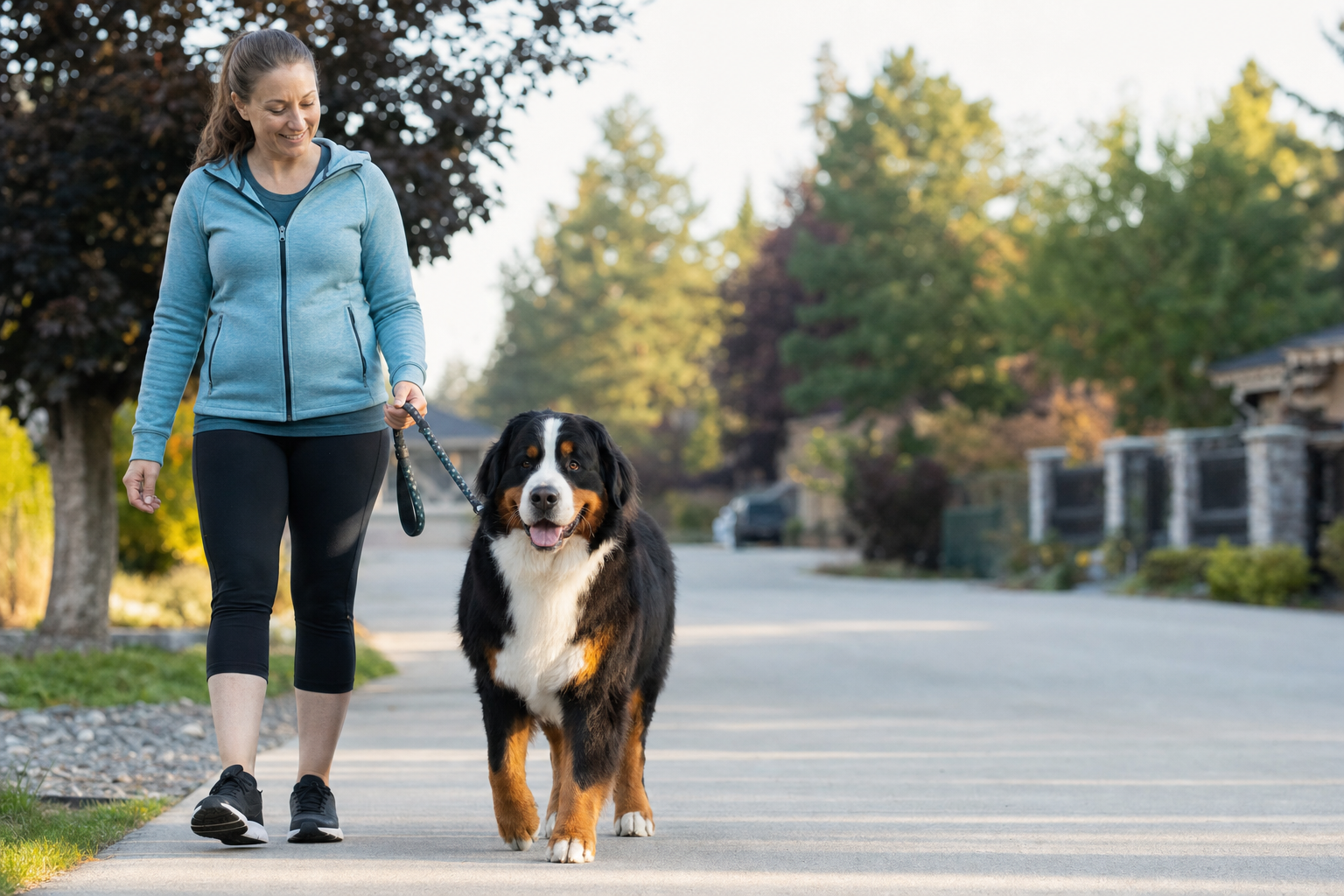
Dog weight loss for large breeds needs slow vet-backed plans—not crash diets. Extra pounds strain joints hearts and increase bloat risk in deep-chested dogs. This article is for info only. It does not replace vet advice. Sudden weight drop or refusal to eat needs prompt exam.
For instance you should feel ribs with light pressure—not see them vanish under fat. Therefore learn body condition scoring before you guess portion sizes.
In addition lean large breeds live longer with less arthritis pain. Similarly small weekly wins beat aggressive cuts that fail in a week.
Read our senior nutrition guide for feeding basics that support safe slimming.
Furthermore our arthritis guide shows why joint load drops matter when pounds come off.
What dog weight loss for large breeds should look like
Disclosure: This post has affiliate links. We may earn a small fee if you buy. It costs you nothing extra. We only share gear we trust.
First safe dog weight loss targets about one to two percent of body weight per week for most dogs. After that your vet adjusts calories based on breed age and health.
For example a 90-pound Lab losing one pound weekly is steady progress. Giant breeds need custom math—not generic bag charts alone.
The VCA weight loss guide notes that treats and table scraps often hide the real calorie load.
To sum up measure food and body score weekly. Hope is not a portion plan.
Why overweight large breed dogs need a plan
Joint load heart stress and bloat risk
Namely every extra pound multiplies force on hips elbows and wrists. Moreover fat tissue adds inflammation that worsens skin and mobility issues.
Health risks of extra weight:
- For instance faster arthritis progression in hips and elbows
- Similarly higher strain on the heart and lungs on walks
- Also greater bloat risk factors in deep-chested breeds when overweight
- Furthermore lower heat tolerance during summer exercise blocks
Read our bloat guide and heart disease guide for linked large-breed risks.
In contrast puppies and seniors need different calorie floors. Never starve growing joints or aging dogs.
Signs your large breed dog is overweight
Body score waist line and walk stamina
By comparison owners often normalize a thick waist on big dogs. However vet body condition scores tell the truth fast.
Signs to watch:
- First no visible waist when viewed from above
- Next ribs hard to feel under a fat pad
- Then heavy panting on short flat walks
- Also trouble jumping into the car or onto furniture
- Lastly collar tightness without seasonal coat change
Nevertheless belly swell that appears overnight is not fat alone. See your vet for urgent belly checks.
How vets guide dog weight loss safely
Exam calories blood work and target weight
Clearly kitchen guesses miss hidden calories. Your vet sets a target weight and daily calorie budget.
Typical vet steps:
- In particular full exam rules out thyroid and other metabolic causes
- Beyond that blood work screens organ health before diet shifts
- Similarly calorie math uses ideal weight—not current weight alone
- Also prescription weight diets when standard portions fail
The AKC overweight guide also offers simple at-home body checks between vet weigh-ins.
Therefore weigh your dog monthly on the same scale at the clinic when possible.
Daily habits for dog weight loss at home
Portions treats and low-impact movement
In practice food tracking beats willpower for most families with large breeds.
Practical daily habits:
- For instance measure kibble with a scale—not a scooper guess
- Similarly swap high-calorie treats for carrot pieces or vet-approved low-cal options
- Also split meals so one person does not double-feed by accident
- Furthermore add short flat sniff walks before increasing speed or hills
Meanwhile use our ramp guide so sore overweight dogs still reach the yard without jump strain.
Above all one family member owns the feeding chart. Mixed messages add pounds fast.
Exercise for overweight large breed dogs
Start flat stay cool and build slow
Overall movement supports weight loss—but bad joints need gentle starts.
Next favor multiple short walks over one long weekend hike at first.
Furthermore avoid hard sprints on pavement while pounds are still high.
Safe exercise tips:
- Walk early or late in hot months on large thick-coated breeds
- Use a mobility harness if balance is weak early on
- Swim only when your vet clears joints and ears—see our ear infection guide after water days
- Stop if limping or heavy lagging appears—rest beats pushing through
Nevertheless painful dogs may need rehab plans before mileage increases. Ask your vet first.
Prevention after dog weight loss success
Maintenance weigh-ins and treat rules
Clearly most dogs regain weight without maintenance habits. Still simple systems keep success lasting.
Maintenance habits:
- For instance monthly weigh-ins at the same time of day
- Similarly fixed treat budgets written on the fridge
- Also annual senior labs when metabolism shifts with age
- Lastly review our senior care guide each season
In addition link lean weight to our hip dysplasia guide and elbow dysplasia guide for long-term joint plans.
FAQs – dog weight loss
How fast should weight drop?
For example one to two percent weekly is a common vet target. Therefore faster loss can harm large breeds.
Are grain-free diets required?
Calorie deficit matters most. In addition your vet picks the food line—not trend labels alone.
Treats exercise and seniors
Can I still give treats?
Similarly yes—budget them inside daily calories. Cut kibble when treats rise.
Is my senior too old to slim?
Meanwhile lean seniors often move better. Your vet sets safe calorie floors for aging dogs.
Final recap: dog weight loss for large breeds done right
Overall get a vet calorie plan before you cut bowls on your own.
Next measure food track treats and score body shape weekly.
Then add low-impact walks that match joint health—not ego miles.
Still weigh monthly and adjust portions before waistlines creep back.
As another option lean on our nutrition guide for long-term feeding structure.
On balance slow steady dog weight loss protects joints and adds good years to large breeds.
For example photo your dog from above monthly. Waist lines tell truth faster than hope.
Similarly log every treat source in the house for one week. Above all vet math plus honest measuring beat crash diets every time.
Disclosure: This post has affiliate links. Grey Snout Guide may earn a small fee. You pay nothing extra.