
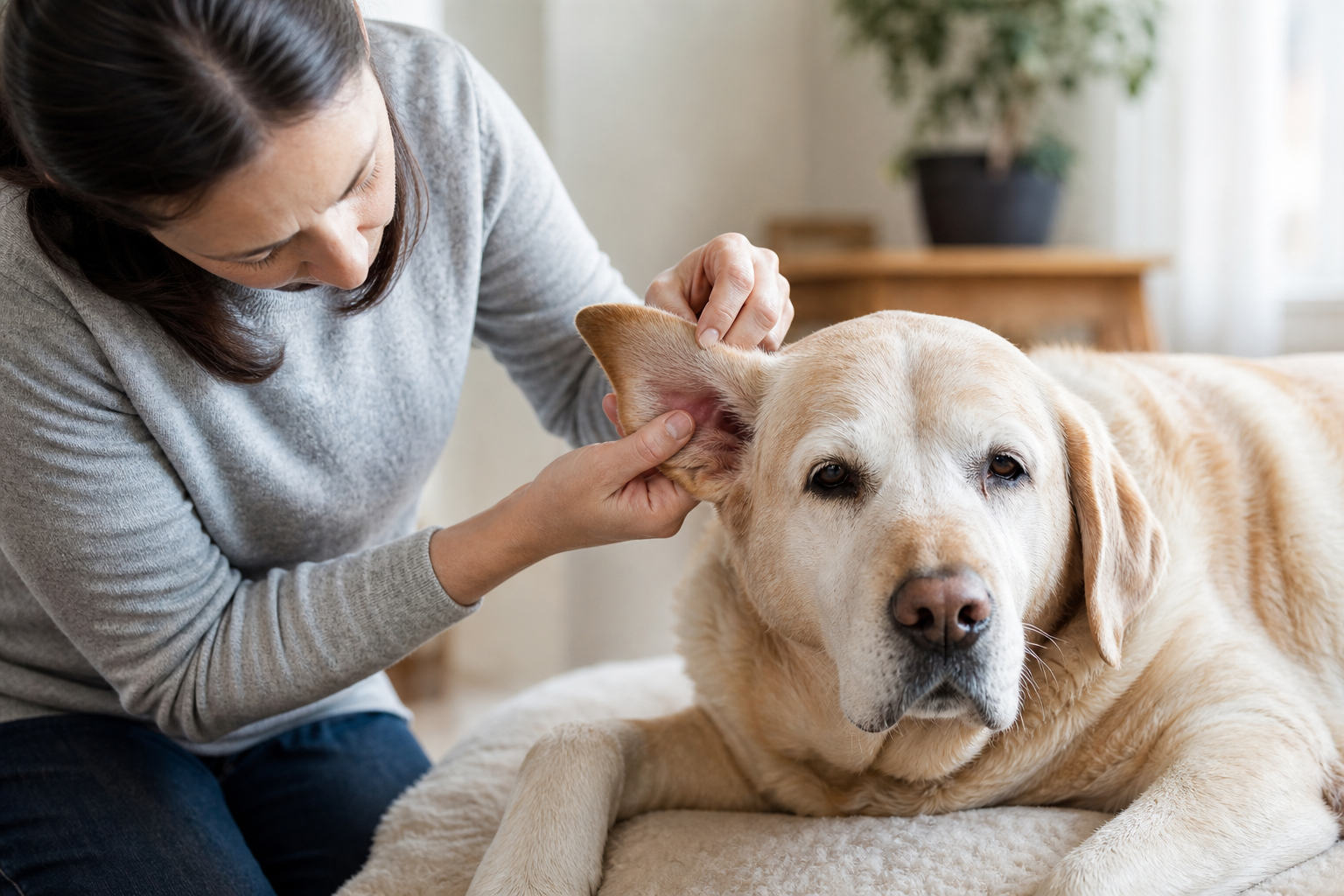
Dog ear infection shows up as head shaking pawing ears and a strong yeasty odor in many large breeds. Labs Goldens and Cocker-type mixes with floppy ears face higher risk after swimming. This article is for info only. It does not replace vet advice. Head tilt balance loss or severe pain needs urgent care.
For instance one wet swim day can start a flare in prone dogs. Therefore dry and check ears after water play—not days later.
In addition vet drops treat the cause faster than home guesses. Similarly finding allergies early cuts repeat infections over time.
Read our senior care guide for full aging routines beyond ears alone.
Furthermore our dental disease guide covers another common hidden pain source in seniors.
What dog ear infection owners should know first
Disclosure: This post has affiliate links. We may earn a small fee if you buy. It costs you nothing extra. We only share gear we trust.
First otitis means bacteria or yeast overgrow in the ear canal. After that inflammation pain and odor follow fast.
For example dog ear infection can hit one ear or both depending on cause and breed shape.
The VCA ear infection guide notes that floppy ears trap moisture and heat more than upright ears.
To sum up ear flares are medical—not dirt alone. Vet exams beat deep cotton swabs at home.
Why dog ear infection hits large breeds often
Floppy ears moisture allergies and narrow canals
Namely many large breeds love water and have heavy ear flaps. Moreover allergies and skin issues feed repeat ear flares.
Common risk factors:
- For instance floppy ears that limit air flow in Labs and Goldens
- Similarly frequent swimming without proper drying after
- Also food or environmental allergies that inflame skin and ears
- Furthermore excess hair or wax buildup in some breed lines
Read our life jacket guide when water safety and post-swim ear care both matter.
In contrast upright ears dry faster—but any breed can get otitis.
Early signs of dog ear infection
Shaking odor redness and head tilt
By comparison early signs look like minor itch after play. However odor plus pain means infection until your vet says otherwise.
Early signs to watch:
- First frequent head shaking or ear scratching
- Next dark discharge or waxy buildup with strong odor
- Then red swollen ear flap or canal entrance
- Also whining when ears are touched
- Lastly head tilt or balance change in severe cases
Nevertheless head tilt with walking circles needs same-day vet care—not home cleaner alone.
How vets diagnose and treat dog ear infection
Ear swab exam and prescription drops
Clearly home smell checks cannot name bacteria versus yeast. Your vet swabs the canal and picks the right treatment.
Typical vet steps:
- In particular otoscope exam views canal swelling and debris
- Beyond that cytology identifies yeast bacteria or mites
- Similarly prescription drops or ointments treat the match
- Also allergy workup when infections return every few weeks
The AKC ear care overview also stresses finishing the full drop course even when ears look better early.
Therefore recheck ears when your vet schedules follow-up—not when odor fades alone.
Safe home care for dog ear infection
Cleaning drying and what to avoid
In practice home care supports vet treatment—it does not replace it on active infection.
Safe home habits:
- For instance use vet-approved cleaner only on healthy ears or as directed
- Similarly dry ear flaps after baths swims and rainy walks
- Also never push cotton deep into the canal
- Furthermore give all prescription drops for the full course length
Meanwhile keep our first aid kit stocked for trail cuts—not for unsupervised ear digging.
Above all stop home cleaning if your dog yelps. Pain means vet exam first.
Prevention habits for dog ear infection
Dry ears allergy control and regular checks
Overall prevention cuts painful repeat flares and vet bills alike.
Next lift the ear flap weekly in floppy large breeds. Look for redness or odor early.
Furthermore treat underlying allergies when infections keep returning.
Practical prevention steps:
- Dry ears gently after every swim or bath session
- Keep weight lean when allergies and skin flares overlap
- Schedule vet ear checks at wellness visits each year
- Log flare dates to spot seasonal allergy patterns
In addition review our cognitive dysfunction guide when night pacing—not ear itch—drives behavior changes.
Similarly our incontinence guide helps when multiple senior issues stack at once.
FAQs – dog ear infection
Can I use human ear drops?
For example human products can harm dogs. Therefore use only vet-prescribed ear meds.
Will it come back?
Many do if moisture or allergies stay untreated. In addition allergy plans reduce repeat rates.
Swimming cleaning and pain
Should swimming stop?
Similarly drying after water often enough beats a full swim ban. Ask your vet for your dog’s case.
Is head shaking always infection?
Meanwhile foxtails foreign bodies and mites also shake heads. Vet exam sorts the cause.
Final recap: dog ear infection care done right
Overall treat head shaking plus odor as a vet visit—not a bath fix.
Next get cytology and the right drops before infections spread deeper.
Then finish the full med course and recheck as directed.
Still dry floppy ears after every wet day in large breeds.
As another option lean on our senior care guide for whole-body aging support.
On balance early vet care beats repeat flares when dog ear infection signs first appear.
For example photo the ear flap color when healthy. Compare after swims monthly.
Similarly log cleaner and drop dates in your phone. Above all vet drops plus dry ears give most large breeds fast relief.
Disclosure: This post has affiliate links. Grey Snout Guide may earn a small fee. You pay nothing extra.