
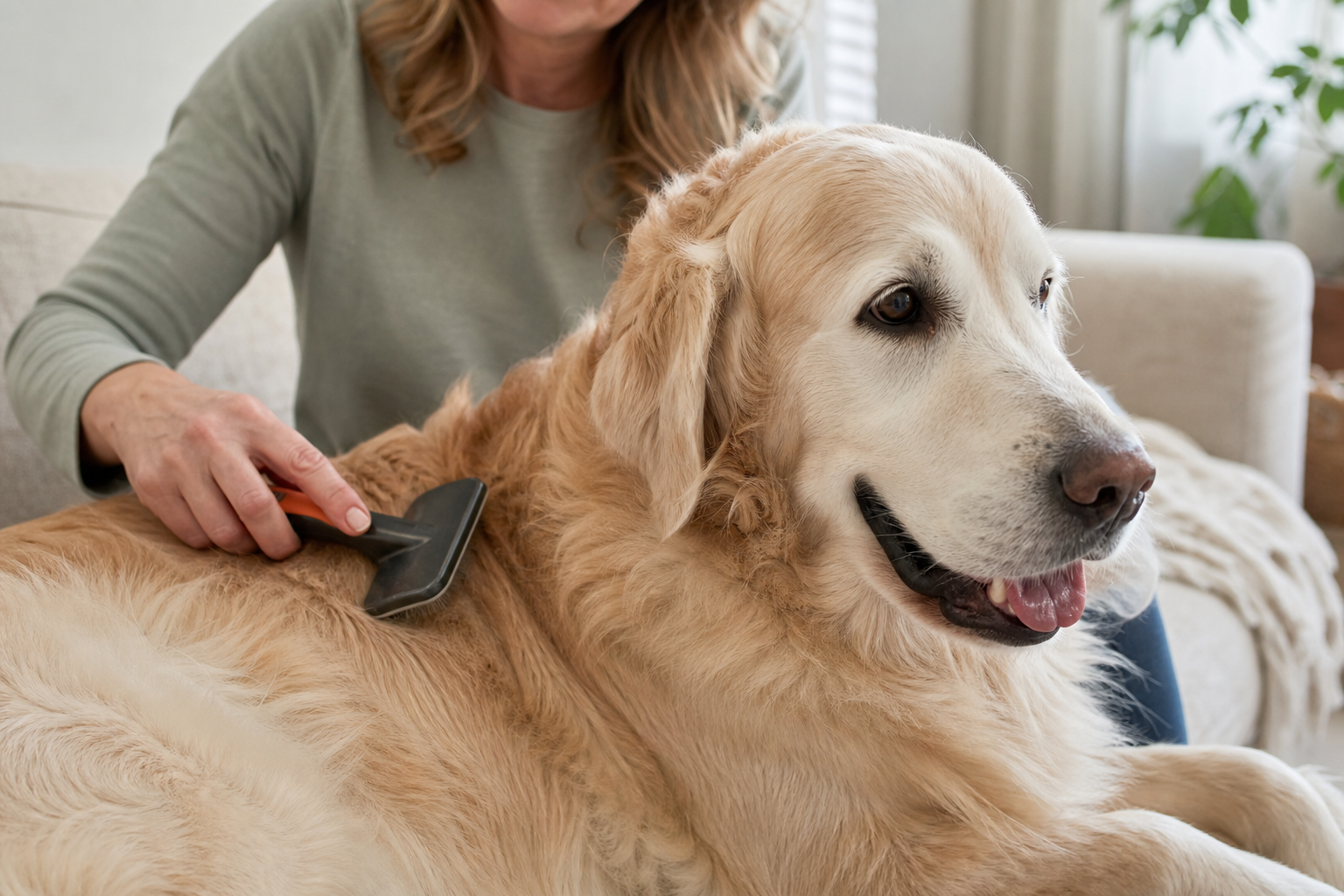
Dog skin allergies show up as constant scratching red belly patches and repeat ear flares in many large breeds. Labs Goldens and Shepherds often itch seasonally or year-round. This article is for info only. It does not replace vet advice. Open sores swelling of the face or trouble breathing needs urgent care.
For instance paw licking every night may not be habit. Therefore track itch patterns before you blame boredom alone.
In addition finding food or environmental triggers cuts vet visits over time. Similarly gentle skin routines protect the coat on big dogs.
Read our ear infection guide when itchy ears join skin flares.
Furthermore our senior care guide covers full aging support beyond skin alone.
What dog skin allergies owners should know first
Disclosure: This post has affiliate links. We may earn a small fee if you buy. It costs you nothing extra. We only share gear we trust.
First allergies mean the immune system overreacts to pollen food fleas or contact triggers. After that skin and ears inflame and itch.
For example dog skin allergies often look like hot spots paw stains and thin coat patches on the belly.
The VCA allergies guide lists environmental food and flea allergies as the three main types in dogs.
To sum up itch is a medical signal—not bad manners. Vet plans beat endless random shampoos.
Why dog skin allergies hit large breeds often
Big coats outdoor life and breed-linked sensitivity
Namely large breeds spend more time outdoors in pollen and grass. Moreover thick double coats trap moisture and allergens against skin.
Common allergy types:
- For instance environmental triggers like pollen dust and mold
- Similarly food sensitivities linked to certain proteins or grains
- Also flea bite allergy—even one flea can flare sensitive dogs
- Furthermore contact reactions from detergents or lawn treatments
Read our senior nutrition guide before big diet swaps for itch control.
In contrast one rash does not prove allergy. Your vet rules out infection and mites first.
Early signs of dog skin allergies
Itch redness paws ears and hot spots
By comparison early signs look like dry skin or a dirty coat. However repeat patterns across weeks point toward allergy.
Early signs to watch:
- First constant scratching licking or chewing paws and belly
- Next red patches hair loss or dark stained fur on feet
- Then repeat ear infections with head shaking
- Also hot spots—moist angry skin sores that spread fast
- Lastly rubbing face on carpet after walks outdoors
Nevertheless facial swelling or hives after a new food or walk needs emergency vet care tonight.
How vets diagnose dog skin allergies
Exam history trials and allergy testing
Clearly home guessing cannot sort food from pollen triggers. Your vet builds a stepwise plan.
Typical diagnostic steps:
- In particular skin exam checks mites infection and hot spot zones
- Beyond that flea control must be perfect before allergy labels stick
- Similarly elimination diet trials test food triggers over weeks
- Also blood or skin allergy tests when environmental causes are likely
The AKC dog allergies overview also notes that patience matters—trials take time to read clearly.
Therefore log itch scores and walk routes before each vet visit.
Treatment paths for dog skin allergies
Meds diet flea control and vet skin plans
In practice most plans mix trigger control daily meds and coat care.
Common treatment paths:
- For instance prescription anti-itch meds break the scratch cycle fast
- Similarly hypoallergenic or limited-ingredient diets when food triggers show
- Also year-round flea prevention on every pet in the home
- Furthermore medicated baths when your vet recommends a schedule
Meanwhile never stop allergy meds without vet guidance during flare season.
Above all treat hot spots early. Large breeds can widen sores overnight.
Home relief for dog skin allergies
Baths wipes paws and calm indoor air
Overall home habits support vet plans—they rarely replace them alone.
Next wipe paws and belly after high-pollen walks in large outdoor breeds.
Furthermore clean bedding weekly to cut dust and pollen load.
Practical home habits:
- Use lukewarm vet-approved shampoo—not human soap—on irritated skin
- Keep an orthopedic bed with washable covers for less contact itch
- Run a HEPA filter in rooms where your dog sleeps most
- Trim nails short so scratch damage stays mild on big paws
Nevertheless avoid essential oils and random home remedies without vet OK. Some burn inflamed skin.
Prevention and awareness for dog skin allergies
Flea control logs and seasonal planning
Clearly you cannot erase every trigger outdoors. Still steady habits cut flare severity.
Practical awareness steps:
- For instance keep flea prevention on calendar year-round in warm climates
- Similarly bathe after lake or field days when pollen counts spike
- Also note new foods treats and detergents when itch starts
- Lastly pair skin care with our dental guide and arthritis guide for whole-senior checks
In addition review our ear infection guide when ears flare with every skin bout.
FAQs – dog skin allergies
Is grain-free always the fix?
For example food allergy is one slice of the picture. Therefore diet trials need vet structure—not random bag swaps.
Can allergies go away?
Many are managed—not cured. In addition good plans keep itch low for years.
Baths food and itching at night
How often to bathe?
Similarly over-bathing dries skin. Follow your vet schedule for medicated washes.
Why worse at night?
Meanwhile heat under thick coats spikes itch when dogs settle. Cool rooms and clean beds help.
Final recap: dog skin allergies care done right
Overall treat repeat itch as a vet topic—not a shampoo lottery.
Next rule out fleas infection and mites before long diet trials.
Then follow med food and bath plans with your vet team.
Still wipe paws and wash bedding during high-pollen weeks.
As another option lean on our senior care guide for full aging routines.
On balance steady vet partnership beats frustration when dog skin allergies signs first appear.
For example rate itch from 1 to 10 weekly in your phone notes. Trends help your vet adjust plans.
Similarly photo belly and paw redness before each recheck. Above all trigger control plus vet meds give most large breeds real relief.
Disclosure: This post has affiliate links. Grey Snout Guide may earn a small fee. You pay nothing extra.