
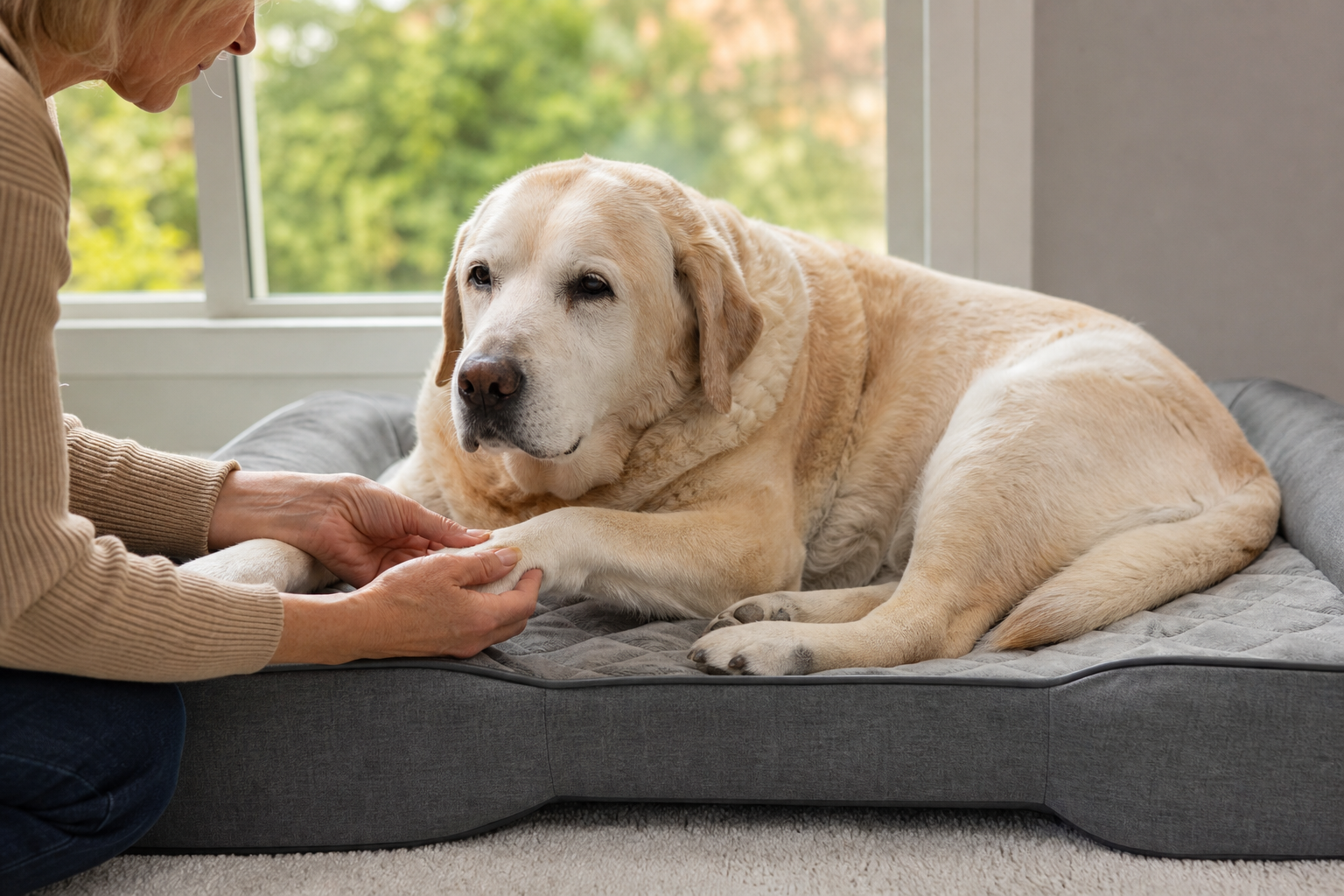
Dog elbow dysplasia causes front-leg joint pain in many large breeds. Labs Bernese Mountain Dogs and Rottweilers often show lameness before age two. This article is for info only. It does not replace vet advice. Persistent front-leg limping needs an exam—not a wait-and-see month.
For instance a young dog that sits with one front leg held out may not be quirky. Therefore know front-leg signs before you blame rough play alone.
In addition early X-rays can guide surgery or rehab plans. Similarly daily weight and low-impact walks protect elbows long term.
Read our hip dysplasia guide when back-leg pain is the main issue instead.
Furthermore our arthritis guide covers joint care when elbow wear builds over years.
What dog elbow dysplasia owners should know first
Disclosure: This post has affiliate links. We may earn a small fee if you buy. It costs you nothing extra. We only share gear we trust.
First elbow dysplasia means the elbow joint did not form cleanly as the puppy grew. After that bone fragments or loose pieces may rub and hurt.
For example dog elbow dysplasia often hits one front leg first—but both elbows can be affected over time.
The VCA elbow dysplasia guide notes that fast-growing large breeds face the highest risk.
To sum up front-leg lameness in a large breed deserves vet imaging early—not hopeful rest alone.
Why dog elbow dysplasia hits large breeds
Fast growth genetics and joint load
Namely heavy puppies grow bone faster than soft tissue can keep up. Moreover certain breeds show up in clinic data far more often.
High-risk breed examples:
- For instance Labrador Retrievers and Golden Retrievers
- Similarly Bernese Mountain Dogs and Rottweilers
- Also German Shepherds and Mastiff-type breeds
Read our lifespan guide for breed health context beyond joints alone.
In contrast hip dysplasia affects the back end. Elbow dysplasia usually shows in the front legs first.
Early signs of dog elbow dysplasia
Front-leg lameness stiffness and posture clues
By comparison early signs mimic sprains or too much fetch. However pain that returns after rest often points to the elbow.
Early signs to watch:
- First limping on a front leg after naps or cold mornings
- Next reluctance to jump into the car or onto furniture
- Then sitting with one front leg held to the side
- Also swelling or heat near the elbow in some dogs
- Lastly lower drive for long runs on hard ground
Nevertheless any front-leg lameness over 48 hours in a large breed needs a vet visit. Do not wait for obvious swelling.
How vets diagnose dog elbow dysplasia
Exam X-rays and advanced imaging
Clearly home checks cannot confirm elbow dysplasia. Your vet uses imaging to map bone shape and loose fragments.
Typical diagnostic steps:
- In particular a hands-on exam checks pain range and gait
- Beyond that elbow X-rays show bone changes and fragments
- Similarly CT scans map detail when X-rays look unclear
- Also joint taps or blood work rule out infection when needed
The AKC elbow dysplasia overview also stresses that both elbows should be checked even when only one leg limps.
Therefore ask your vet to explain each image before you pick surgery or rehab paths.
Treatment paths for dog elbow dysplasia
Surgery meds weight control and rehab
In practice plans vary by age fragment type and daily pain level.
Common treatment paths:
- For instance arthroscopy removes loose bone pieces in some cases
- Similarly pain meds and joint supplements support comfort per vet plan
- Also strict weight control cuts load on sore elbows
- Furthermore physio and controlled walks rebuild muscle safely
Meanwhile review our senior nutrition guide with your vet when weight goals matter.
Above all never give human pain meds without vet approval. Some common pills are toxic to dogs.
Quality of life with dog elbow dysplasia
Low-impact walks gear and honest daily checks
Overall many dogs live active lives with the right mix of surgery rehab and home habits.
Next track limp frequency play joy and rest quality each week.
Furthermore home setup cuts jump stress on front legs.
Comfort habits at home:
- Use an orthopedic bed so elbows rest off hard floors
- Add ramps and car ramps to cut jump load
- Try a mobility support harness on stairs and slick floors
Nevertheless know when pain outweighs good play days. Your vet can help you judge that line with honesty.
Prevention and awareness for dog elbow dysplasia
What puppy owners can control
Clearly genetics set part of the risk. Still growth habits protect developing elbows.
Practical awareness steps:
- For instance feed large-breed puppy food on a steady growth plan
- Similarly limit hard repetitive jumps while bones still grow
- Also keep puppies lean—extra weight speeds joint wear
- Lastly ask breeders about elbow screening scores in parent dogs
In addition review our osteosarcoma guide when one-leg lameness looks sudden and severe in older dogs.
Similarly our senior care guide supports aging dogs with multi-joint limits.
FAQs – dog elbow dysplasia
Is it the same as hip dysplasia?
For example hip issues affect the back legs. Therefore front-leg lameness points your vet toward elbows first.
Can puppies outgrow it?
Some mild cases improve with rest. In addition many dogs need lifelong weight and exercise plans either way.
Surgery exercise and breeders
Is surgery always required?
Similarly not every dog needs an operation. Imaging plus pain level guide the choice with your vet.
Can my dog still hike?
Meanwhile soft trails and shorter loops often beat long pavement runs. Ask your vet for a custom plan.
Final recap: dog elbow dysplasia care done right
Overall treat new front-leg lameness as worth fast vet imaging in large breeds.
Next get both elbows checked even when only one leg limps.
Then follow weight rehab and med plans with your vet team.
Still adapt ramps beds and harness gear for good days and sore days alike.
As another option lean on our hip dysplasia guide when back-leg signs join the picture.
On balance early vet partnership beats fear when dog elbow dysplasia signs first appear.
For example film your dog walking on flat ground monthly. Do not rely on memory alone at vet visits.
Similarly log walk length and limp notes weekly. Above all lean weight plus low-impact routines give sore elbows the best long-term shot.
Disclosure: This post has affiliate links. Grey Snout Guide may earn a small fee. You pay nothing extra.