
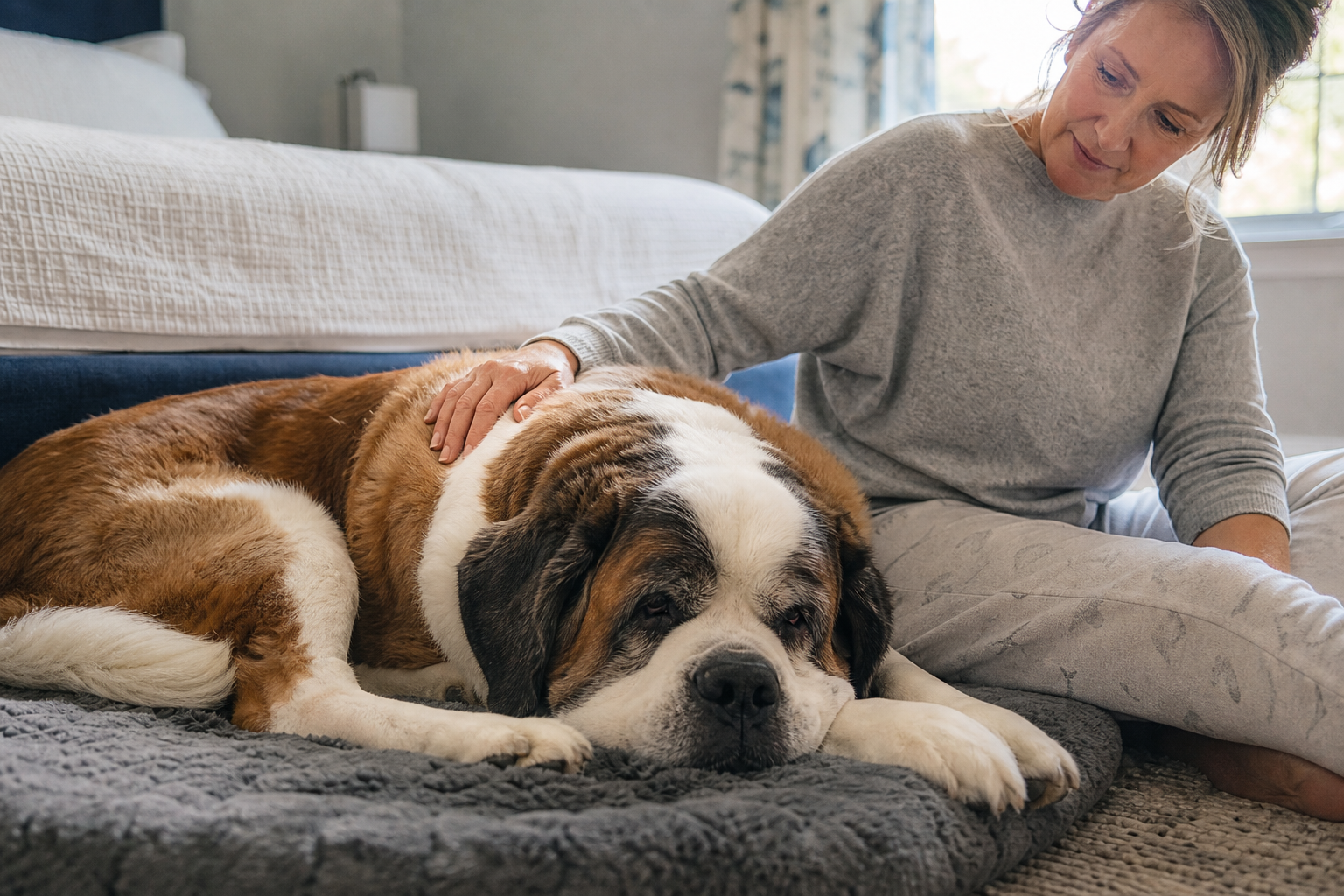
Dog pain signs hide well in large breeds trained to stay stoic. Saint Bernards Mastiffs and Shepherds often mask sore joints until pain is advanced. This article is for info only. It does not replace vet advice. Collapse screaming pain or hard swollen belly needs emergency care now.
For instance slower stairs may not mean lazy aging. Therefore learn subtle dog pain signs before you blame old age alone.
In addition early vet action improves comfort fast. Similarly knowing twelve common clues helps you act sooner—not after weeks of silent suffering.
Read our arthritis guide when joint pain drives most daily changes.
Furthermore our senior care guide covers broader aging support beyond pain alone.
Why large breed dogs hide dog pain signs
Disclosure: This post has affiliate links. We may earn a small fee if you buy. It costs you nothing extra. We only share gear we trust.
First pack animals avoid showing weakness. After that big dogs keep walking until pain limits every step.
The VCA pain signs guide notes that behavior shifts often appear before obvious limping.
To sum up watch patterns—not one off days. Pain usually repeats across weeks.
12 dog pain signs large breed owners should watch
Movement mood eating touch and sleep clues
Clearly no single sign proves pain alone. However two or more together warrant a vet visit fast.
Twelve dog pain signs to watch:
- Limping or stiffness after rest—especially on one leg
- Reluctance to jump into cars or onto furniture they used to use
- Gait changes like short strides weight shifting or bunny hopping
- Lower appetite or dropping food from the mouth when chewing hurts
- Excessive licking one paw joint or belly zone
- Vocalizing when touched—or flinching away from petting
- Withdrawal from family rooms games or normal greeting habits
- Grumpiness or snapping when approached especially near sore areas
- Restlessness at night—cannot settle into one sleep position
- Heavy panting without heat or exercise stress
- Posture changes like hunched back or front-end down stretch (prayer pose)
- Sleep shifts—much more sleeping or unable to sleep through the night
Nevertheless sudden collapse open-mouth breathing or pale gums needs emergency care—not a wait-and-see day.
What different dog pain signs may mean
Joints mouth belly and nerve pain patterns
By comparison front-leg lameness may point to elbow or wrist issues. Meanwhile hind drag can link to hips spine or nerves.
Common pain sources in large breeds:
- For instance arthritis and hip dysplasia in aging giants
- Similarly elbow dysplasia in active young large dogs
- Also dental disease causing hidden mouth pain
- Furthermore bone cancer when one-leg lameness worsens fast
Read our DM guide when hind weakness—not joint pain—dominates signs.
In contrast one skipped meal alone may mean nausea. Look for clusters of dog pain signs instead.
How to check for dog pain signs at home
Safe touch walks and video for your vet
Clearly rough probing can worsen fear and pain. Next use calm short checks your dog accepts.
Simple home checks:
- Film your dog walking on flat ground from the side and rear
- Feel along spine hips and legs with light pressure only
- Watch face ears and tail during slow petting sessions
- Note which dog pain signs repeat for three or more days
The AKC pain awareness overview also recommends sharing videos at vet visits when signs come and go.
Therefore stop if your dog growls or snaps. Schedule a vet exam instead of forcing touch.
When to call the vet about dog pain signs
Routine comfort plans versus emergencies
In practice mild stiffness after long hikes may need rest first. However repeat clusters need professional exams.
Call your vet soon when:
- For instance two or more signs from the list above last several days
- Similarly appetite drops with limping or mood change together
- Also pain meds from an old script no longer help
- Furthermore weight loss joins low energy in senior large breeds
Meanwhile see our weight loss guide when extra pounds may fuel joint pain.
Above all never give human pain pills without vet approval. Many are toxic to dogs.
Comfort steps while you wait for the vet
Rest gear calm space and joint support
Overall keep sore dogs quiet until your vet names the cause.
Short-term comfort habits:
- Use an orthopedic bed on firm paths to sore joints
- Add ramps to cut jump stress on painful legs
- Try a mobility harness for supported short potty trips
- Keep our first aid kit ready for minor trail injuries
Nevertheless comfort steps do not replace diagnosis. Pain source still needs vet care.
FAQs – dog pain signs
Do large breeds feel less pain?
For example they feel pain the same—they often hide it better. Therefore stoic breeds need extra watchfulness.
Can anxiety mimic pain?
Yes—and pain can mimic anxiety. In addition your vet sorts both with exam and history.
Meds aging and exercise
Should I still walk a sore dog?
Similarly short flat trips often help stiffness. Ask your vet before long hikes return.
Are supplements enough?
Meanwhile supplements support some joint cases—they do not replace pain workups when signs cluster.
Final recap: dog pain signs in large breeds
Overall treat repeat limping mood shifts and touch flinch as vet topics—not bad behavior.
Next use the twelve-sign list weekly on senior large breeds.
Then film gait and log patterns before clinic visits.
Still add ramps beds and harness support while diagnosis is pending.
As another option review linked guides for hips elbows teeth and bone pain when one sign dominates.
On balance early action beats silent suffering when dog pain signs first appear in your large breed dog.
For example set a monthly phone reminder to walk-film your dog on flat ground. Small changes show up early on video.
Similarly share this twelve-sign list with everyone who feeds or walks your dog. Above all team awareness catches pain sooner in stoic giants.
Disclosure: This post has affiliate links. Grey Snout Guide may earn a small fee. You pay nothing extra.