
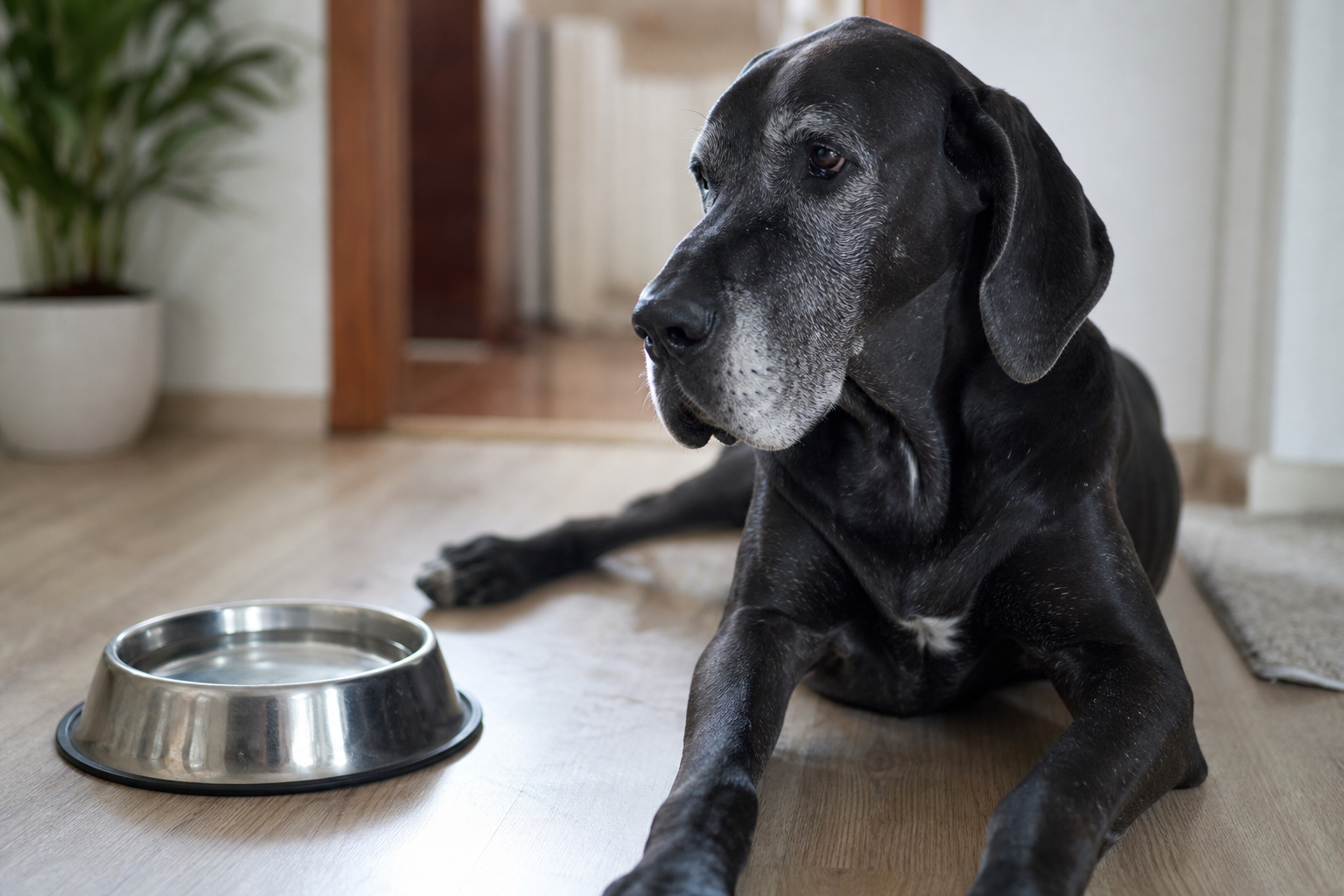
Bloat large breed dogs face a life-threatening stomach twist called GDV. Deep-chested breeds like Great Danes and Shepherds carry the highest risk. This article is for info only. It does not replace vet advice. Bloat can kill within hours—call your vet or emergency clinic right away if you suspect GDV.
For instance a distended belly and retching without vomit can signal GDV—not simple indigestion. Therefore every large-breed owner should know warning signs before an evening crisis hits.
In addition prevention habits cut risk—but they never eliminate it entirely. Similarly knowing emergency steps saves time when you rush to the clinic.
Read our senior nutrition guide for feeding patterns that support gut health on daily meals.
Furthermore our first aid kit guide covers gear to stash before any road trip with a deep-chested dog.
What bloat large breed dogs owners should know about GDV
Disclosure: This post has affiliate links. We may earn a small fee if you buy. It costs you nothing extra. We only share gear we trust.
First bloat means the stomach fills with gas and fluid. After that GDV adds volvulus—the stomach twists and traps gas while cutting blood supply.
For example bloat large breed dogs emergencies often start after meals exercise or stress—not always after one obvious trigger.
The VCA GDV overview notes that deep chest shape raises twist risk in many giant and large breeds.
To sum up bloat is urgent—but GDV is a true surgical emergency every time.
Why bloat large breed dogs carry higher GDV risk
Deep chest shape genetics and daily habits
Namely anatomy matters more than owner care alone. Moreover a narrow deep chest lets the stomach swing and twist under gas pressure.
High-risk breed examples:
- For instance Great Danes German Shepherds and Weimaraners top many GDV risk lists
- Similarly Standard Poodles Irish Setters and Dobermans show elevated rates
- Also any large deep-chested mix can face the same emergency pattern
Read our lifespan guide for breed-specific health notes including bloat history.
In contrast small barrel-chested breeds develop GDV far less often—though any dog can bloat in theory.
Early signs of bloat in large breed dogs
Warning signals before full GDV progression
By comparison early bloat signs can look subtle—especially if your dog hides pain like many large breeds do.
Watch for these early signs:
- Restlessness and pacing after meals—unable to get comfortable
- Therefore excessive drool or lip licking without clear cause
- Furthermore a tight or slowly swelling belly—harder than normal
- Similarly trying to vomit with little or nothing coming up
- Also whining when the abdomen is touched lightly
Nevertheless one sign alone can still mean GDV—do not wait for a full checklist before you call the vet.
Emergency GDV signs in bloat large breed dogs
When to leave for the clinic immediately
Clearly these signs mean drive now—not monitor until morning.
Emergency signs:
- First a rapidly ballooning abdomen that feels tight like a drum
- Next repeated dry heaving or gagging without productive vomit
- Then pale gums rapid panting or collapse
- Finally weak pulse and inability to stand—late-stage shock
The AKC bloat guide also stresses that time to surgery strongly affects survival odds.
Above all call ahead so the emergency team can prepare for immediate intake.
Prevention habits for bloat large breed dogs
Feeding exercise and surgical options that lower risk
In practice daily habits cannot guarantee safety—but they reduce odds on average across high-risk breeds.
Prevention habits:
- For instance feed two or three smaller meals instead of one large bowl daily
- Similarly wait 60 to 90 minutes after meals before hard exercise or play
- Also use slow feeders if your dog gulps kibble in under two minutes
- Furthermore limit vigorous activity right before and after water gulping
- Lastly discuss prophylactic gastropexy with your vet for highest-risk breeds
See our elevated bowl guide for feeding-height notes—and ask your vet what fits your dog.
Meanwhile keep weight lean—extra fat adds abdominal pressure and slows emergency exams.
Emergency steps if you suspect bloat in a large breed dog
What to do on the drive to the vet
Meanwhile stay calm and move fast—every minute of delay raises shock risk.
On the way to emergency care:
- First call the nearest 24-hour clinic and tell them you suspect GDV
- Next transport with minimal jostle—have a helper hold your dog steady if possible
- Then do not give food water or home remedies by mouth
- Similarly note when symptoms started and what your dog ate last
- Lastly bring vaccination records if you have them—but do not delay departure to search
Therefore stash clinic numbers in your phone before symptoms ever appear—see our road trip checklist for travel planning habits.
In contrast online forums are not emergency care—trust your vet team on arrival.
Gastropexy and vet care for bloat large breed dogs
When surgery is discussed before or during a crisis
Overall gastropexy tacks the stomach wall to prevent future twists after GDV repair—or as a preventive step in some high-risk dogs.
Next your vet weighs breed age and health history before recommending elective surgery.
Furthermore dogs recovering from GDV need strict rest and follow-up imaging—joint support matters too if mobility drops during recovery.
Read our hip dysplasia guide and senior care guide for long-term mobility support after major surgery.
FAQs – bloat large breed dogs and GDV
Can bloat resolve on its own?
For example simple gas can pass—but never assume that when retching and a tight belly appear together. Therefore treat it as GDV until a vet says otherwise.
Does raised bowl height cause bloat?
Research is mixed. In addition eating speed and breed risk matter more for most dogs—ask your vet about your specific breed and habits.
Exercise age and multi-dog meal notes
Puppies?
Similarly large-breed puppies need measured meals and calm post-meal periods—rapid growth plus gulping raises stress on developing guts.
Multiple dogs?
Meanwhile separate feeding stations cut competitive gulping—a common habit before evening bloat calls.
Final recap: bloat large breed dogs done right
Overall know the signs—restlessness dry heaving and a tight belly—before a crisis peaks.
Next use prevention meals slow feeding and calm post-meal windows every day.
Then save emergency clinic numbers and drive immediately when symptoms match GDV.
Still discuss gastropexy with your vet if your breed sits on high-risk lists.
As another option review feeding and exercise habits in our nutrition guide each season.
On balance preparation beats panic when bloat large breed dogs emergencies strike at night.
For example save this page and your nearest 24-hour vet contact on your phone home screen tonight.
Similarly share prevention habits with anyone who feeds or walks your dog. Above all fast vet care—not waiting—is the lever that saves lives when GDV hits deep-chested breeds.
Disclosure: This post has affiliate links. Grey Snout Guide may earn a small fee. You pay nothing extra.