
Large breed dog care spans adoption puppy years home safety daily routines and grey-muzzle aging. Giants are not big small dogs—every choice scales with weight and lifespan. This page is your 2026 hub to every guide in our large-breed series.
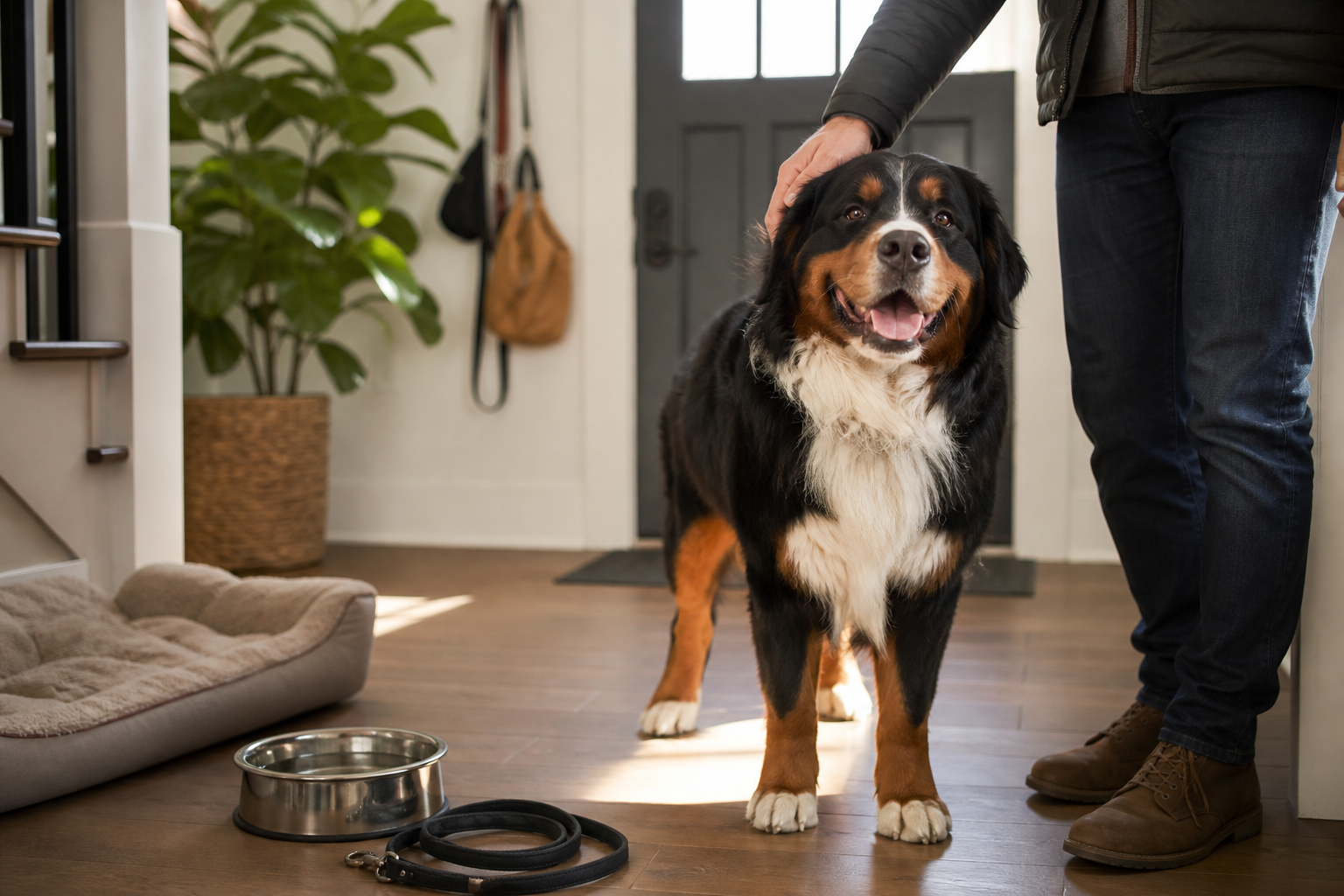
Large breed dog care works best when you follow life stages—not random tips from social media. Moreover a 120 lb senior needs different floors meds and walks than a five-month Dane puppy. Also budget vet and gear plans early—surprise bills hurt more with giants. This hub is for info only. Collapse bloat signs bites or trauma need ER care or a pro trainer now.
For example you might adopt a calm seven-year-old Lab or raise a Mastiff from eight weeks. Therefore this large breed dog care roadmap sends you to the right deep guide at each step in 2026.
First bookmark our senior care guide for aging health. After that keep hip dysplasia and arthritis guides handy as joints change.
Additionally use our emergency signs guide and bloat guide for ER cues every giant owner should know.
Furthermore the AKC large breed health issues overview explains why size changes vet timing and nutrition rules.
Meanwhile the AVMA pet care basics stress yearly exams vaccines and safe housing for all dogs.
Why large breed dog care needs a staged plan
Disclosure: This post has affiliate links. Grey Snout Guide may earn a small fee when you buy through our links. You pay nothing extra.
Generally owners who skip stage order buy the wrong gear twice. However this hub lists what to read before you bring a dog home—and after. In addition each linked guide goes deep on one topic so this page stays a map—not a repeat of every detail.
Consequently you can start at your life stage today. Moreover return here when your dog ages into the next block.
As a result large breed dog care feels organized—not overwhelming.
Large breed dog care hub: all 15 guides at a glance
Quick map of our 186–200 series
Meanwhile use this table to jump to the guide you need now. Always pair reading with your vet’s advice for your dog.
| Life stage / topic | Guide | Link |
|---|---|---|
| Before day one | Adoption | Large breed dog adoption |
| Year one puppy | Puppy essentials | Large breed puppy guide |
| New baby at home | Dog + baby | Introduce large breed baby |
| Dog + cat | Cat intro | Introduce large breed cat |
| Second giant | Two-dog intro | Introduce two large dogs |
| Apartment life | Apartment living | Large breed apartment living |
| Daily movement | Exercise | Large breed exercise guide |
| Grey muzzle schedule | Senior routine | Senior large breed routine |
| Sleep support | Beds 2026 | Best dog bed large breeds |
| Money planning | True cost | Large breed ownership cost |
| Vet bills | Insurance | Large breed insurance guide |
| Vet-trusted gear | Vet products | Large breed vet products |
| Home car yard | Safety | Large breed safety guide |
| Senior home layout | Home prep | Senior large breed home |
Therefore save this large breed dog care hub page—you will revisit it as your dog ages.
Stage 1 large breed dog care: before your dog arrives
Adoption or puppy path
First decide rescue versus breeder puppy—honest fit beats impulse. Also read our adoption guide for shelter questions and senior pros.
Moreover if you raise a puppy start our puppy guide for growth feeding and vet timing.
However both paths need budget talk early. Consequently open our cost guide and insurance guide before day one.
In addition apartment renters should read our apartment guide for size rules and noise plans.
Stage 2 large breed dog care: home and family
Intros safety and layout
Generally new giants shake up every room. Therefore use our safety guide for floors cars and yard basics.
For instance a baby on the way needs our baby intro guide. Meanwhile cat homes need our cat intro guide.
Additionally adding a second dog? Follow our two-dog intro guide on neutral ground first.
Similarly grey muzzles need our senior home prep guide for traction ramps and calm zones.
Stage 3 large breed dog care: daily health habits
Exercise rest and routine
Moreover movement keeps muscle that protects joints. Also read our exercise guide for age-based walk rules.
First build a clock-friendly plan in our senior routine guide once your dog slows down.
Therefore pair rest with our bed guide and pain tracking with our pain signs guide.
However never skip yearly labs as weight creeps up. Consequently use our weight loss guide when your vet sets a target.
Stage 4 large breed dog care: vet money and gear
Supplements insurance and clinic habits
Generally giants cost more at the clinic than small dogs. Moreover our vet products guide ranks joint dental and gut picks vets often mention.
Meanwhile insurance may offset big surprises—see our insurance guide for policy traps.
In addition keep vaccination and parasite plans on calendar with our vaccination guide when you use it.
Therefore treat this stage as yearly review—not one-time shopping.
Senior large breed dog care: when pace slows
Grey muzzle priorities
First shift to shorter walks and more rest blocks. Also upgrade home traction from our senior home guide.
Moreover lean on our senior care guide for dental pain and cognition red flags.
However do not stack new supplements without vet OK. Consequently our vet products guide shows one-add-per-week rollout.
Similarly know when quality of life talks start—our senior care guide lists questions to ask your clinic.
Large breed dog care mistakes to skip
Common giant-owner errors
Generally these habits cause most avoidable harm:
- Letting a large dog ride loose in the car every trip
- Skipping nail trims until gait changes
- One long noon walk for a stiff senior in summer heat
- Buying adult food for a large-breed puppy on guesswork
- Introducing a second giant without neutral-ground meets
Therefore fix one item per week using the linked guides above. Moreover re-read our safety guide after any home change.
Your first 30 days of large breed dog care
Simple rollout calendar
Instead of changing everything at once use this order:
- Start with vet exam vaccine review and microchip check (days 1–7)
- Next set up crate bed and non-slip paths in main rooms (days 8–14)
- Then lock exercise plan and weight baseline on scale (days 15–21)
- Finally request insurance quote and cost spreadsheet (days 22–30)
Meanwhile adjust if you adopted a senior—swap puppy steps for home prep and routine guides first.
FAQs on large breed dog care
Where should I start if I already own a giant?
Moreover pick your biggest pain point today—joints weight safety or money. Also open the matching guide from the hub table. Therefore you act fast without reading all fifteen posts at once.
How often should I revisit this hub?
Generally every six months or after any big life change—move baby new dog or senior diagnosis. However bookmark it now so you do not search from scratch later.
Puppies vs seniors
Is puppy care the same as senior care?
Instead no—puppies need controlled growth food and social time. Meanwhile seniors need traction shorter walks and more vet labs. Consequently follow the stage blocks above—not one generic list.
Do large breeds live shorter lives?
Similarly many giants age faster than small dogs. Therefore start senior home and routine plans earlier than you think—often around six to seven for extra-large breeds per your vet.
Final recap: large breed dog care step by step
First use this hub to pick your life stage guide. Also read adoption or puppy content before day one home. Moreover set safety floors car rules and intro plans early. Similarly build exercise routine and senior schedule as age shifts. However budget cost insurance and vet products yearly—not once. Therefore steady large breed dog care across fifteen linked guides keeps giants healthier and your plan calmer in 2026.
Meanwhile bookmark this page and open one linked guide tonight. In addition share it with family so everyone uses the same care map. If your dog’s needs changed since your last read—start at the hub table row that fits today.
Disclosure: This post has affiliate links. Grey Snout Guide may earn a small fee. You pay nothing extra.