
Large breed puppy guide owners need a slower growth plan than small breeds. Giants mature later and joints need protection. This page is your first-year checklist from eight weeks to twelve months.
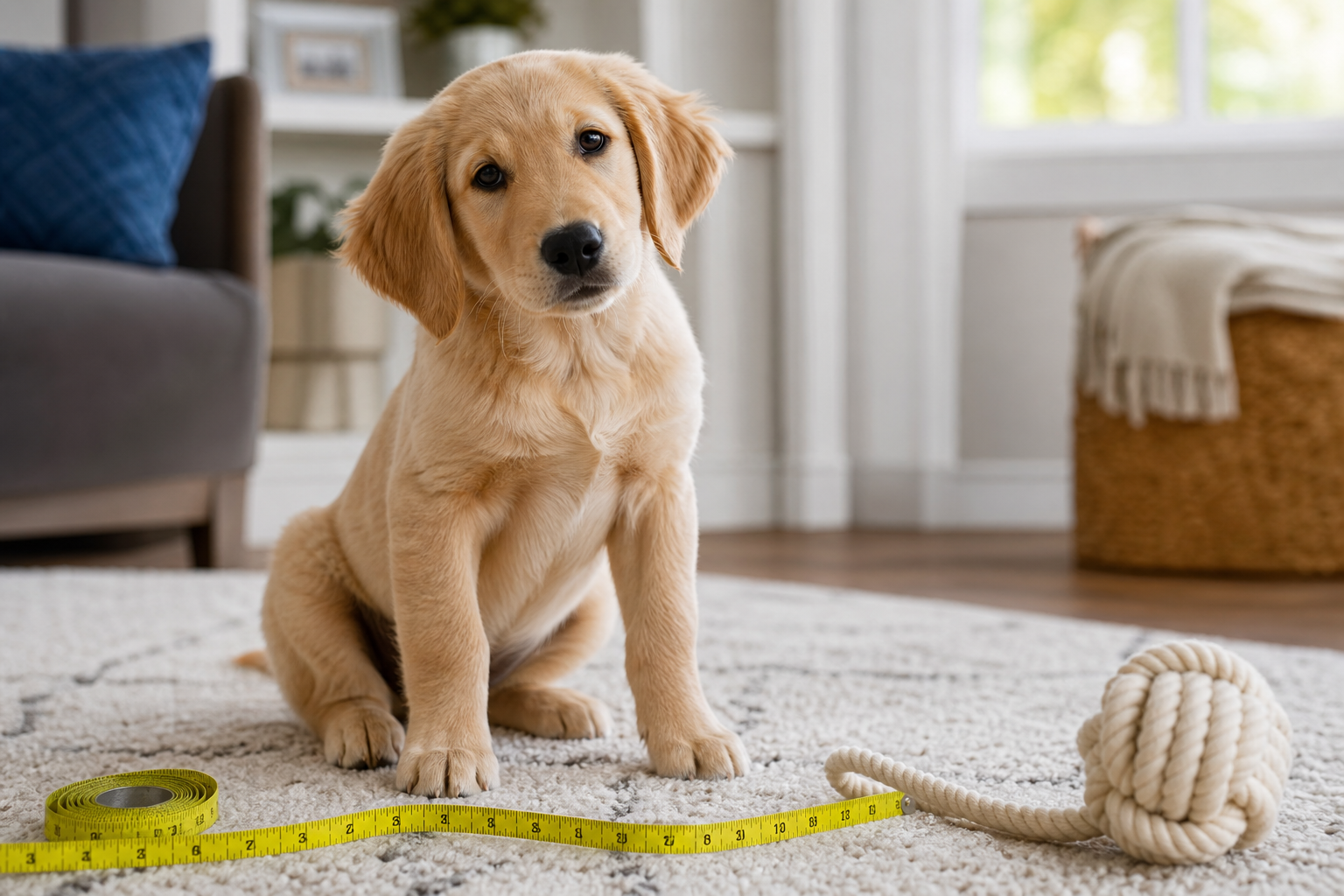
Large breed puppy guide basics start with food that matches bone growth—not adult kibble too soon. Moreover vet visits training and calm social time stack week by week. This guide is for info only. Limping collapse or bloated belly need your vet or ER now.
For example a four-month Lab should look lean—not roly-poly for photos. Therefore this large breed puppy guide walks months zero to twelve in 2026.
First see our large breed dog adoption guide if you are still choosing a dog. After that follow our vaccination guide and crate training guide from day one home.
Additionally use our potty training guide and positive reinforcement guide for calm habits.
Furthermore the AKC puppy feeding fundamentals note that large breeds need controlled growth—not max calories.
Why large breed puppy guide rules differ from small dogs
Disclosure: This post has affiliate links. Grey Snout Guide may earn a small fee when you buy through our links. You pay nothing extra.
Big puppies grow for twelve to twenty-four months depending on breed. However joints and growth plates close on a slower clock than a Chihuahua. In addition one bad jump on slick floors can hurt hips early.
Similarly lean puppies often have fewer joint issues later. Therefore this large breed puppy guide favors slow growth over chubby cuteness.
As a result you trade viral puppy rolls for healthier adult years.
Months 0–3: large breed puppy guide starter phase
Home vet and first social wins
Generally book a vet visit within the first week—even if the breeder gave shots. Also bring paperwork and ask about deworming flea control and vaccine schedule.
Week one to twelve priorities:
- Large-breed puppy food per bag label or vet—not adult food yet
- Crate naps and potty trips on a timer from our potty guide
- Short positive meets with vaccinated friendly dogs when your vet clears
- No dog parks until shots are complete per your clinic plan
- Soft bedding and non-slip rugs so puppy does not wipe out on tile
Moreover read our hip dysplasia guide so you know why forced miles wait.
Feeding in your large breed puppy guide
Meals growth and weight checks
First pick food labeled for large-breed puppies or all life stages your vet approves. Also measure every meal on a scale—not guessing cups.
Generally feed two to three meals per day under six months. Moreover keep ribs easy to feel without a thick fat pad.
Feeding mistakes to avoid:
- Switching to adult food too early without vet OK
- Free-feeding bowls that never empty
- Extra calcium supplements unless your vet prescribes them
- Table scraps that pack weight on fast-growing joints
- Comparing your pup to a small-breed growth chart online
Therefore weigh weekly and photo ribs from above monthly.
Exercise in the large breed puppy guide
Play without pounding joints
Generally five-minute play per month of age is a common cap—ask your vet for your breed. For instance a four-month giant might get twenty minutes of active play—not a five-mile jog.
Also skip forced running on pavement before growth plates close. In addition no repetitive fetch marathons on slick floors.
Similarly sniff walks and gentle tug on grass beat stairs and jumping games. However mental puzzles in the crate count as work too.
Consequently tired happy puppies nap—cranky puppies bite more.
Training timeline for large breed puppy guide owners
Crate leash and manners
First teach name recall and hand targets with treats. Also practice loose-leash walks in the yard before busy streets.
Moreover use our positive reinforcement guide—giants respond poorly to fear-based corrections.
By six months aim for:
- Calm crate time when you cannot watch
- Potty routine with few accidents indoors
- Sit wait at doors before bolts outside
- Gentle meet-and-greet with people—no jumping on kids
- Leave-it for dropped food and trash on walks
Therefore short daily reps beat one long weekend drill.
Socialization in the large breed puppy guide
Safe exposure windows
Generally expose puppy to sounds surfaces hats and calm adults in positive ways. For example treat when the vacuum runs from another room first.
However never flood a scared pup—distance and treats win. Moreover ask your vet when dog parks and busy sidewalks are safe post-vaccines.
Furthermore the AKC puppy socialization overview stresses kind first impressions.
As a result a confident adult giant is easier on leash than a fearful 100 lb puller.
Months 4–8: large breed puppy guide growth phase
Teeth neuter and bigger gear
First expect chewing spikes—rotate safe chews and crate when you leave. Also size up collar harness and crate before the pup hits the edges.
Moreover discuss spay or neuter timing with your vet—large breeds often wait past six months in many clinics.
Similarly refresh vaccine boosters per your vaccination guide. However limping after play needs same-week x-ray talk—not wait and see.
Months 9–12: large breed puppy guide finish line
Teen manners and breed health prep
Generally teenagers test rules—stay boring when they jump or mouth. Also add short training walks before meals for focus.
Therefore read breed health pages if you know the line—for example German Shepherd health or Labrador health.
Moreover plan adult food switch only when your vet says growth is near done—often twelve to eighteen months for giants.
Vet checklist for large breed puppy guide year one
Visits labs and prevention
First stick to puppy vaccine series and fecal checks. Also discuss heartworm flea and tick plans for your region.
Ask your vet about:
- Hip screening timing for your breed if recommended
- Bloat risk and meal habits if you have a deep-chest breed
- Dental start—finger rub now saves drama later
- Insurance or savings fund before emergency season
- When to start adult exercise like hiking or swim
Consequently year-one records help adult vets spot trends fast.
Gear for large breed puppy guide homes
Size early so you do not rebuy weekly
Generally buy a crate your adult will fit with divider for now. Also non-slip bowls and a long line for yard training help.
Moreover car restraint or crate travel keeps everyone safe—see our safety series when article 198 goes live.
Instead of ten cheap collars buy one sturdy harness sized to current girth with room to adjust.
FAQs on large breed puppy guide care
When do large breed puppies stop growing?
Generally twelve to twenty-four months by breed. Moreover your vet can guess from parents and current weight trends.
Is my puppy too skinny?
Therefore feel ribs—easy to feel with light cover is often right. A visible waist from above is a good sign.
Food and behavior
Can I run with my large breed puppy?
Instead wait for vet clearance on growth plates—often after twelve to eighteen months for giants.
My puppy bites kids—help?
Moreover redirect to toys and crate for naps when overtired. Hire a force-free trainer if breaking skin or fear growls appear.
Final recap: large breed puppy guide month by month
First use large-breed puppy food and lean body goals. Also vet on schedule crate potty and positive training daily. Moreover protect joints with short play and no pavement marathons early. Similarly socialize kindly after your vet clears risk. However switch to adult food only when cleared. Therefore a steady large breed puppy guide year one builds a calm healthy giant—not a stressed overweight teen.
Therefore print this checklist and mark vet dates on your calendar tonight. Also weigh your pup and feel ribs before the next meal bump. If limping started after yesterday’s play—call your clinic this week.
Disclosure: This post has affiliate links. Grey Snout Guide may earn a small fee. You pay nothing extra.