
Introduce two large dogs with a plan—not a backyard free-for-all. Two 80 lb dogs can hurt each other in seconds. This page covers neutral meets leashes and calm home steps.
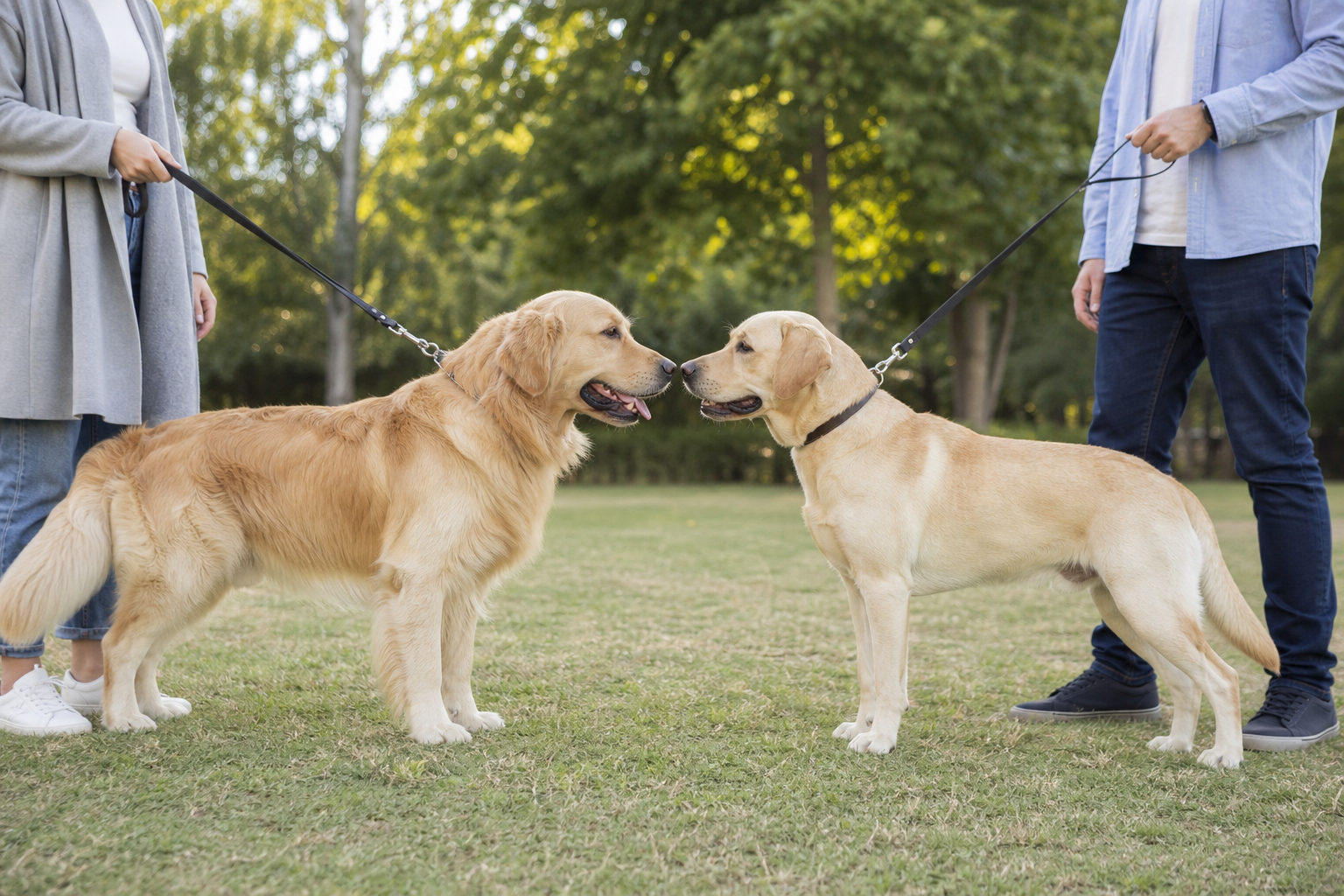
Introduce two large dogs when both have stable basics—or fights can stick for years. Moreover size makes leash control and space planning non-optional. This guide is for info only. Bites bleeding or non-stop fighting need a certified behaviorist and vet—not DIY fixes alone.
For example a friendly adult may still hate same-sex housemates. Therefore this introduce two large dogs guide walks prep neutral ground and red flags in 2026.
First finish cat intros from our introduce large breed cat guide before adding a second dog. After that use our positive reinforcement guide and adoption guide if the new dog is a rescue.
Additionally refresh leash skills from our leash training hub articles before parallel walks.
Furthermore the AKC introducing dogs guide stresses neutral territory and calm handlers.
Why introduce two large dogs needs extra structure
Disclosure: This post has affiliate links. Grey Snout Guide may earn a small fee when you buy through our links. You pay nothing extra.
Big dogs have more mass in a scuffle. However personality and history beat breed labels. In addition one bad fight can create long grudges.
Similarly two handlers on two leashes beat one person holding both collars. Therefore plan help for every outdoor meet.
As a result slow polite hellos beat hoping they will work it out.
Before you introduce two large dogs: fit check
History sex age and resources
Generally pause or hire a pro if:
- Either dog has a bite history with serious wounds
- Resident dog guards food beds or doorways heavily
- Neither dog can sit calmly on leash near other dogs
- You lack separate rooms for weeks of separation
- Puppies under four months meet unknown adults without vet OK
Moreover same-sex pairs can work—but fights are more common in some homes. Therefore ask a behaviorist about your two dogs specifically.
Consequently honest fit beats rushing a second giant for company.
Neutral ground to introduce two large dogs
Parallel walks and brief greets
First meet on neutral turf—not the resident dog’s yard. Also walk parallel on wide paths with handlers between dogs at first.
Outdoor meet rules:
- Loose leashes—not tight choke tension
- Sniff for three to five seconds then call away with treats
- No face-on leash pulling if either dog stiffens
- Skip dog parks for intros—too chaotic
- End on calm notes before either dog melts down
Moreover repeat parallel walks on separate days before home entry.
Home steps when you introduce two large dogs
Yard rooms and crates
First walk the new dog through the yard on leash while resident is inside. Also remove toys bones and food bowls from shared sight lines for weeks.
Generally keep leashes on indoors for early meets—even if fenced yard seemed fine. For instance use our baby gate guide to split rooms between sessions.
Therefore our crate training guide gives each dog a safe solo zone.
Meals and stuff when you introduce two large dogs
Resource guarding prevention
First feed in separate rooms or crates for at least two to four weeks. Also pick up bowls when empty—no wandering into the other dog’s space.
Multi-dog home habits:
- Separate chew times behind gates
- No shared bully sticks on one rug early on
- Extra beds so dogs do not pile on one mat
- Human attention given evenly—avoid always petting the new dog first
- Yard poop pick-up daily—less territory drama
Moreover watch doorways and sofas—common guard spots in giants.
Body language as you introduce two large dogs
Green yellow and red signals
Generally good signs include loose wag play bows and brief sniff then move on. However stiff stare raised hackles and slow stiff tail mean stop and add distance.
Similarly whale eye lip lick and freezing need a break—not more pressure. In addition one yelp can be play—but repeated pinning is not.
Therefore film meets on phone slow motion if unsure—a behaviorist can review clips.
Timeline to introduce two large dogs
Week by week expectations
Week one: Generally separate rooms with gated sniff sessions only. Also short yard meets on leash twice daily if calm.
Week two to four: Moreover longer supervised living-room time with leashes dragging under watch. However still separate when you leave the house.
Month two plus: For instance some pairs relax off leash at home—others need years of management. Never assume trust too soon.
Red flags when you introduce two large dogs
When to stop and get help
Generally call a behaviorist if you see:
- Fights that break skin or need vet care
- One dog cannot enter a room without attacking
- Constant stalking or blocking at doors
- Panic in either dog for days—won’t eat or hides
- Children in the home during unresolved fights
Moreover rehome or permanent separation may be safest—kindness over forcing peace.
FAQs on introduce two large dogs plans
How long until they are friends?
Therefore two to eight weeks for calm tolerance is common. Moreover friendship is optional—peace is the goal.
Should I let them sort it out?
Instead never for giants—fights escalate fast. Guided meets with treats win.
Second dog myths
Will a second dog fix loneliness?
Generally maybe—but our separation anxiety guides note some dogs double stress. Ask a trainer first.
Apartment with two large breeds?
Moreover space and noise matter—article 191 will cover apartment life honestly.
Final recap: introduce two large dogs step by step
First check bite history and guarding. Also parallel walk on neutral ground. Moreover leashed home meets with gates and separate feeding. Similarly watch body language and end early. However call a pro at real fights. Therefore a patient introduce two large dogs plan lowers injury risk and builds a calmer multi-dog home.
Therefore book a parallel walk helper this weekend before home intros. Also remove bones and food bowls from shared rooms tonight. If a fight drew blood last month—pause intros and call a behaviorist first.
Disclosure: This post has affiliate links. Grey Snout Guide may earn a small fee. You pay nothing extra.