
Large breed exercise guide plans must match age joints and weather—not a one-size jog for every giant. Too little builds boredom; too much breaks growing hips. This page shows how much activity large dogs really need.
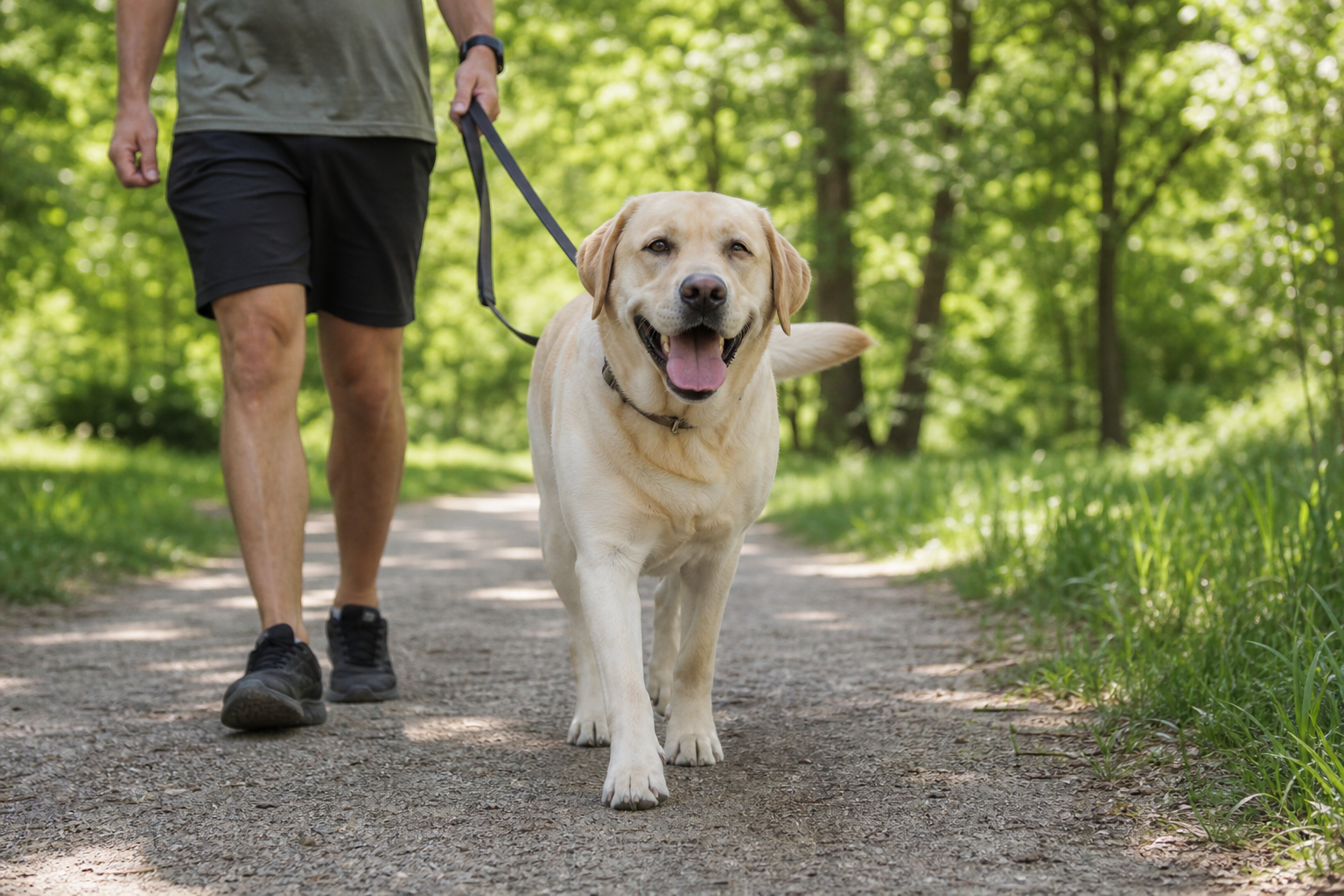
Large breed exercise guide basics split puppies adults and seniors. A six-month Shepherd is not a six-year-old Shepherd. Moreover heat and slick floors change the plan fast. This guide is for info only. Collapse limping or bloated belly after meals need your vet or ER—not more miles.
For example a calm senior Greyhound may need two short walks—not a half marathon. Therefore this large breed exercise guide covers minutes types and red flags in 2026.
First read our puppy guide for year-one caps. After that pair our hip dysplasia guide and arthritis guide when movement hurts.
Additionally see our apartment living guide if you lack a yard but still owe daily output.
Furthermore the AKC exercise for dogs overview notes breed and age matter more than generic step counts.
Why large breed exercise guide plans differ by age
Disclosure: This post has affiliate links. Grey Snout Guide may earn a small fee when you buy through our links. You pay nothing extra.
Giants grow for twelve to twenty-four months. However adult working breeds need more mental work than couch breeds. In addition seniors need joint-friendly motion—not zero walks.
Similarly mental exercise counts—sniff walks puzzle feeders and training reps tire dogs without sprinting. Therefore this large breed exercise guide mixes body and brain work.
As a result you match minutes to your dog’s vet notes—not internet hero stories.
Puppy exercise in the large breed exercise guide
Minutes growth plates and play style
Generally use the five-minutes-per-month-of-age rule as a starting cap for structured exercise—ask your vet to confirm for your breed.
Puppy do list:
- Short sniff walks on soft grass
- Training games indoors between naps
- Swim only when your vet clears joints and ears
- Social meets on leash after vaccine plan
- Plenty of sleep—overtired pups bite more
Puppy avoid list:
- Forced running on pavement
- Hour-long fetch on slick floors
- Stairs marathons before growth plates close
- Dog parks with rough adult play
- Wrestle right after large meals—bloat risk in deep chests
Moreover our puppy guide walks month-by-month habits.
Adult exercise in the large breed exercise guide
Typical daily targets
Generally healthy adult large breeds need 45 to 90 minutes of combined activity per day. For instance split into two walks plus ten minutes of training.
By energy type:
- High drive (Shepherds Malinois types): longer walks plus mental work daily
- Moderate (Labs Goldens): steady walks fetch on grass sniff games
- Lower (many mature Mastiffs): shorter walks focus on weight control
Therefore lean dogs move easier—see our weight loss guide if ribs are hard to feel.
Senior exercise in the large breed exercise guide
Joint-friendly motion
First shorten walks but keep them daily—muscle loss hurts joints faster than gentle motion. Also add our senior care guide for full grey-muzzle plans.
Moreover watch our pain signs guide when your dog skips stairs or lags on familiar routes.
Senior-friendly options:
- Two to three short leash walks per day
- Sniff-focused yard time on non-slip turf
- Swim or hydro when your vet approves
- Low reps of sit stand for muscle maintenance
- Rest days after vet procedures or flare-ups
Similarly use our dog bed guide so rest between walks supports sore hips.
Low-impact options for large breed exercise guide users
When joints or heat limit miles
Generally swimming sniff walks and training games cut pounding. However not every dog likes water—never force.
Moreover mental work tires high-drive dogs when outdoors is unsafe:
- Scatter-feed kibble in grass for sniff hunts
- Stuffed frozen Kong on a mat
- Nose work hides in the apartment
- Trick training from our positive reinforcement guide
Consequently apartment giants can stay calm without illegal marathon balcony pacing.
Heat cold and weather in the large breed exercise guide
When to skip outdoor miles
First skip hard exercise when pavement burns paw pads—test with your hand seven seconds. Also brachy breeds and thick coats overheat fast in humid heat.
Therefore walk at dawn or dusk in summer. Moreover carry water and watch for heavy panting drool or stumbling.
Similarly ice salt and slick snow hurt seniors—use boots or shorten outings when our paw care articles apply.
Signs of too much or too little in the large breed exercise guide
Read your dog weekly
Too little exercise often shows as:
- Destructive chewing and wall scratching
- Non-stop barking in apartments
- Hyper zoomies indoors every evening
- Weight gain and harder rib checks
Too much exercise often shows as:
- Limping after walks that used to be fine
- Reluctance to stand or climb stairs next day
- Excessive panting long after rest
- Sore paws or worn nails from pavement
However sudden collapse needs ER talk—especially deep-chest breeds after meals.
Breed notes for large breed exercise guide planning
Quick examples not rules
Generally Danes and Newfies need careful bloat habits around activity and meals. Also lean sighthounds sprint short—do not treat them like sled dogs daily.
Moreover read breed health pages for your line—German Shepherd, Labrador, or Great Dane guides list joint and heart cautions.
FAQs on large breed exercise guide targets
Is one long walk enough?
Therefore two shorter walks plus sniff time often beat one tiring hike for joints and boredom.
Can I run with my large breed?
Moreover wait until your vet clears growth plates—often twelve to eighteen months. Also avoid hot pavement and post-meal sprints.
Apartments and seniors
How much for apartment dogs?
Generally same minutes—different layout. See our apartment guide for city tricks.
Should seniors still walk?
Instead yes unless your vet says rest—short gentle walks maintain muscle.
Final recap: large breed exercise guide checklist
First match minutes to puppy adult or senior stage. Also mix walks sniff work and training. Moreover protect joints on pavement and stairs. Similarly adjust for heat and weight. However stop when limping or collapse appears. Therefore a smart large breed exercise guide routine keeps giants fit without breaking hips in 2026.
Therefore log this week’s walks and note any next-day limp. Also add ten minutes of sniff games if barking rose lately. If your dog collapsed after exercise—call your vet today.
Disclosure: This post has affiliate links. Grey Snout Guide may earn a small fee. You pay nothing extra.