
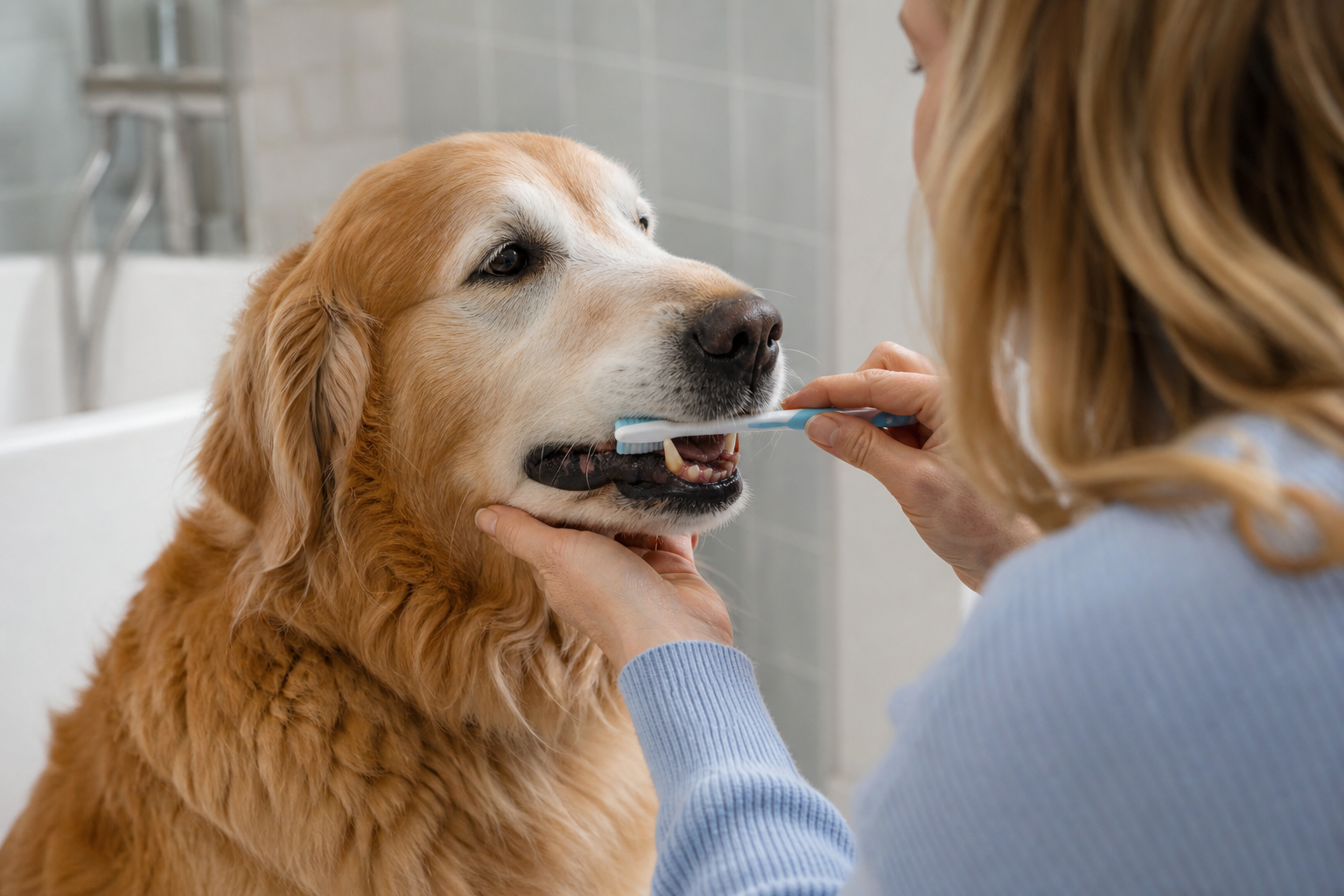
Dog dental disease starts with plaque and inflamed gums then spreads to pain tooth loss and organ stress in large breeds. Most dogs over three already have early signs. This article is for info only. It does not replace vet advice. Broken teeth mouth swelling or refusal to eat needs prompt exam.
For instance bad breath is not normal dog smell. Therefore treat stinky breath as a mouth health signal—not a joke.
In addition daily habits plus vet cleanings protect heart and kidney health over years. Similarly large seniors benefit when pain is caught before they stop eating.
Read our senior care guide for full aging routines beyond teeth alone.
Furthermore our heart disease guide matters because gum infection can stress the heart over time.
What dog dental disease owners should know first
Disclosure: This post has affiliate links. We may earn a small fee if you buy. It costs you nothing extra. We only share gear we trust.
First periodontal disease means bacteria live under the gum line. After that roots loosen and abscesses can form.
For example dog dental disease often hides until owners notice breath change or dropped kibble.
The VCA dental disease guide notes that most adult dogs have some gum inflammation without owners noticing.
To sum up mouth care is whole-body care. Start before senior years when possible.
Why dog dental disease hits large breeds hard
Big jaws long life and hidden mouth pain
Namely large breeds live long enough for years of tartar buildup. Moreover wide jaws can hide rear molars until pain is advanced.
Common risk factors:
- For instance age over three in nearly all dogs regardless of size
- Similarly small daily brushing gaps that add up over years
- Also cracked teeth from hard chews or fetched rocks
- Furthermore chronic pain that lowers mood and activity in seniors
Read our lifespan guide for why long-lived large breeds need early mouth plans.
In contrast toy breeds often get more daily face time. Large dogs need planned mouth checks anyway.
Early signs of dog dental disease
Breath gums chewing changes and drool
By comparison early signs look like picky eating or slow chewing. However red gums and tartar lines confirm mouth trouble.
Early signs to watch:
- First persistent bad breath beyond normal dog scent
- Next red swollen or bleeding gums when brushing
- Then yellow-brown tartar along the gum line
- Also chewing on one side or dropping food from the mouth
- Lastly pawing the face or avoiding head touch
Nevertheless sudden jaw swelling or open-mouth breathing needs same-day vet care—not home brushing alone.
How vets diagnose and treat dog dental disease
Oral exam X-rays and professional cleaning
Clearly home checks cannot see roots under gums. Your vet uses exam plus imaging under safe anesthesia.
Typical vet steps:
- In particular awake exam scores tartar and gum inflammation
- Beyond that dental X-rays find hidden root disease
- Similarly scaling and polishing happen under anesthesia
- Also extractions relieve pain when teeth cannot be saved
The AKC dental care overview also stresses that professional cleanings complement—not replace—home brushing.
Therefore ask your vet for a mouth grade each wellness visit. Track it year to year.
Prevention habits for dog dental disease
Brushing chews and steady vet schedules
In practice prevention beats emergency extractions for cost and comfort alike.
Daily and monthly habits:
- For instance brush with dog toothpaste—not human paste—several times weekly minimum
- Similarly use vet-approved dental chews sized for large jaws
- Also schedule professional cleanings when your vet recommends them
- Furthermore skip rock-hard bones that crack large breed teeth
Meanwhile review our senior nutrition guide when soft food helps sore mouths temporarily.
Above all start slow with short brush sessions. Praise beats force every time.
Home care when dog dental disease is active
Comfort feeding and post-cleaning routines
Overall recovery after cleaning is usually fast for large breeds. Next keep soft food and calm days as your vet advises.
Furthermore pain control may follow extractions for a few days.
Comfort habits at home:
- Offer softened kibble or wet food when chewing hurts after treatment
- Keep water bowls easy to reach on the same path nightly
- Store our first aid kit basics for minor mouth cuts from chews
- Resume brushing gently once your vet clears the gum line
Nevertheless skip tug games until healing finishes after extractions.
Dog dental disease and whole-body health
Heart kidneys and senior brain links
Clearly mouth bacteria can enter the bloodstream. Moreover chronic oral pain mimics aging slowdowns.
Whole-body links to track:
- For instance heart murmur dogs need extra mouth care per cardiology advice
- Similarly kidney seniors may need anesthesia plans tailored by your vet
- Also mouth pain can worsen night pacing in cognitive dysfunction cases
- Lastly better chewing supports nutrition when large breeds need lean weight
In addition review our arthritis guide when jaw pain plus joint pain stack on bad days.
FAQs – dog dental disease
Is bad breath always dental?
For example kidney disease and diabetes can change breath too. Therefore your vet should sort the cause—not guess from scent alone.
Are anesthesia-free cleanings enough?
They polish visible tartar only. In addition roots stay untreated without proper vet dental work.
Brushing bones and cost
How often should I brush?
Daily is ideal. Similarly three times weekly helps more than monthly bursts.
Do dental chews replace brushing?
Meanwhile chews support care—they do not replace brushing and vet cleanings together.
Final recap: dog dental disease prevention done right
Overall treat bad breath and red gums as vet topics—not normal aging.
Next book professional cleanings on your vet schedule—not when teeth are loose.
Then build short daily brush habits your large dog can tolerate.
Still skip chews that crack teeth on powerful jaws.
As another option lean on our senior care guide for full mouth-to-mobility routines.
On balance early mouth care beats emergency extractions when dog dental disease signs first appear.
For example lift the lip and photo gum color monthly. Do not wait for odor alone.
Similarly log cleanings and extractions in your phone notes. Above all brush-plus-vet plans give most large breeds healthier years.
Disclosure: This post has affiliate links. Grey Snout Guide may earn a small fee. You pay nothing extra.