
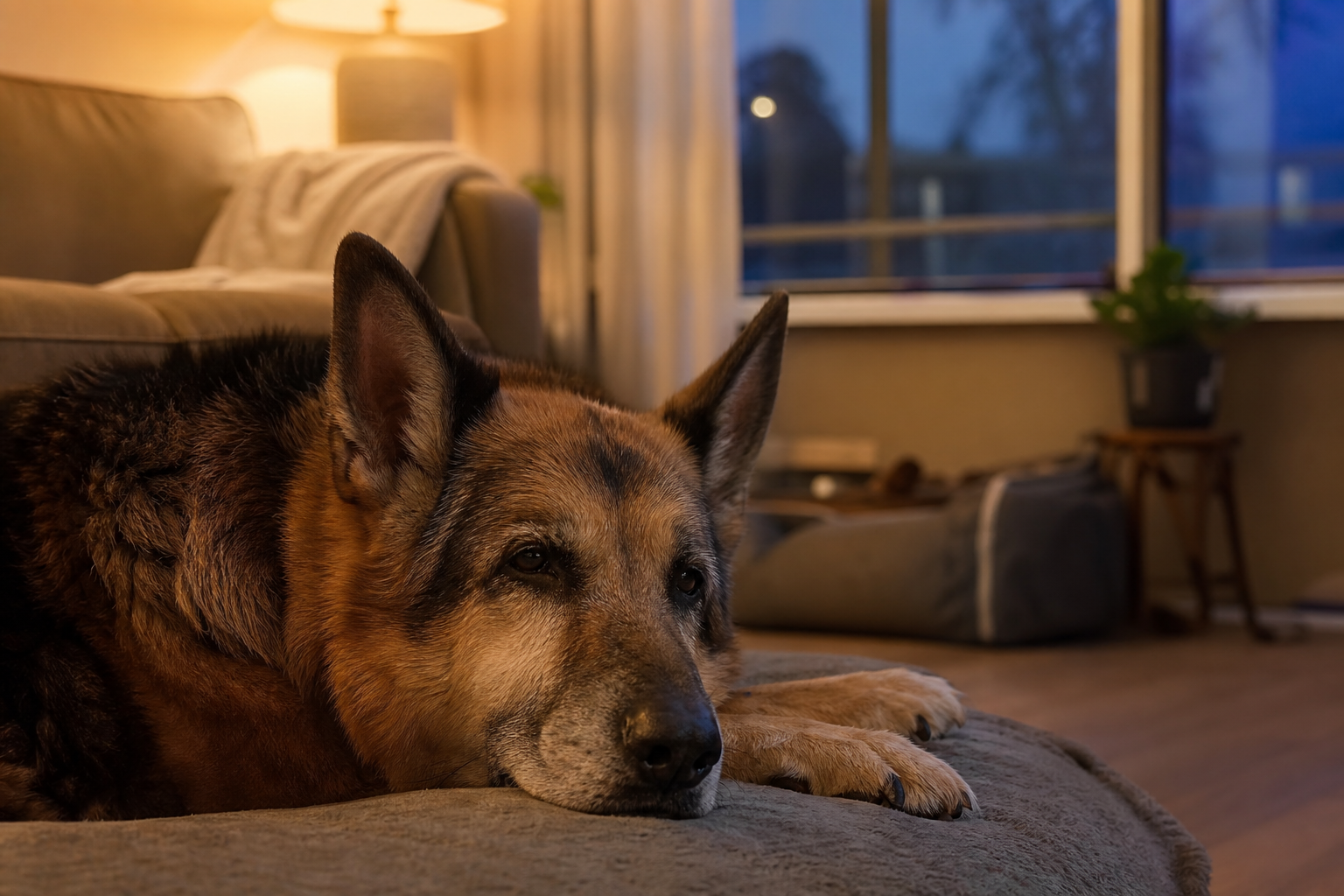
Dog cognitive dysfunction looks like confusion pacing at night and forgetting old routines in senior large breeds. German Shepherds Labs and Golden Retrievers often show signs after age nine. This article is for info only. It does not replace vet advice. Sudden severe confusion may signal pain infection or other urgent issues—not dementia alone.
For instance a dog that gets stuck in corners may not be stubborn. Therefore know brain-age signs before you blame bad behavior alone.
In addition steady routines and vet meds can slow decline for many dogs. Similarly a calm home layout cuts fear when memory fades.
Read our senior care guide for full aging support beyond brain changes.
Furthermore our incontinence guide helps when bathroom accidents differ from confusion patterns.
What dog cognitive dysfunction owners should know first
Disclosure: This post has affiliate links. We may earn a small fee if you buy. It costs you nothing extra. We only share gear we trust.
First cognitive dysfunction means the aging brain processes less clearly over time. After that sleep cycles mood and memory can shift month by month.
For example dog cognitive dysfunction is often called dog dementia in plain talk. Vets may say CCD for short.
The VCA cognitive dysfunction guide lists disorientation interaction changes sleep shifts and house soiling as core sign groups.
To sum up brain aging is medical—not spite. Kind structure beats scolding every time.
Why dog cognitive dysfunction shows up in large breeds
Longer lives and bigger bodies aging together
Namely large breeds that reach senior years have more time for brain changes to appear. Moreover pain from arthritis or heart limits can mimic or worsen confusion.
Factors vets often review:
- For instance age over eight to ten in many large breeds
- Similarly chronic pain that disrupts sleep and focus
- Also hearing or vision loss that increases startle at night
- Furthermore untreated anxiety that stacks on top of CCD signs
Read our lifespan guide for breed age context when signs first appear.
In contrast one bad night does not equal dementia. Patterns over weeks matter more.
Early signs of dog cognitive dysfunction
Disorientation pacing and routine loss
By comparison early signs look like stress or hearing loss. However repeat patterns over weeks point toward CCD.
Early signs to watch:
- First getting stuck in corners or behind furniture
- Next pacing or whining more at night (sundowning)
- Then forgetting cues they knew for years
- Also staring blankly or failing to greet family
- Lastly house soiling in odd places while seeming unaware
Nevertheless sudden collapse extreme thirst or painful movement needs urgent vet care—not routine dementia talk alone.
How vets diagnose dog cognitive dysfunction
Rule out pain infection and sensory loss
Clearly no single blood test proves CCD. Your vet excludes other causes first.
Typical diagnostic steps:
- In particular a full exam checks pain spine vision and hearing
- Beyond that urinalysis and blood work rule out UTI kidney and metabolic issues
- Similarly blood pressure and thyroid tests catch hidden triggers
- Also owner history forms score disorientation sleep and interaction changes
The AKC cognitive dysfunction overview also notes that treating pain and infection can improve signs that looked like dementia.
Therefore list sign start dates and night patterns before your visit.
Treatment paths for dog cognitive dysfunction
Meds diet enrichment and vet follow-ups
In practice plans mix prescription support brain-friendly habits and pain control.
Common treatment paths:
- For instance selegiline helps some dogs per vet prescription plans
- Similarly special senior diets may support brain health when your vet agrees
- Also pain control for arthritis often improves sleep and mood fast
- Furthermore predictable walks and puzzle time keep minds engaged gently
Meanwhile review our arthritis guide when sore joints may fuel night pacing.
Above all never combine new supplements with Rx meds without vet approval.
Home care for dog cognitive dysfunction
Routines night safety and calm spaces
Overall stable days reduce panic when the brain feels lost.
Next keep furniture layout steady so paths stay familiar.
Furthermore night setup cuts falls and midnight stress for large seniors.
Practical home setup:
- Use soft night lights near beds and water bowls on the same path nightly
- Keep an orthopedic bed in a quiet low-traffic corner
- Add ramps so confused dogs do not miss jumps and panic
- Block unsafe zones with gates when pacing loops get risky
Nevertheless accidents happen as awareness fades. See our incontinence guide when leaks are medical—not confusion alone.
Prevention and awareness for dog cognitive dysfunction
Brain health habits across the lifespan
Clearly you cannot stop all brain aging. Still lifelong habits support sharper senior years.
Practical awareness steps:
- For instance keep daily walk and meal times steady year round
- Similarly offer gentle scent games and food puzzles in adult years
- Also treat hearing vision and dental pain early so senses stay clear
- Lastly log odd nights on your phone before vet visits stack up
In addition review our DM guide when hind weakness—not memory—drives most changes.
Similarly our heart disease guide helps when fatigue not confusion limits activity.
FAQs – dog cognitive dysfunction
Is dog dementia the same as CCD?
For example owners say dog dementia in plain talk. Therefore vets often use cognitive dysfunction or CCD on charts.
Can meds reverse it?
Meds may slow signs for some dogs. In addition they work best with routines and pain control together.
Sleep accidents and quality of life
Why worse at night?
Similarly sundowning is common. Calm lights short potty trips and steady beds help many large breeds.
When is quality of life the focus?
Meanwhile track good hours versus fear loops weekly. Your vet can help you judge that line with honesty.
Final recap: dog cognitive dysfunction care done right
Overall treat new confusion patterns as a vet visit—not a discipline issue.
Next rule out pain UTI and sensory loss before you label dementia.
Then build steady meals walks and night paths with your vet plan.
Still add ramps beds and calm lighting for safe senior nights.
As another option lean on our senior care guide for full aging routines.
On balance patience plus structure beat fear when dog cognitive dysfunction signs first appear.
For example film one evening walk loop monthly. Do not rely on memory alone at vet visits.
Similarly note sleep and pacing times in a simple phone log. Above all vet care plus calm home habits give most large seniors safer golden years.
Disclosure: This post has affiliate links. Grey Snout Guide may earn a small fee. You pay nothing extra.