
German Shepherd hip dysplasia is one of the most common joint issues in the breed. This page covers early signs vet treatment options and daily prevention habits that protect your dog’s hips.
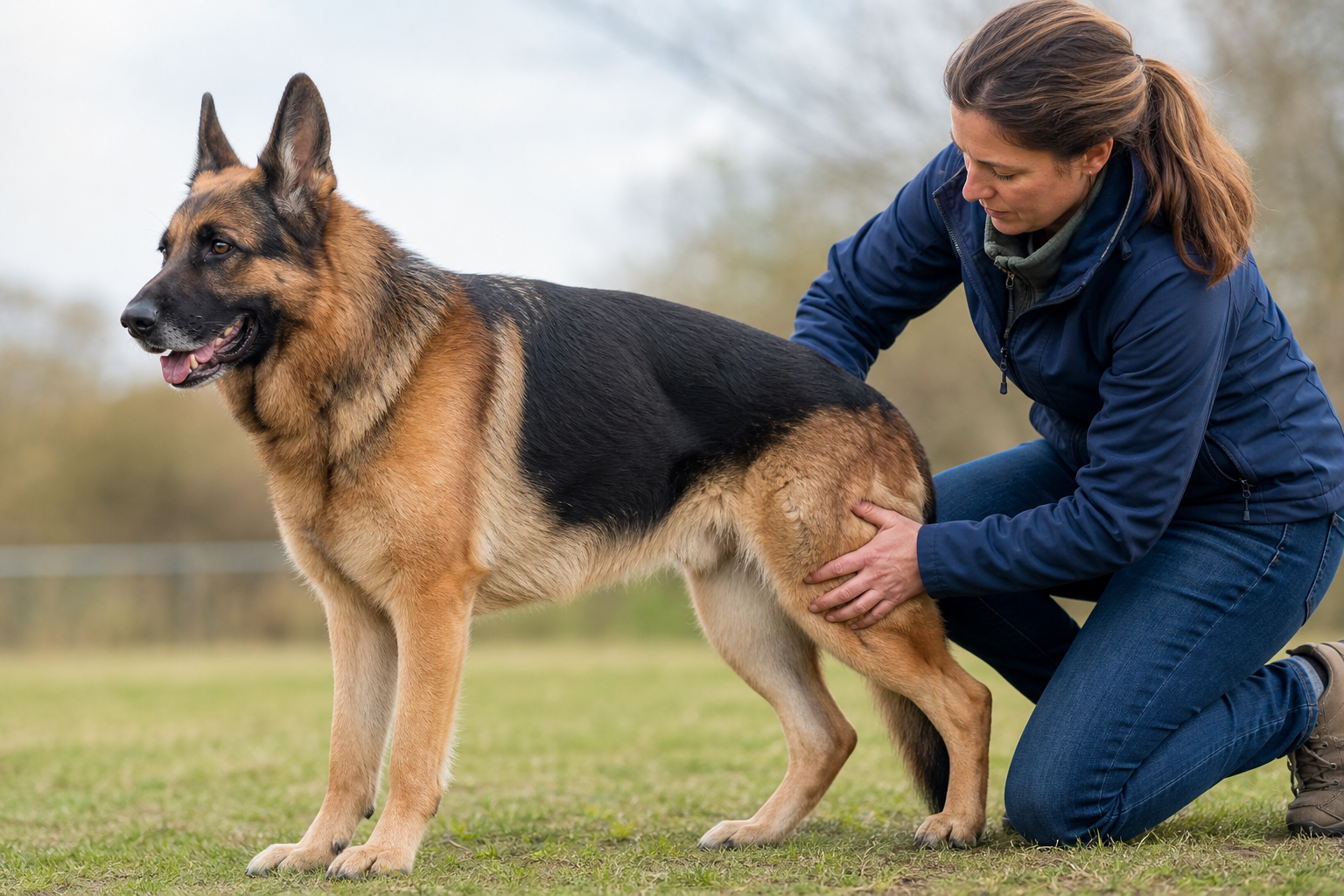
German Shepherd hip dysplasia often starts before you see an obvious limp. Puppies may bunny-hop on grass. Adults may slow on stairs. Moreover many owners blame age when joints are actually painful. This guide is for info only. Sudden collapse or non-weight-bearing lameness need emergency vet care now.
For example a three-year-old GSD who refuses jumps may have hip pain—not stubbornness. Therefore this German Shepherd hip dysplasia guide lists signs treatment paths and prevention in 2026.
First read our German Shepherd health problems guide for full breed risks. After that see our hip dysplasia in large breeds guide for general joint care.
Additionally track pain cues with our pain signs guide and keep weight lean with our weight loss guide.
Furthermore the AKC German Shepherd health page notes hip disease as a top breed concern.
Why German Shepherd hip dysplasia is so common
Disclosure: This post has affiliate links. Grey Snout Guide may earn a small fee when you buy through our links. You pay nothing extra.
Shepherds grow fast and stay active for years. However genetics plus rapid growth on the wrong food can loosen hip joints. In addition extra weight multiplies pain on weak hips.
Similarly breeder hip scores help you know risk early. However no puppy is guaranteed clear for life. Therefore prevention and lean weight still matter after you buy.
As a result early signs plus vet plans beat waiting for a crisis limp.
Early signs of German Shepherd hip dysplasia
What owners notice at home
Generally signs show up in puppies or young adults. For instance watch for these clues:
- Bunny-hopping when running on grass
- Slow to stand after long naps
- Reluctance to jump into cars or on couches
- Narrow stance in the rear legs or swaying gait
- Less interest in play that needs sharp turns
Therefore do not dismiss stiffness as laziness. Moreover senior dogs can hide pain until damage advances.
How vets diagnose German Shepherd hip dysplasia
Exams and imaging
First your vet will watch your dog walk and feel the hips. Also x-rays under sedation show how loose or arthritic joints are.
Generally OFA or PennHIP style screening helps breeders. Therefore ask for paperwork if you buy from a breeder or rescue with history.
Meanwhile blood work may run before long-term pain meds—not every stiff dog needs NSAIDs on day one.
Treatment options for German Shepherd hip dysplasia
From conservative care to surgery
Moreover treatment depends on age pain level and x-ray findings. Mild cases often start with:
- Weight loss if ribs are hard to feel
- Low-impact exercise on grass when your vet approves
- Physical therapy and home ramps
- Pain control only under vet supervision
Therefore severe cases in young dogs may need surgery. Options can include juvenile pubic symphysiodesis TPO FHO or total hip replacement per your surgeon.
Similarly use our senior care guide when grey muzzles need softer routines.
Prevention of German Shepherd hip dysplasia
Puppy growth and adult habits
First choose a large-breed puppy food until your vet clears adult switch. Also keep growth steady—not chunky puppies for photos.
Prevention checklist:
- Buy from breeders who publish hip screening results
- Avoid forced miles on pavement before growth plates close
- Keep adults lean for life—weight is the cheapest joint drug
- Use ramps early so dogs do not launch off SUVs daily
- Yearly vet exams with gait checks even when your dog looks fine
Consequently prevention cannot erase bad genes. However it can delay pain and protect quality years—see our German Shepherd lifespan guide.
Daily home care for German Shepherd hip dysplasia
Ramps bedding and exercise
Generally non-slip rugs help indoors. Also orthopedic beds reduce pressure on sore hips. Moreover short walks twice a day beat one long hike that fries joints.
However heat and cold swings can worsen stiffness. Therefore shorten outdoor time on icy or very hot days.
When German Shepherd hip dysplasia needs ER care
Red flags beyond a mild limp
Moreover go to emergency care for sudden non-weight-bearing lameness. Also seek help if your dog cannot rise after rest or cries when the hip is touched.
Therefore mild next-day stiffness after play differs from acute collapse or severe pain cries.
FAQs on German Shepherd hip dysplasia
Can hip dysplasia be cured?
Generally there is no cure for loose hip joints. However pain and function can improve with weight care meds therapy or surgery.
Is surgery always required?
No. Moreover many dogs do well for years with lean weight and vet-led pain plans.
Puppies and breeding
Can puppies be screened?
Therefore preliminary exams exist. Also official hip scores are often done after growth slows—ask your vet for timing.
Do supplements fix hips?
Instead ask your vet before you buy stacks online. Supplements do not replace weight control and proven vet care.
Final recap: German Shepherd hip dysplasia step by step
First learn early signs like bunny-hopping and slow stands. Also keep weight lean and use ramps. Moreover get x-rays and a vet plan before pain becomes chronic. Similarly buy from screened lines when possible. However when sudden lameness or collapse appears go to ER. Therefore steady German Shepherd hip dysplasia care keeps active dogs moving longer.
Therefore book a gait check at your next wellness visit. Also weigh your Shepherd tonight. If stairs look harder than last month—call your vet for hip exams instead of waiting.
Disclosure: This post has affiliate links. Grey Snout Guide may earn a small fee. You pay nothing extra.