
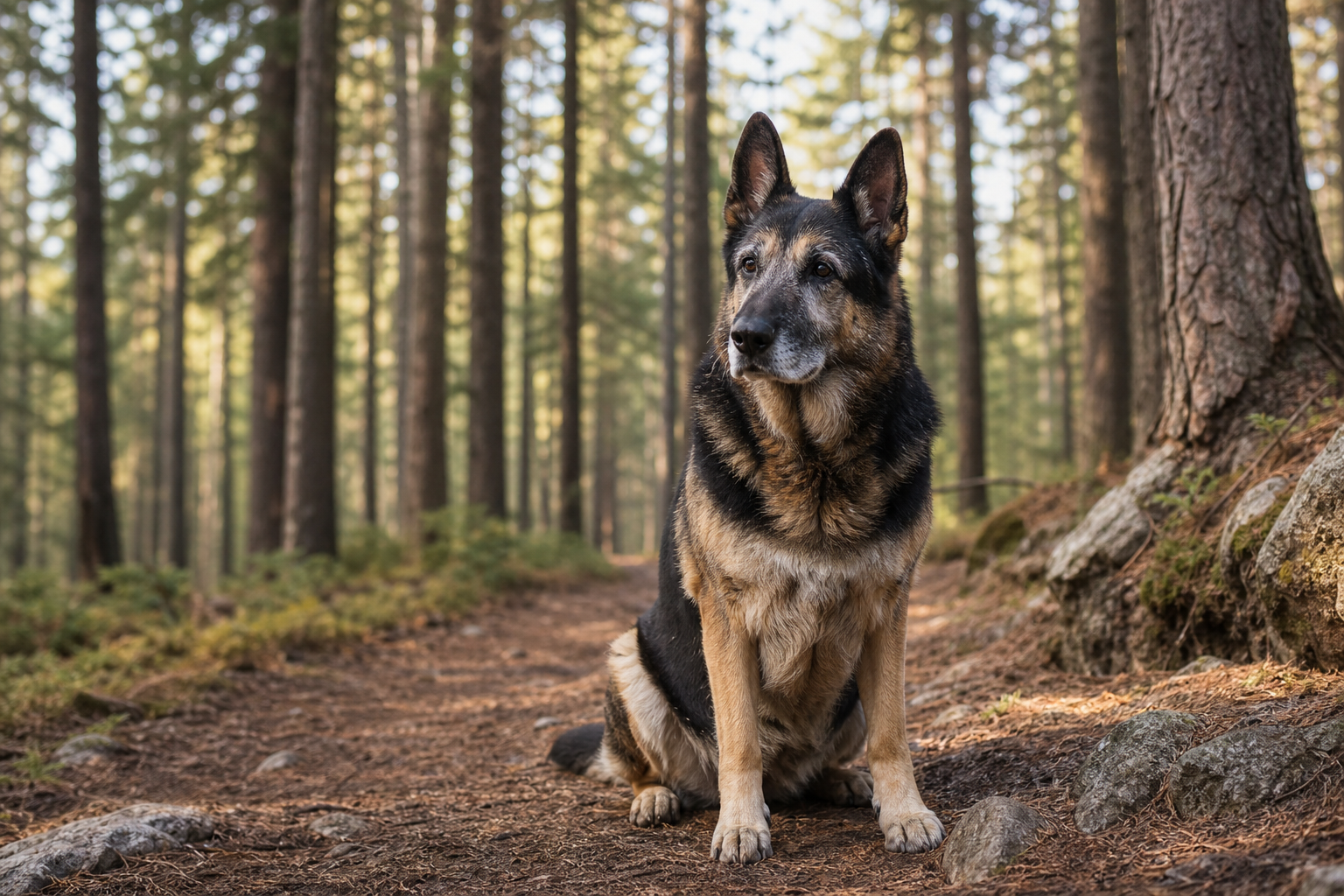
German Shepherd arthritis often starts as stiff hips and slow stairs—not a dramatic limp on day one. Many Shepherds hide joint pain until elbows and spine wear down after years of work play and hard turns. Moreover owners blame age when the dog is actually sore. This guide is for info only. Sudden collapse or a leg that will not bear weight needs an ER vet now.
For example a six-year-old Shepherd may skip the car jump but still focus on training cues. Therefore this German Shepherd arthritis guide covers signs clinic plans and daily management in 2026.
First read our arthritis in large breed dogs guide for general joint care. After that see our hip dysplasia guide when rear-leg stiffness dominates.
Additionally track pain with our pain signs guide before you blame drive loss on attitude alone.
Furthermore the AKC German Shepherd health overview notes joint disease as a common issue in the breed.
Why German Shepherd arthritis is so common
Disclosure: This post has affiliate links. Grey Snout Guide may earn a small fee when you buy through our links. You pay nothing extra.
German Shepherds are active working dogs with high hip and elbow dysplasia risk in many lines. However hard turns on slick floors ACL tears and extra weight multiply joint wear fast. In addition spine arthritis appears in some seniors alongside hip pain.
Similarly lean weight is the biggest home lever owners control. Structured low-impact work beats daily hard ball on pavement. However home care never replaces X-rays and pain plans from your clinic.
As a result early stiffness deserves vet exams—not wait until your Shepherd refuses stairs.
Early signs of German Shepherd arthritis
What owners miss before the obvious limp
Generally stiffness after rest is the first clue many owners notice. Also slow starts on stairs shorter patrol walks and less eager sit-to-stand moves appear next.
Early signs to watch:
- Morning stiffness that eases after a short warm-up walk
- Reluctance to jump into vehicles or onto platforms
- Wide rear stance or bunny-hopping on fast runs
- Licking at hips elbows or carpus after activity
- Less drive on known cues—not only age-related focus drift
Therefore treat new patterns as vet topics—not normal working-dog toughness alone.
Advanced German Shepherd arthritis signs
When joint pain is harder to hide
Moreover advanced signs need clinic care soon:
- Clear limp on one or more legs during and after walks
- Muscle loss in thighs or shoulders on the sore side
- Difficulty rising on slick kitchen or tile floors
- Yelping when hips spine or elbows are touched
- Refusal to climb stairs or complete formerly easy routes
However sudden non-weight-bearing lameness needs same-day or ER imaging—not rest alone for weeks.
Daily management for German Shepherd arthritis
Weight traction and joint-friendly work
First keep your Shepherd lean. Ribs should be easy to feel under the coat. Also use our weight loss guide if pounds crept up during less active months.
Home comfort habits:
- Non-slip runners on main paths from bed to door
- Ramps for cars and training platforms when your vet approves
- Short sessions on grass or dirt—not only pavement pivot work
- Soft beds from our crate pad guide in rest zones
- Bed stairs from our bed stairs guide when jumps are off limits
Moreover our joint balm guide covers spot rub comfort only with vet OK—not a Rx replacement.
Exercise and training with German Shepherd arthritis
Keep purpose without flare days
Generally rest alone makes stiff Shepherds worse over time. However the right movement plan matters. Therefore swap long hard runs for sniff walks balance work and calm training when your vet OKs the load.
Also read our senior care guide when grey-muzzle Shepherds need full routine shifts. Similarly our Golden Retriever arthritis guide compares daily care patterns on another high-risk breed.
Consequently many homes use two or three short outings daily instead of one long hard session.
Vet care for German Shepherd arthritis
Diagnosis pain plans and follow-up
Generally home guesswork cannot stage arthritis. Your vet uses exams gait checks and imaging together.
Typical clinic steps:
- Physical exam with hip elbow and spine checks
- X-rays when limp patterns point to dysplasia ACL or spine wear
- Blood work before NSAIDs or long-term pain meds
- Weight targets and recheck pain scores each visit
- Rehab or orthopedic referral when surgery is on the table
Therefore ask for a written pain plan and recheck date—not open-ended meds without labs.
In addition the AVMA pet care basics stress vet-led pain control over human drug guesswork.
German Shepherd arthritis vs degenerative myelopathy
Do not confuse rear weakness types
Generally arthritis limps often improve after warm-up walks. Meanwhile degenerative myelopathy causes progressive rear weakness without clear pain on many exams. However both need clinic work—not home diagnosis from video clips alone.
Consequently tell your vet if weakness worsens without limp or if paws scrape on floors.
FAQs on German Shepherd arthritis
At what age do German Shepherds get arthritis?
Generally signs often start between five and eight years. Moreover some dogs show early stiffness at four with dysplasia history. However any sudden limp at any age needs a vet exam.
Are supplements enough for German Shepherd arthritis?
Instead ask your vet after blood work. Supplements may support a Rx plan—they rarely replace pain control on moderate to severe arthritis alone.
Daily life notes
Can my Shepherd still do nose work or obedience?
Therefore low-impact brain games often fit when running is cut back. Similarly stop sessions when limps appear after training.
Do sloped yards make arthritis worse?
Meanwhile steep daily hills can flare sore hips. Also use flat routes and ramps when your vet flags joint pain.
Final recap: German Shepherd arthritis step by step
First watch stiff mornings slow stairs and drive changes. Also keep weight lean and add traction rugs at home. Moreover book vet exams for new limps—not month-long rest guesses. Similarly use ramps short walks and pain plans from your clinic. However when a leg will not bear weight go to ER. Therefore steady German Shepherd arthritis management keeps more working years in 2026.
Therefore schedule a joint check at your next wellness visit. Also weigh your Shepherd tonight. If morning stiffness is new this month—call your vet now.
Disclosure: This post has affiliate links. Grey Snout Guide may earn a small fee. You pay nothing extra.