
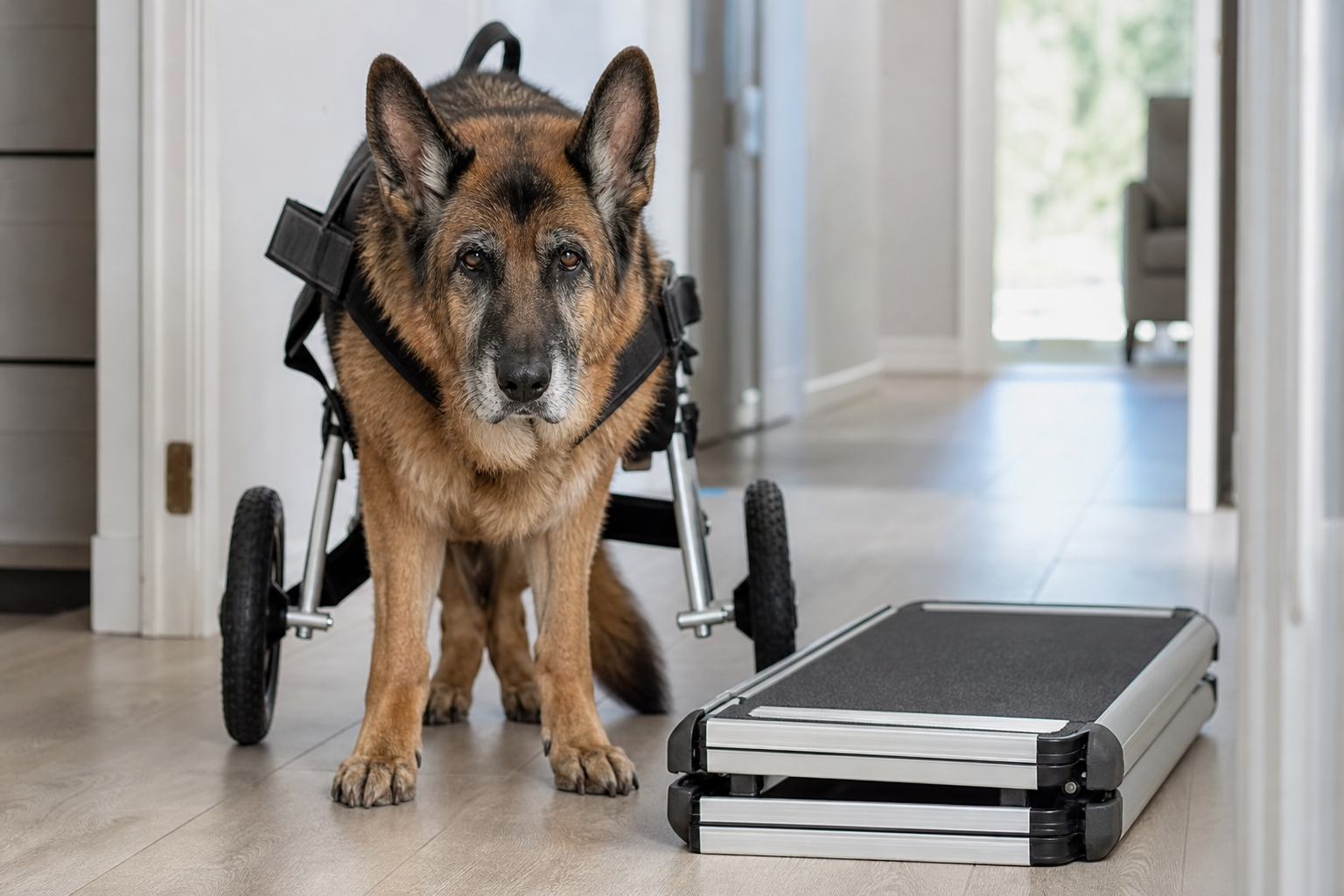
Dog mobility aids are not one-size-fits-all for a 100 lb shepherd. Ramps harnesses and carts solve different jobs. This article is for info only. It does not replace your vet or a certified rehab pro.
Many owners buy the wrong tool first. Therefore match each dog mobility aids pick to your dog’s weak spots—not to what worked for a neighbor’s Lab.
Pain may come from arthritis, hip dysplasia, or degenerative myelopathy. Moreover extra weight makes every aid work harder. Similarly read our arthritic stairs guide when home climbs still happen daily.
Read our ramp roundup, harness roundup, and wheelchair roundup after you pick a lane below.
Why dog mobility aids matter for giant breeds
First big dogs hit joints with more force per step. Also owner backs wear out from repeated belly lifts. After that the right aid can delay injury spirals.
The AVMA senior pet health tips urge safe movement and weight control. They also stress vet exams before you self-diagnose lameness.
To sum up smart dog mobility aids plans often stack two tools—not a single magic product.
Ramps as dog mobility aids
Best for cars couches and low jumps
Namely ramps cut impact from jumps. Humans may still need to guide the first weeks.
Ramps shine when:
- Your dog still walks but refuses SUV or bed leaps
- You want less daily load on hips and elbows
- Space allows a gentle slope with grip tape or carpet
- Pain is moderate—not total hind collapse
Nevertheless steep cheap ramps fail giants fast. Instead see ramp vs stairs before you buy steps.
Therefore pair home ramps with our car ramp guide when travel height is the main block.
Harnesses as dog mobility aids
Best for supported walks and short lifts
By comparison harnesses help you share the load. Next fit handles where your vet or rehab tech points—not random belly grabs.
Harness shine when:
- Rear legs wobble but still bear some weight
- You need help on stairs grass or slick tile
- Post-surgery dogs need controlled potty trips
- You want a bridge before a cart is needed
Clearly choose XL deep-chest sizing. However a walking no-pull harness is not the same as a lift harness.
In practice many families use a mobility harness plus a ramp at the couch the same week.
Carts and wheelchairs as dog mobility aids
Best for weak or paralyzed rear legs
Overall carts mean rear-wheel or full-support wheelchairs. Also they return outdoor joy when legs cannot carry full weight.
Cart shine when:
- Hind legs drag or knuckle on pavement
- DM or nerve disease is progressing with vet follow-up
- Harness-only walks leave your dog exhausted in minutes
- Your vet says supported rolling is safe for heart and lungs
Meanwhile carts need fitting time. Likewise measure chest width and leg length before you order.
Nevertheless wheelchairs are not lazy shortcuts. Instead they are tools when biology outruns braces and ramps alone.
Ramps vs harnesses vs carts — quick comparison
Pick the lead tool first
In addition use this table as a talk starter with your clinic—not a diagnosis chart.
At-a-glance guide:
- Ramps — cut jump stress; dog still climbs with paws
- Harnesses — you assist balance and lifts; dog still walks
- Carts — wheels carry hind or full body weight on walks
- Combo — ramp at bed plus harness for yard is common
- Cart plus ramp — many DM dogs use both by late stages
Additionally track pain signs weekly as you add gear. Furthermore log what tool lowered limping most.
How to introduce dog mobility aids safely
Training vet checks and floors
Clearly test gear on good pain days first. Overall keep sessions under five minutes at the start.
Intro tips:
- Reward calm sniffing before the first ramp climb
- Practice harness lifts on grass before stairs
- Let wheelchairs sit open indoors before rolling outdoors
- Add non-slip runners where paths turn
Therefore ask about physical therapy homework that matches each aid.
Nevertheless sudden hind paralysis needs same-day vet care—not Amazon overnight carts alone.
FAQs – dog mobility aids for large breeds
Which aid first?
For example start with ramps if jumps are the main trigger. Add a harness when walks slip on grass.
Cart too early?
Instead carts help when rear drive is poor despite pain control. Your vet can stage the shift.
Cost and combos
Buy all three?
Meanwhile many homes own a ramp and harness for years before carts. Budget in phases—not one panic cart order.
Insurance cover aids?
In short rarely for gear alone. See our insurance guide for policy limits.
Final recap: dog mobility aids compared
Overall ramps protect joints from jumps. Also harnesses share load on walks and stairs. Moreover carts return distance when hind legs fail. However measure fit and vet-clear each step. Finally layered dog mobility aids beat guessing one gadget for every giant breed story.
For instance list your top three daily obstacles—bed car porch—before you shop.
Similarly book a vet mobility check before you spend on a cart. Above all the right aid is the one your dog actually uses—not the one with the best ad photo.
Disclosure: This post has affiliate links. Grey Snout Guide may earn a small fee. You pay nothing extra.