
Harness vs collar senior is the walk fork when your 90 lb Lab still pulls but his neck stiffens on cold mornings. Moreover harnesses spread force across the chest while collars keep ID simple and light. Therefore this guide compares both for senior large breeds in 2026.
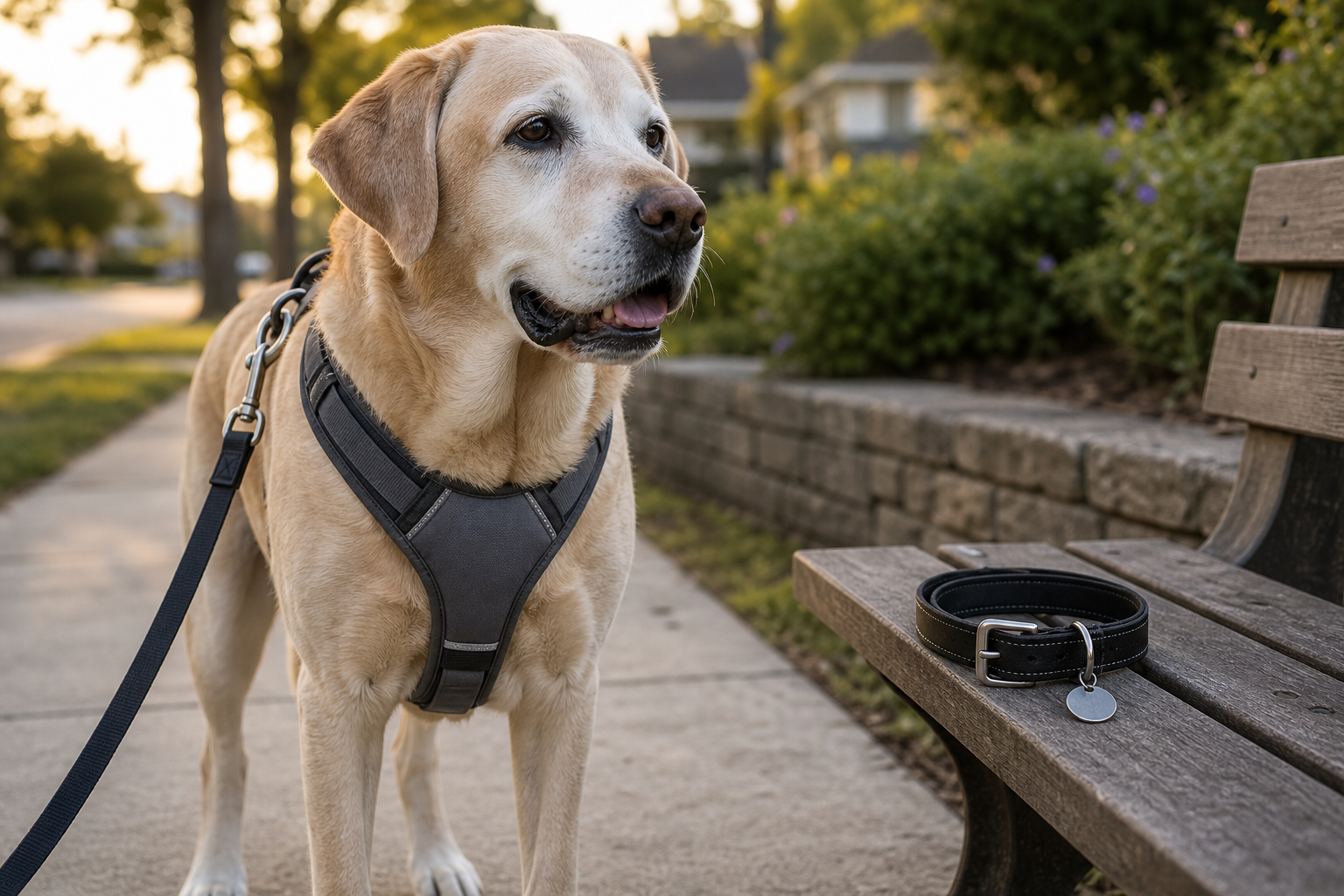
Moreover harness vs collar senior debates often skip trachea math: neck-only pressure hurts aging throats on powerful pullers. In addition stiff shoulders can make harness buckles harder to reach. This guide is for info only. Lunging or bite risk needs a certified trainer—not only gear swaps.
For example your Shepherd may walk calmly on a harness but cough on a flat collar. Meanwhile the right harness vs collar senior stack depends on pull force neck arthritis and ID needs in 2026.
Additionally see our senior harness guide for padded walk rigs.
After that read our dog collar Top 6 guide for wide-band ID picks.
Furthermore our harness vs head halter guide covers extreme pullers—not this collar fork.
Similarly the Humane Society collar guidance warns against choke pressure on the throat.
Overall the AVMA pet care basics stress safe restraint on every outing.
Short answer: harness vs collar senior for giants
Disclosure: This post has affiliate links. Grey Snout Guide may earn a small fee when you buy through our links. You pay nothing extra.
Generally choose a front-clip harness for daily walks when your senior still pulls or has neck arthritis. Meanwhile keep a flat or martingale collar for ID tags at home and calm yard time. Consequently many XL homes walk on harness and tag on collar—not one tool for every moment.
Harness vs collar senior comparison table
Side-by-side for aging large breeds
Meanwhile use this chart before you retire old gear. In addition measure neck and chest girth after winter weight shifts.
| Factor | Harness | Collar |
|---|---|---|
| Pressure point | Chest and shoulders mainly | Neck and throat |
| Pull control | Front-clip steers body | Weak on 80 lb draggers |
| Neck arthritis | Often gentler on stiff necks | Can worsen cough or pain |
| ID tags | Some rigs have tag rings | Natural tag home |
| On/off speed | More steps on sore shoulders | Fast clip for potty breaks |
| Handler assist | Top handle on some senior rigs | No lift support |
| Best default for XL seniors | Daily walks with any pull | ID plus calm low-pull moments |
Therefore the harness vs collar senior choice is comfort and control—not brand hype. Moreover pair walk gear with our leash guide for solid snaps.
Harness vs collar senior: when harness wins
Daily walks pullers and stiff necks
Moreover walk harnesses route the leash to chest clips or back rings. Also padded straps cut rub on thin senior coats. In addition reflective trim helps dusk walks on shorter winter days.
Harness pros on senior giants:
- Spreads pull force off the trachea
- Front-clip helps redirect 70–100 lb draggers
- Top handles assist balance on slick walks
- Fits deep chests better than one neck band
- Pairs with loose-leash training plans
Consequently harnesses suit most aging XL dogs on real walks. Nevertheless buckles can be hard when shoulders are stiff.
Harness cons:
- More time to fit over arthritic legs
- Wrong size can chafe behind elbows
- Not a substitute for lift harnesses on stairs
- Some dogs chew straps when bored
Therefore browse our senior harness guide for Y-front picks. Similarly use our stop pulling guide for training steps.
Harness vs collar senior: when collar wins
ID tags and calm low-force moments
Generally flat collars carry tags and slide on fast for yard potty trips. Meanwhile martingale styles help narrow heads without full choke chains. In addition wide bands spread pressure better than thin nylon on heavy tags.
Collar pros on senior giants:
- Lightweight for quick backyard exits
- Clear home for rabies and phone tags
- Easy for sitters to clip a short lead
- Martingale option for slim-neck breeds
- Less bulk in crate rest between walks
As a result collars excel for ID and calm handlers—not highway-pull walks. Furthermore they pair with our martingale guide on escape-prone seniors.
Collar cons:
- Neck pressure on strong pullers
- Risky on trachea or cervical pain
- Easy to slip if fit is loose on weight loss
- No chest support on wobbly gait
Meanwhile see our collar Top 6 guide for wide-band fits. In addition check two-finger room after every weight change.
Harness vs collar senior by scenario
Pick the right gear today
Therefore match tool to walk type—not only habit from puppy years. Similarly revisit fit after arthritis flares. In addition note whether pull or ID is the bigger daily need.
| Scenario | Better pick |
|---|---|
| Daily neighborhood walk with pull | Front-clip harness |
| Quick backyard potty at night | Collar plus short leash |
| Neck arthritis or collapse cough | Harness for all walks |
| Senior loses weight—collar gaps | Resize collar; harness chest remeasure |
| Narrow head slips flat collar | Martingale collar for ID |
| Cognitive drift and wandering | Harness on walks; tagged collar at home |
| Still lunging at dogs on harness | Trainer plan—see halter guide |
Additionally read our arthritis guide when gait drives gear swaps. Consequently comfort on walks keeps seniors moving—not gear shame. Therefore upgrade gear before you cut walk length on stiff days.
Fit checks for senior large breeds
Harness and collar sizing without guesswork
Moreover follow these steps each season:
- Measure neck mid-point and deepest chest girth
- Slide two fingers under collar or harness straps
- Watch for rub spots behind legs and armpits
- Weigh monthly—XL seniors shift fast on meds
- Replace frayed collars before snaps fail
Therefore bad fit turns any harness vs collar senior plan into pain or escape risk. In addition photograph fit from the side for your vet or trainer.
Furthermore our cognitive dysfunction guide helps when pacing and door darting rise.
Can seniors wear harness and collar together?
Stack ID and walk gear smartly
Generally yes—many homes tag a flat collar and walk on a harness with the leash clipped to the harness only. Meanwhile never clip one leash to both at once—that creates odd neck torque.
Consequently collar stays for ID while harness handles pull. However remove loose dangling tags from harness clips if they snag on brush.
FAQs on harness vs collar senior
Should seniors ditch collars completely?
Moreover no—collars still carry ID. Therefore use a harness for walks when pull or neck pain exists.
Is a collar fine for a calm senior?
Generally yes on truly loose-leash dogs with healthy necks. Meanwhile add a harness if pull returns after a flare.
Health and training
Still pulling on harness?
Consequently work our stop pulling guide daily. For extreme cases, see harness vs head halter with a trainer.
Neck looks sore after walks?
Instead switch to a padded harness and ask your vet about cervical arthritis—not a tighter collar.
Final recap: harness vs collar senior checklist
Moreover walk daily outings on a fitted front-clip harness when your XL senior pulls or has neck pain. Also keep a tagged collar for ID and calm yard trips, then remeasure both after weight changes. Furthermore pair gear with loose-leash training and vet input on stiff gait—smart harness vs collar senior choices keep aging large breeds safer in 2026.
Meanwhile see our senior care guide and large breed dog care hub for full walk stacks.
Disclosure: This post has affiliate links. Grey Snout Guide may earn a small fee. You pay nothing extra.