
GPS tracker vs microchip is the safety fork when your 90 lb Shepherd slips the gate or a finder scans a tagless stray. Moreover live GPS maps show real-time paths while microchips store permanent ID after pickup. Therefore this guide compares both for large breeds in 2026.
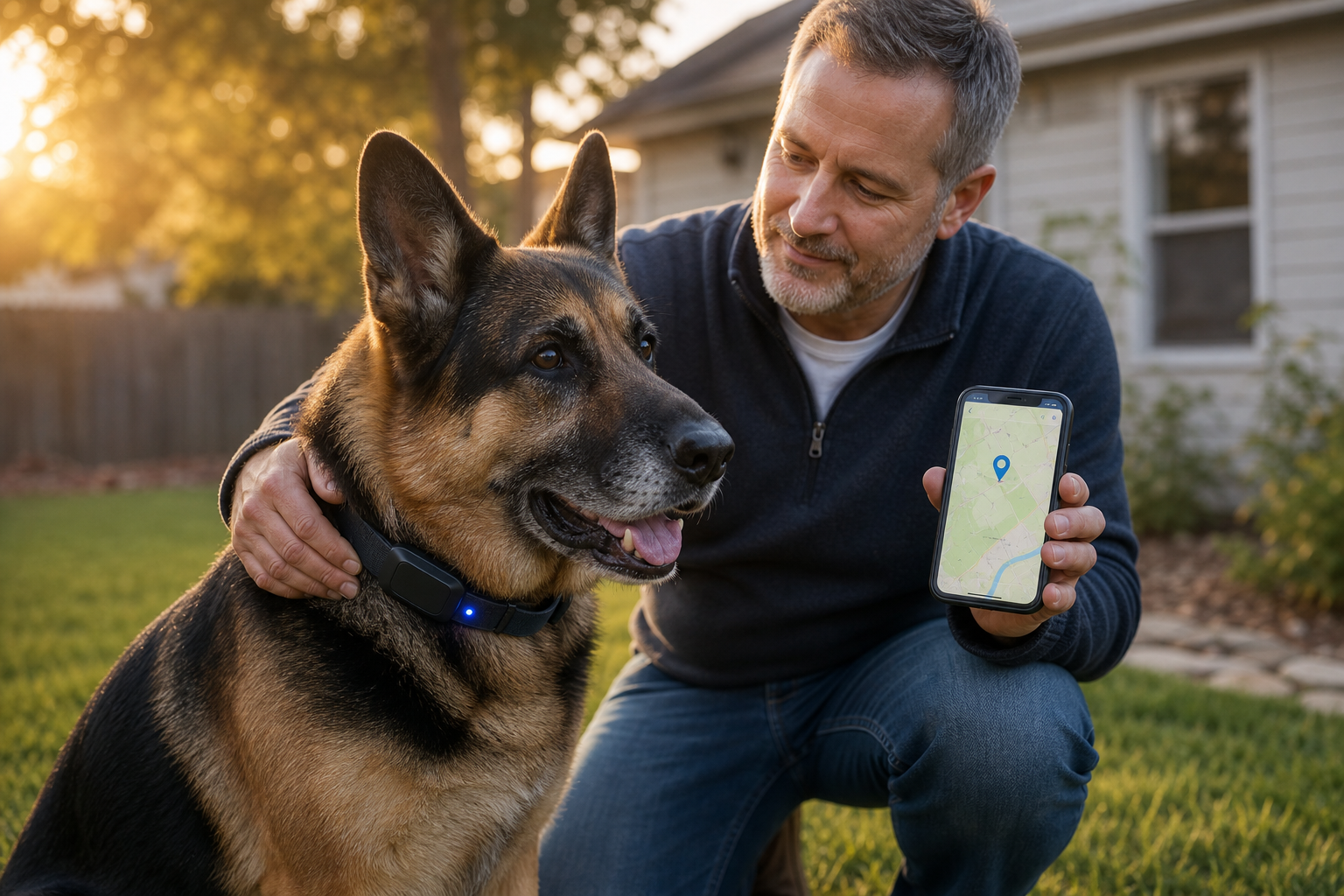
Moreover GPS tracker vs microchip debates often treat them as rivals—they are not. In addition chips do not broadcast location and GPS units do not replace clinic implants. This guide is for info only. A lost dog still needs fences leashes and training—not only new tech.
For example your Lab may wander on a foggy trail. Meanwhile the right GPS tracker vs microchip stack depends on escape risk budget and whether the chip is registered in 2026.
Additionally see our GPS tracker Top 6 guide for LTE collar picks.
After that read our activity monitor guide when health charts matter more than live maps.
Furthermore our escape-proof crate guide cuts home breakout risk.
Similarly the AKC microchips vs GPS trackers overview notes chips identify after find—not during search.
Overall the AVMA pet care basics stress ID and supervised outings for all dogs.
Short answer: GPS tracker vs microchip for giants
Disclosure: This post has affiliate links. Grey Snout Guide may earn a small fee when you buy through our links. You pay nothing extra.
Generally get a microchip implanted and registered for every large dog—it is baseline ID for life. Meanwhile add a GPS tracker when escape risk fog walks or senior confusion rise. Consequently smart XL owners stack both—not pick one and skip the other.
GPS tracker vs microchip comparison table
Side-by-side for large breed dogs
Meanwhile use this chart before you buy either tool. In addition list your top fear—lost on a hike versus no ID after shelter intake.
| Factor | GPS tracker | Microchip |
|---|---|---|
| Main job | Live location on a map | Permanent ID after scan |
| Power | Battery—needs charging | Passive—no battery |
| Cost | Hardware plus yearly LTE fees | One-time implant plus registry |
| Collar loss | Gone if collar slips off | Stays under skin |
| Finder needs | You track on your phone | Scanner at vet or shelter |
| Senior cognitive drift | Escape alerts help same day | Backup if collar is gone |
| Best default for XL dogs | Add-on when escape risk is real | Yes for every dog always |
Therefore the GPS tracker vs microchip choice is layered safety—not either-or marketing. Moreover pair both with a visible ID tag on a sturdy collar.
When a GPS tracker wins
Live maps and same-day escape recovery
Moreover GPS collars and tags ping location on your phone. Also geofence alerts fire when your giant leaves the yard line.
GPS tracker pros on giants:
- Real-time search on hikes and camping trips
- Escape alerts when gate latches fail
- Share live link with family during storms
- Some units add activity and rest charts
- Faster reunion before shelter intake
Consequently GPS shines when every minute of search matters. Nevertheless batteries die and collars slip—never treat GPS as the only ID layer.
GPS tracker cons:
- Monthly LTE plans add up over years
- Dead battery equals blind search
- Heavy units may not fit every XL collar
- Thick tree cover can delay pings
Therefore browse our GPS tracker guide for Fi Tractive and Whistle picks. Similarly test fence alerts in your yard before travel week.
When a microchip wins
Permanent ID that survives collar loss
Generally microchips sit under skin between shoulder blades. Meanwhile they hold a unique number linked to your registry account.
Microchip pros on giants:
- No battery or subscription required
- Works even when collar and GPS are gone
- Standard scan at vets shelters and rescues
- One implant lasts for life in most dogs
- Low cost baseline for every puppy and senior
As a result chips are the safety net when gear strips off in brush. Furthermore they help strangers reunite you after your dog is already found.
Microchip cons:
- Cannot show live location during active search
- Useless if registry data is outdated
- Does not replace visible tags for quick calls
- Implant must be placed by a clinic
Meanwhile update phone and address on the chip registry after every move. In addition ask your vet to scan the chip at annual exams.
GPS tracker vs microchip by scenario
Pick the right safety stack today
Therefore match tools to risk—not only gadget hype. Similarly revisit this list when cognition or fencing changes.
| Scenario | Better pick |
|---|---|
| New XL puppy first week home | Microchip plus visible tag |
| Repeat yard escape artist | Microchip plus GPS tracker |
| Foggy trail or open camping | GPS tracker on walk days |
| Senior confusion and pacing | Both—see cognitive guide |
| Tight budget this year | Microchip and tag first |
| Collar chewed off in crate | Microchip still active |
| Dog already at city shelter | Microchip scan—not GPS |
Additionally read our cognitive dysfunction guide when indoor pacing rises. Consequently stack crate training with ID—not tech alone.
Microchip registry rules owners skip
Keep chip data current after every move
Moreover follow these steps so your GPS tracker vs microchip plan actually works:
- Register the chip number the same day as implant
- Save registry login in your phone notes
- Update phone email and address after moves
- Add a backup contact who can answer at 2 a.m.
- Ask for a scan at yearly vet visits
Therefore thousands of chips fail reunion because the database still lists an old phone. In addition put your current number on a visible collar tag too.
Furthermore pair tags with our collar guide for wide-band fits on deep chests.
GPS tracker setup for large breeds
Battery plans and XL collar fit
Generally budget hardware plus yearly LTE before you commit. Meanwhile check neck size limits on integrated GPS collars.
- Charge on a fixed weekly schedule—Sunday night works
- Test yard geofence before you trust vacation mode
- Confirm LTE coverage on your hike routes
- Use breakaway or secure clips per your escape history
- Share app access with a spouse or dog walker
Consequently dead batteries erase the whole GPS advantage. Nevertheless a charged GPS plus registered chip beats either tool alone.
Therefore see our activity monitor guide when step charts matter as much as maps. Similarly seniors on pain meds may walk odd routes—track baselines early.
Can you use both tools?
Stack GPS tracker and microchip smartly
Generally yes—this is the best practice for most XL homes. Meanwhile implant the chip at the puppy exam and add GPS when escape risk proves real.
Furthermore read our senior care guide for full safety routines beyond gadgets.
Consequently microchip plus GPS plus visible tag is the triple layer many trainers recommend. However do not skip the chip because GPS feels enough—collars come off in one bush snag.
FAQs on GPS tracker vs microchip
Does a microchip track my dog live?
Moreover no—it only stores ID for scanner lookup. Therefore you still need active search or GPS for real-time maps.
Is GPS enough without a chip?
Generally no—battery and collar loss happen fast on giants. Meanwhile a registered chip survives both.
Health and seniors
Senior wandering at night?
Consequently add GPS alerts and review our cognitive guide. Similarly secure doors and use night lights.
Still losing dogs?
Instead fix fence latches and training first—not only pricier trackers.
Final recap: GPS tracker vs microchip checklist
Moreover implant and register a microchip for every XL dog. Also add a GPS tracker when escape risk trails or senior drift rise. Furthermore keep collar tags current and charge GPS weekly. Consequently test geofence alerts before trips. However never skip leashes because a map exists. Therefore smart GPS tracker vs microchip stacks reunite senior large breeds faster in 2026.
Meanwhile see our senior care guide and large breed dog care hub for full safety stacks.
Disclosure: This post has affiliate links. Grey Snout Guide may earn a small fee. You pay nothing extra.