
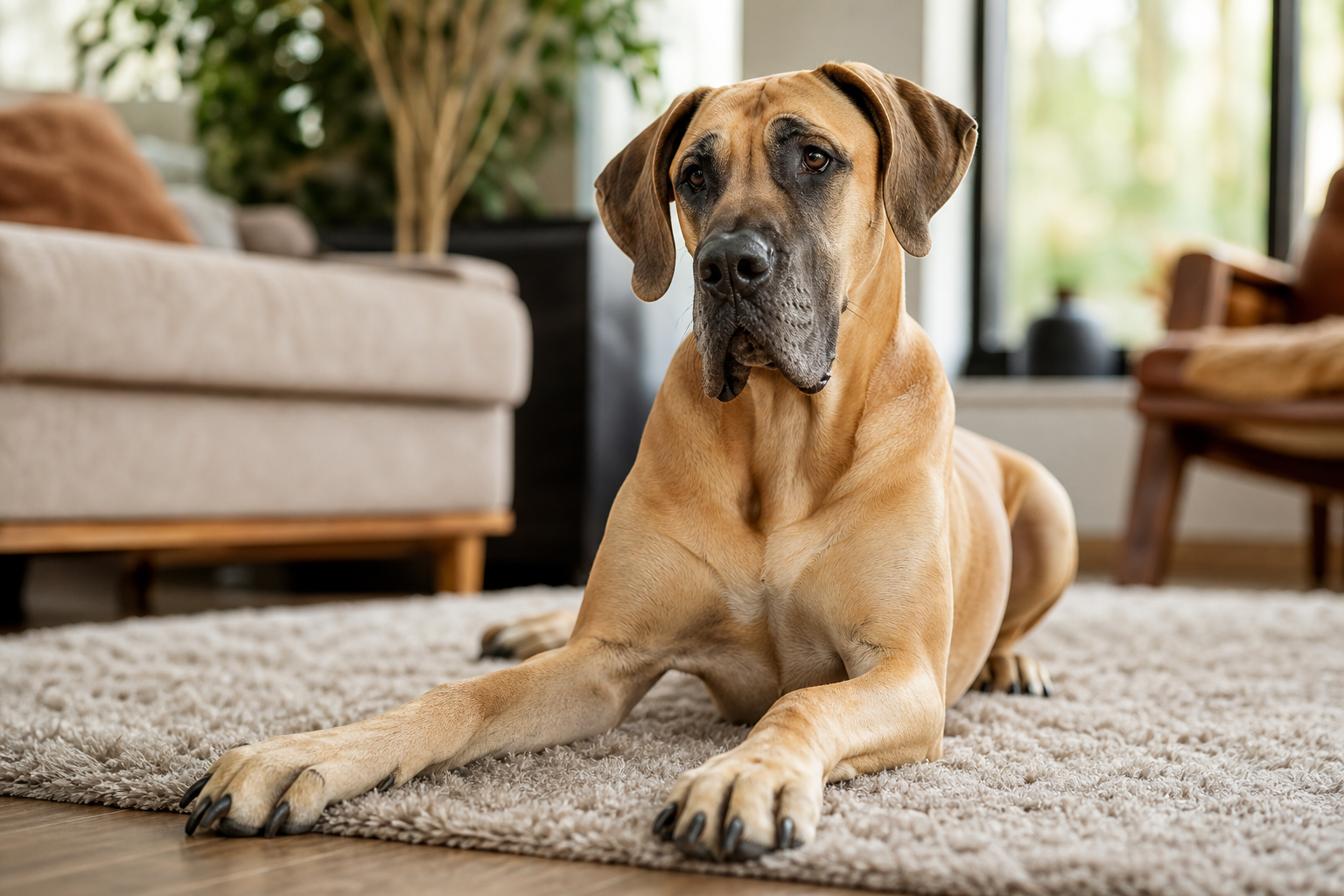
Great Dane health problems hit hard and fast. Bloat joint pain and heart issues top the list. Moreover many owners blame age when the dog is in crisis. This guide is for info only. However a swollen belly dry heaving or sudden collapse need an ER vet now.
For example a five-year-old Dane who paces after dinner may have bloat—not anxiety. Therefore this Great Dane health problems guide lists what to watch in 2026. It also covers prevention and when to call your vet.
First book yearly exams. Keep shots on schedule with our vaccination guide. After that read our bloat guide. Also study pain signs before you blame a bad mood.
Additionally learn ER cues from our emergency signs guide when minutes matter.
Furthermore the AKC Great Dane health page lists risks vets screen each year.
Why Great Dane health problems need breed-aware care
Disclosure: This post has affiliate links. Grey Snout Guide may earn a small fee when you buy through our links. You pay nothing extra.
Great Danes are giant dogs with giant needs. However the breed dies younger than many small dogs. In addition deep chests raise bloat risk. Fast growth as pups can stress joints.
Similarly lean weight helps hips and heart. Daily calm walks beat wild sprints right after meals. However home care never replaces blood work. Your vet still needs hip exams and heart checks.
As a result you catch small shifts before a belly twist becomes a tragedy.
Common Great Dane health problems owners see most
Quick map by body system
Generally bloat tops the ER list for Danes. Joint and heart issues follow. Bone cancer and wobbler neck disease appear in some lines.
High-frequency issues:
- Bloat and stomach twist (GDV) after meals or stress
- Hip dysplasia with stiffness after rest
- Heart muscle disease (DCM) in midlife
- Bone cancer (osteosarcoma) in limbs
- Wobbler syndrome with weak rear legs and neck pain
Consequently one dog may face two issues at once. For example heart disease plus sore hips in a senior Dane.
Bloat and stomach Great Dane health problems
When the belly is the emergency
Bloat is the top killer for many giant breeds. Danes rank among the highest risk. Moreover gas fills the stomach. The stomach can twist and cut blood flow.
Therefore know dry heaving with no vomit. Also watch a tight swollen belly and restlessness after eating. In short go to ER—do not wait for morning.
Review our bloat guide for meal rest and prophylactic surgery talks. A full Dane bloat deep-dive is coming in our breed series.
Bloat prevention habits:
- Split meals into two smaller feeds per day
- No hard play for one hour after eating
- Keep water available but limit huge gulps right after meals
- Ask your vet about preventive gastropexy for high-risk dogs
Joint and mobility Great Dane health problems
Hips growth and giant load
Generally hip dysplasia is common in Danes. Also fast pup growth on the wrong food can hurt joints. For instance slow stands after naps are a clue. Reluctance on stairs is another.
Therefore see our hip dysplasia guide for signs and ramps. Similarly use our senior care guide for grey muzzles. Soft beds and short walks help stiff giants.
Home support:
- Keep adults lean—every extra pound multiplies joint stress
- Use ramps for cars and couches on stiff days
- Choose low-impact exercise on grass when your vet approves
- Ask about joint supplements only after blood work—not random stacks
Heart-related Great Dane health problems
DCM and murmurs
Heart muscle disease (DCM) affects some Danes in midlife. Moreover cough tiredness and belly fluid can be heart signs—not just old age.
Therefore yearly heart checks matter after age four. Also tell your vet about fainting or exercise collapse. In addition some vets add diet talks for DCM-prone breeds.
Cancer-related Great Dane health problems
Bone cancer and other tumors
Generally bone cancer shows as sudden limps in one leg. For example osteosarcoma can strike young adult Danes. Other tumors appear as lumps on the skin or chest.
Therefore limps need X-rays—not only rest and hope. Meanwhile weekly brush sessions are lump maps. Note size and how fast a mass grows.
Wobbler syndrome and neck pain
Weak rear legs and stiff neck
Wobbler disease compresses the neck spine. Moreover rear legs may wobble. Front legs can look stiff too. Therefore neck pain needs imaging—not only pain pills at home.
Also use non-slip rugs and block stairs when your vet limits jump risk.
Eye thyroid and daily Great Dane health problems
Smaller issues that stack up
Generally cherry eye and entropion affect some pups. Therefore red eyes or squinting need a vet check. Similarly low thyroid can cause weight gain and dull coat. Blood panels after age five help.
Also dental disease is common when chews replace brushing. See our dental disease guide for home tooth habits.
Prevention plan for your Great Dane
Vet habits that pay off
First choose a giant-breed puppy food. Switch to adult food only when your vet says so. Also keep growth steady. Skip roly-poly pups for photos.
Prevention checklist:
- Yearly blood work after age four sooner if limping
- Hip screening per breeder or rescue paperwork
- Heart checks and bloat plan talks at wellness visits
- Parasite control year-round in tick areas
- Insurance or savings for ER bloat and joint surgery
Therefore pair prevention with calm handling. Use our positive reinforcement guide so vet visits stay calm.
Daily home care for your Great Dane
Meals rest and weight
First weigh monthly on the same scale. Also adjust food when ribs get hard to feel. Moreover split exercise into two shorter walks on hot days.
However never run or wrestle right after meals. Therefore rest on a mat for one hour post-feed is a simple life saver.
Red flags: call your vet or ER now
Do not wait on these signs
Generally a lame leg that will not bear weight needs an ER vet. Also go now for a swollen belly with retching. Sudden collapse or seizures need emergency care too.
Same-day vet signs:
- Blood in stool vomit or urine
- Facial swelling after vaccines or new treats
- Heat stroke on summer walks
- Fast-growing lump or nose bleed with tiredness
FAQs on Great Dane health problems
Do all Great Danes get bloat?
No. However risk is very high in the breed. Prevention habits and vet surgery talks lower odds.
What is a normal lifespan?
Generally seven to ten years with good care. Moreover lean weight and early vet care help quality years.
Puppies and seniors
How much exercise for a Dane puppy?
First ask your vet when growth plates close. Also short play beats long pavement jogs before clearance.
Is grain-free food required?
Instead many heart-prone breeds need vet-led diet picks. Grain-free ads alone are not a fix.
Final recap: Great Dane health problems step by step
First know the breed risks. Watch bloat joints heart and cancer. Also run lean meals and yearly labs. Do weekly lump checks. Moreover treat limps as urgent until X-rays clear them. Similarly use ramps and insurance. Train calm vet visits. However when bloat signs or collapse appear go to ER. Therefore steady Great Dane health problems planning keeps giants comfortable longer.
Therefore book a wellness visit this month. Also weigh your Dane tonight. If the belly looks tight after dinner—call your ER vet now.
Disclosure: This post has affiliate links. Grey Snout Guide may earn a small fee. You pay nothing extra.