
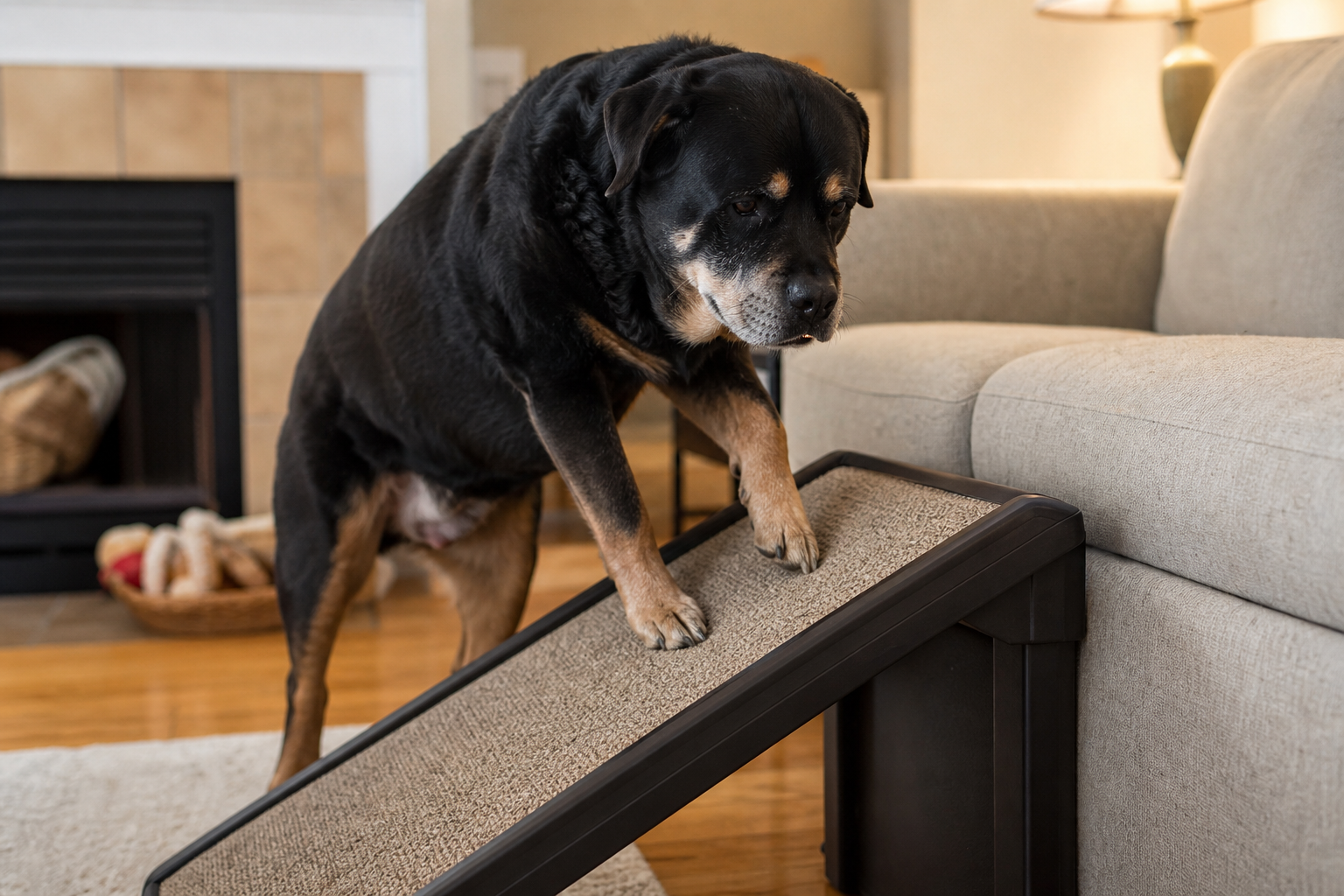
Arthritic dog stairs trips are risky when a 90 lb dog hops on slick steps or jumps on the couch. Joint pain needs ramps grip and a lift plan—not tough love. This article is for info only. It does not replace your vet or a rehab pro.
Many giants still want the sofa bed and porch steps. Therefore your arthritic dog stairs setup must match weight slope and paw grip.
Pain often links to arthritis or hip dysplasia. Moreover extra pounds make every climb worse. Similarly read our pain signs guide before you push more jumps.
Read our ramp guide and senior care guide as you remodel home paths.
Why arthritic dog stairs and jumps need a new plan
Disclosure: This post has affiliate links. A small fee may apply when you buy. You pay nothing extra. Our team only shares gear we trust.
First steep steps force twisting hips and knees. Also slick wood can cause falls in seconds. After that one bad slip may flare pain for weeks.
The AVMA senior pet health tips urge weight control and low-impact paths at home. They also stress vet-led pain plans—not guesswork alone.
To sum up smart arthritic dog stairs habits protect joints more than repeated heroic jumps.
Signs stairs and furniture are too much
When to stop asking for jumps
Namely many owners miss early clues until the dog refuses the bed.
Watch for these signals:
- Hesitation at the bottom step or couch edge
- Bunny-hopping on stairs or skipping rear steps
- Slipping nails scraping on wood or tile
- Panting or whining mid-climb on short flights
- Choosing floor sleep only after years on furniture
Nevertheless some dogs still climb from habit. Still that does not mean joints tolerate the load.
In contrast a supported dog uses ramps or lifts. For example he waits for your cue before moving up.
Ramps vs stairs for arthritic large dogs
Angle weight limit and floor space
By comparison most arthritic giants do better on ramps for cars and couches. Next see our ramp vs stairs comparison before you buy steps.
Quick rules for big breeds:
- Choose gentle slope—steep pet stairs still load stifles
- Check weight rating above your dog’s current scale weight
- Pick non-slip carpet or grit tape on every step
- Block off unsafe human stairs with baby gates when possible
Therefore treat indoor pet stairs as a last choice for heavy seniors—not the default fix.
Make arthritic dog stairs safer when you must use them
Traction lighting and one flight at a time
Clearly add runner carpet or non-slip treads on wood steps. However never rush a dog mid-flight.
Stair safety habits:
- Install bright night lights on turn landings
- Keep clutter off steps and top landings
- Walk beside large dogs with a mobility harness on hind lift handles
- Allow one slow trip up and down per potty break—not ten sprints
- Use weight plans so each step carries less force
Meanwhile avoid basement stairs entirely if your vet flags high fall risk.
Furniture access without harmful jumps
Couch bed and SUV entries
In practice most flare-ups come from daily jumps—not one long hike. Overall cut jump count before you add pills alone.
Home changes that help:
- Place a furniture ramp against the couch or bed your dog uses most
- Lower favorite rest spots with an orthopedic bed on the floor nearby
- Train “wait” until the ramp is set—no leap when you are not ready
- Use a car ramp for tall SUVs instead of lifting from the shoulders
Above all never hoist under the belly alone on giants. Instead use a two-person or harness lift system your rehab team shows you.
Training arthritic dog stairs and ramps
Short positive reps on flat days
Overall teach ramps on pain-stable weeks—not during a flare. Also lure with soft treats every calm paw placement.
Trainer-backed steps:
- Let paws touch the ramp while it lies flat on grass first
- Raise incline slowly over many sessions—not one afternoon
- Reward four-on-the-floor pauses before each climb
- Stop the session while the dog still wants more—not when he quits in fear
Likewise ask your vet about physical therapy homework that matches your home layout.
Nevertheless dragging a scared dog up steps retrains panic. Instead back up to the last calm win.
Vet pain plan plus home mobility
Meds weight and follow-up exams
In addition home changes fail when pain stays untreated. Speak up at exams about stairs couch use and night pacing.
Vet topics worth raising:
- Could anti-inflammatory or joint meds ease climbs safely?
- Would blood work rule out other causes of limping?
- Is imaging due before you buy more gear?
- Will a rehab referral teach safe lift points for your breed?
Additionally track good days and bad days in a phone note. Furthermore share that log at rechecks—not from memory alone.
FAQs – arthritic dog stairs and furniture
Carry my dog every time?
For example short assists help on bad days. However daily full carries hurt your back and may scare some dogs.
Block all furniture?
Instead offer a ramp or floor bed. Total denial without options can raise anxiety.
Seniors and multi-level homes
Live on stairs daily?
Meanwhile consider gating to one level when possible. A ground-floor potty path beats repeated climbs.
Young dog with early arthritis?
In short start ramps early. Habits form fast in large puppies who still look agile.
Final recap: arthritic dog stairs and furniture
Overall treat every climb as a joint event—not a habit to ignore. Also add grip ramps and harness assists before pain spikes. Moreover trim weight and vet-treat flares that make steps worse. However ban slick jumps to couch and bed when a ramp fits. Finally steady arthritic dog stairs planning keeps large dogs mobile without daily wipeouts.
For instance measure one couch height today and shop a ramp length that matches.
Similarly add one non-slip tread on the worst stair today. Above all calm home paths are built step by step—not after a fall.
Disclosure: This post has affiliate links. Grey Snout Guide may earn a small fee. You pay nothing extra.