
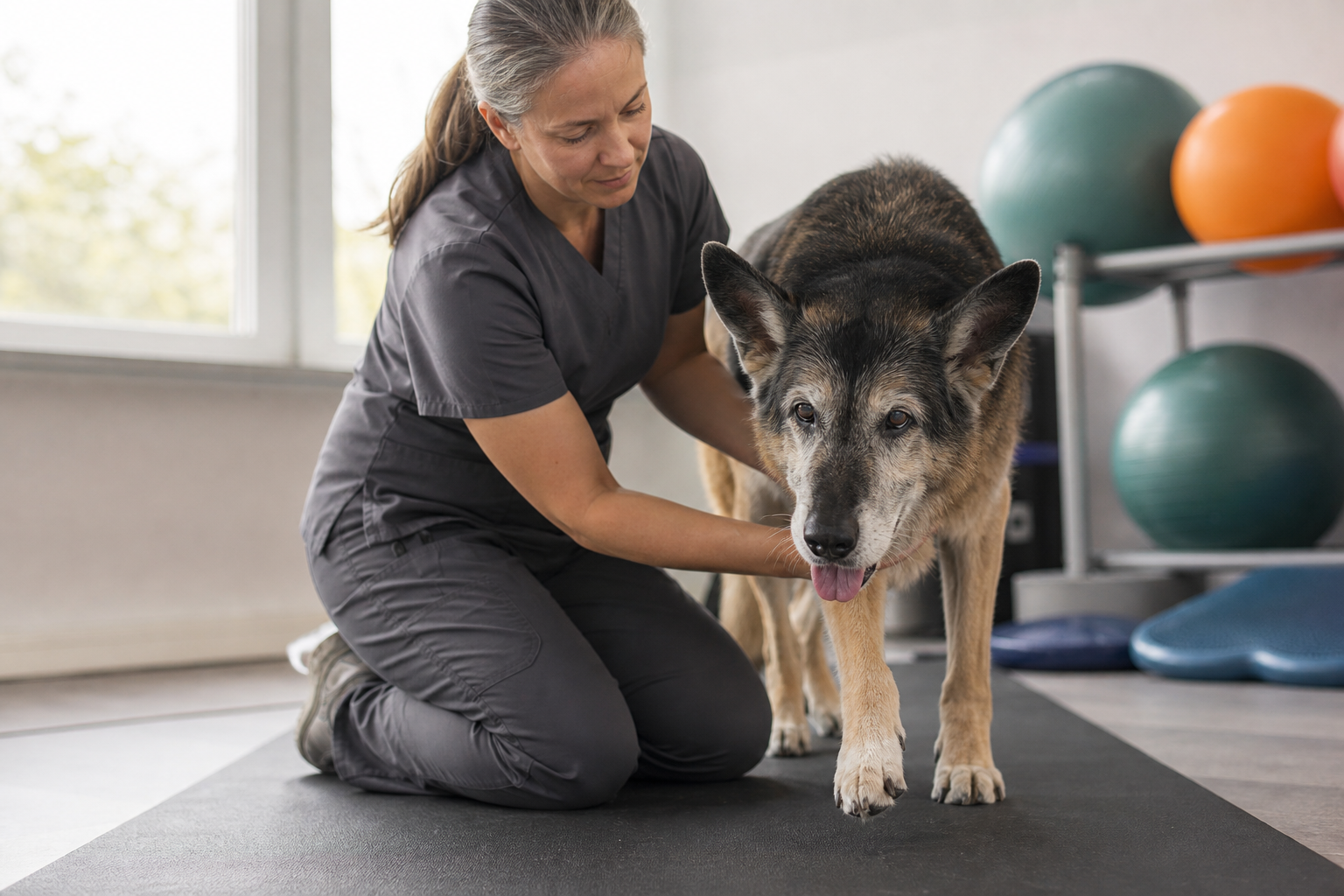
Dog physical therapy helps many large breeds with hip dysplasia walk with less pain and stronger hind muscles. Shepherds Retrievers and Mastiffs often gain ground after surgery—or avoid decline with guided rehab. This article is for info only. It does not replace vet advice. Sudden lameness or collapse needs exam before new exercise plans.
For instance weak hind legs may improve with structured rehab—not more weekend hiking alone. Therefore learn what dog physical therapy involves before you guess home exercises.
In addition certified rehab teams tailor plans to X-rays age and weight. Similarly home drills support clinic work—they rarely replace it.
Read our hip dysplasia guide for causes signs and long-term joint care basics.
Furthermore our arthritis guide overlaps when wear-and-tear joins dysplasia pain.
What dog physical therapy for hip dysplasia aims to do
Disclosure: This post has affiliate links. We may earn a small fee if you buy. It costs you nothing extra. We only share gear we trust.
First rehab builds muscle that supports loose hip joints. After that better strength often means less limping on daily walks.
The VCA rehabilitation guide notes that therapy can follow surgery—or stand alone when surgery is not chosen.
To sum up goals are safer movement less pain and stronger hips—not marathon training by week two.
When dog physical therapy helps hip dysplasia
Post-surgery weakness weight gain and early stiffness
Namely large breeds lose hind muscle fast when they limp for months. Moreover extra weight loads sore hips further.
Common times vets suggest rehab:
- For instance after hip surgery when safe movement must restart slowly
- Similarly when young dogs show dysplasia but surgery waits or is declined
- Also when senior dogs stiffen after rest but still enjoy short walks
- Furthermore when weight loss pairs with strength rebuilding
Read our pain signs guide when discomfort limits every exercise block.
In contrast acute injury or bone cancer needs diagnosis first—not random rehab drills.
What dog physical therapy sessions involve
Exam plans modalities and progress checks
Clearly sessions differ by clinic and dog. However most hip dysplasia plans share core building blocks.
Typical clinic tools and steps:
- In particular gait exam and muscle scoring on visit one
- Beyond that underwater treadmill walking for low-impact strength
- Similarly balance boards cavaletti poles and guided stretches
- Also laser therapy massage or ice/heat when your vet team recommends them
- Lastly homework sheets with reps your dog can do safely at home
The AKC physical therapy overview also stresses certified rehab staff—not generic fitness trends for injured joints.
Therefore ask whether your therapist is vet-led or works under veterinary referral in your region.
Home exercises in dog physical therapy plans
Short reps calm surfaces and stop rules
By comparison home work succeeds when it stays boring and small. However overdoing sets can flare hip pain for days.
Common home drills vets assign:
- First slow sit-to-stand reps on non-slip mats for large breeds
- Next gentle figure-eight walks on flat grass or indoor floors
- Then weight shifting stands with harness support when needed
- Also cookie stretches that flex the spine without jump twists
Meanwhile use our mobility harness during supported homework on slick floors.
Above all stop if limping worsens that day. Tell your rehab team before the next session.
Gear that supports dog physical therapy at home
Ramps treadmills and beds between sessions
Overall gear protects progress between clinic visits. Next cut jump load while hind strength still rebuilds.
Helpful home setup:
- Home ramps and car ramps reduce hip stress on entries
- Our treadmill guide covers home walking when your vet clears flat controlled mileage
- An orthopedic bed supports long rest after rehab days
Nevertheless underwater treadmill work belongs in clinics for most dogs—not DIY pools without supervision.
How to find dog physical therapy near you
Vet referral credentials and realistic goals
In practice start with your orthopedic or general vet for referral lists. Similarly ask about certified canine rehabilitation therapists on staff.
Questions to ask before booking:
- Do you treat large breeds over 70 pounds regularly?
- Is there an underwater treadmill or equivalent low-impact option?
- How do you coordinate with my surgeon or pain med plan?
- What home exercises will you assign between visits?
Furthermore link rehab plans to our elbow dysplasia guide when front-leg issues overlap gait changes.
Nevertheless progress takes weeks. Judge by smoother walks—not day-one miracles.
FAQs – dog physical therapy
Does rehab replace surgery?
For example some dogs manage with rehab and meds alone. Therefore X-rays and pain level guide that choice with your vet.
How many sessions are typical?
Plans vary. In addition many dogs start weekly then taper as strength holds.
Cost age and DIY risks
Can I copy YouTube exercises?
Similarly wrong drills harm dysplastic hips. Use only vet-assigned homework.
Is my senior too old?
Meanwhile gentle rehab often helps old large dogs if pain is controlled first.
Final recap: dog physical therapy for hip dysplasia
Overall treat rehab as vet-led strength work—not random extra fetch.
Next get referral exam and a written home plan before you start.
Then pair sessions with weight control ramps and pain meds as prescribed.
Still log limp days and stop rules so your team can adjust load.
As another option lean on our hip dysplasia guide for full joint care context.
On balance steady dog physical therapy gives many large breeds stronger happier hips over time.
For example film a short flat walk before rehab starts and again at six weeks. Visual progress motivates honest pacing.
Similarly keep homework reps on a fridge chart. Above all clinic plus home drills beat hope-and-hike alone for dysplastic hips.
Disclosure: This post has affiliate links. Grey Snout Guide may earn a small fee. You pay nothing extra.