
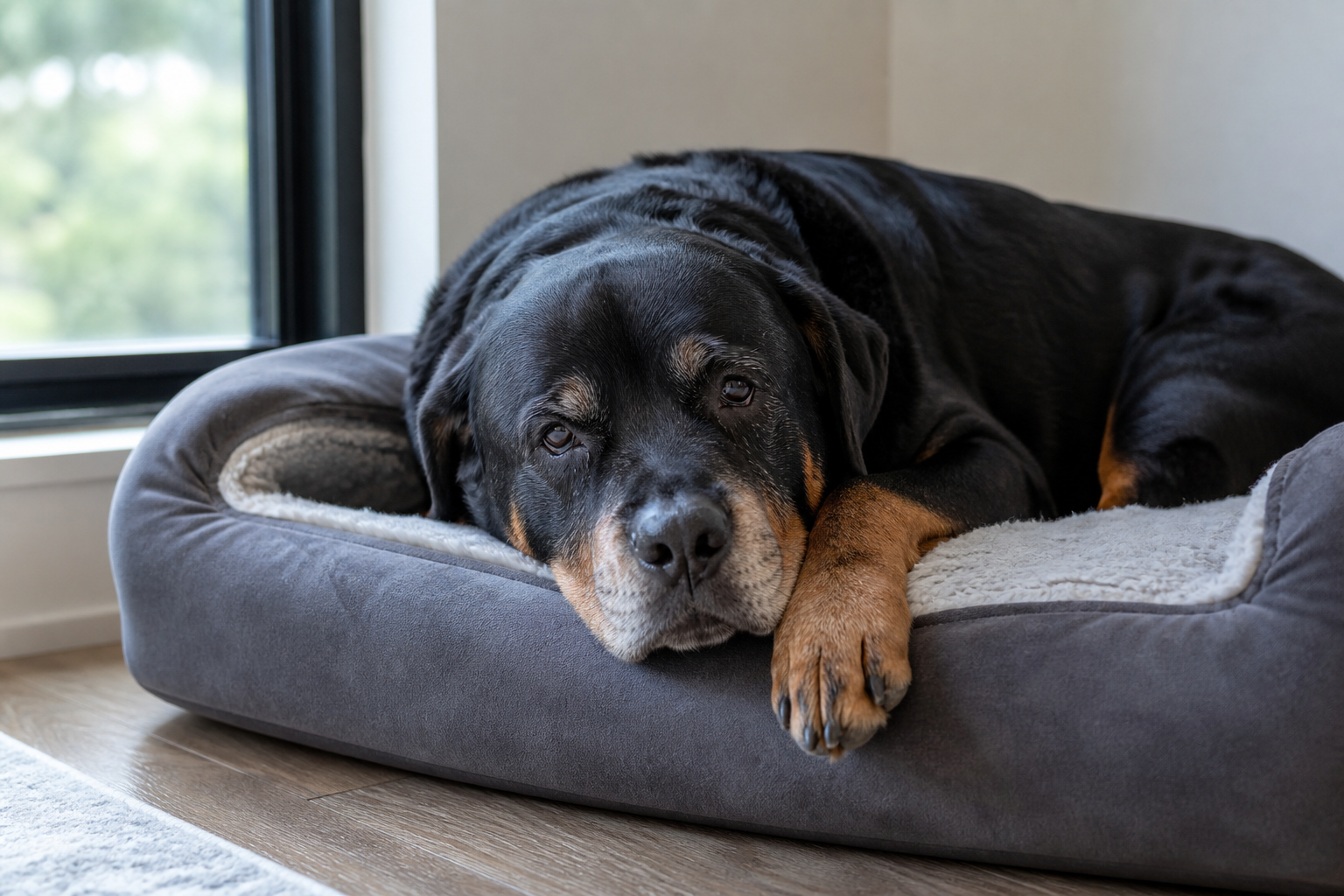
Osteosarcoma large breed dogs develop an aggressive bone cancer that often starts in a leg. Great Danes Rottweilers and Irish Wolfhounds face higher risk than small breeds. This article is for info only. It does not replace vet advice. Persistent lameness needs urgent exam—not a wait-and-see week.
For instance one sore leg that worsens over days can be the first sign. Therefore know the warning pattern before you assume simple arthritis.
In addition early vet action improves comfort and gives you more treatment choices. Similarly quality-of-life planning matters as much as medical facts.
Read our hip dysplasia guide when joint pain looks similar at first.
Furthermore our senior care guide covers daily support for aging large breeds.
What osteosarcoma large breed dogs owners should know first
Disclosure: This post has affiliate links. We may earn a small fee if you buy. It costs you nothing extra. We only share gear we trust.
First osteosarcoma is a malignant bone tumor. After that it often spreads to the lungs over time.
For example osteosarcoma large breed dogs usually show lameness before owners feel a large lump.
The VCA osteosarcoma guide notes that front legs near the wrist are common sites in many breeds.
To sum up this cancer moves fast. Early vet visits beat hopeful waiting.
Why osteosarcoma large breed dogs face higher risk
Size genetics and fast growth history
Namely large and giant breeds carry more bone mass and growth stress. Moreover certain breeds show up in vet data far more often.
High-risk breed examples:
- For instance Great Danes Irish Wolfhounds and Saint Bernards
- Similarly Rottweilers Greyhounds and Dobermans
- Also large mixed breeds with deep chests and heavy bone
Read our lifespan guide for breed health context beyond cancer alone.
In contrast small breeds get bone tumors too—but far less often than large breeds.
Early signs of osteosarcoma in large breed dogs
Lameness swelling and pain patterns to watch
By comparison early signs mimic sprains arthritis or cruciate tears. However pain often worsens faster than a simple strain.
Early signs to watch:
- First sudden or worsening lameness on one leg
- Next swelling near wrist shoulder or knee
- Then pain when the leg is touched or moved
- Also reduced appetite and lower energy in some dogs
- Lastly a firm area on the bone that grows over weeks
Nevertheless any lameness over 48 hours in a large breed needs a vet visit. Do not wait for a visible lump.
How vets diagnose osteosarcoma large breed dogs
X-rays biopsy and chest checks
Clearly home exams cannot confirm bone cancer. Your vet uses imaging and lab work instead.
Typical diagnostic steps:
- In particular leg X-rays show bone destruction patterns
- Beyond that chest X-rays check for spread to lungs
- Similarly biopsy confirms tumor type when needed
- Also blood work supports surgery and chemo planning
The AKC osteosarcoma overview also stresses that staging guides treatment choices.
Therefore ask your vet to explain each test before you decide next steps.
Treatment paths for osteosarcoma large breed dogs
Surgery chemo pain care and palliative options
In practice treatment plans vary by spread age and your dog’s daily joy.
Common treatment paths:
- For instance limb amputation removes the primary tumor in many cases
- Similarly chemo may follow surgery to slow spread
- Also strong pain control helps when surgery is not chosen
- Furthermore palliative radiation or bisphosphonates ease pain for some dogs
Meanwhile many dogs adapt well to three legs. See our wheelchair guide if mobility support helps later.
Above all there is no one right path. Your vet team plus your dog’s spirit guide the choice.
Quality of life for osteosarcoma large breed dogs
Comfort mobility and honest daily checks
Overall good days still happen after diagnosis for many dogs. Next track appetite walk joy and rest quality daily.
Furthermore pain control is the core goal when cure is not likely. Similarly home changes help bad days feel shorter.
Comfort habits at home:
- Use an orthopedic bed on firm floor paths
- Add ramps to cut jump stress on sore legs
- Keep our first aid kit stocked for bandage and wound care
Nevertheless know when pain outweighs good moments. Your vet can help you judge that line with honesty.
Prevention and awareness for osteosarcoma large breed dogs
What owners can and cannot control
Clearly no diet or supplement guarantees prevention. Still early action on lameness saves comfort time.
Practical awareness steps:
- For instance schedule vet exams for any new one-leg lameness fast
- Similarly keep weight lean to reduce joint load on sore legs
- Also know your breed risk before symptoms appear
- Lastly discuss spay-neuter timing with your vet for your breed line
In addition review our DM guide and bloat guide for other large-breed health risks.
FAQs – osteosarcoma large breed dogs
Is amputation cruel?
For example many large dogs walk well on three legs after healing. Therefore quality of life often stays strong with good pain control.
How fast does it spread?
Timing varies. In addition chest X-rays help stage spread before major treatment choices.
Pain age and second opinions
Is it always painful?
Similarly bone tumors usually hurt. Pain meds and vet plans should lead every stage.
Second opinion?
Meanwhile oncology consults help on big choices. Ask your vet for a referral when you need clarity.
Final recap: osteosarcoma large breed dogs care done right
Overall treat new one-leg lameness as urgent in large breeds.
Next get X-rays and staging before you delay for a better week.
Then build a pain-first plan with your vet team.
Still adapt home gear for comfort on good days and hard days alike.
As another option lean on our senior care guide for daily routines that support aging dogs.
On balance early vet partnership beats fear when osteosarcoma large breed dogs signs first appear.
For example save your emergency vet number tonight. Do not wait for a crisis to search.
Similarly film your dog walking monthly on flat ground. Above all fast exams plus honest pain care give your dog the best shot at comfort.
Disclosure: This post has affiliate links. Grey Snout Guide may earn a small fee. You pay nothing extra.