
Great Dane bloat is one of the deadliest emergencies in giant dogs. This page explains early signs daily prevention and what to do before you reach the ER.
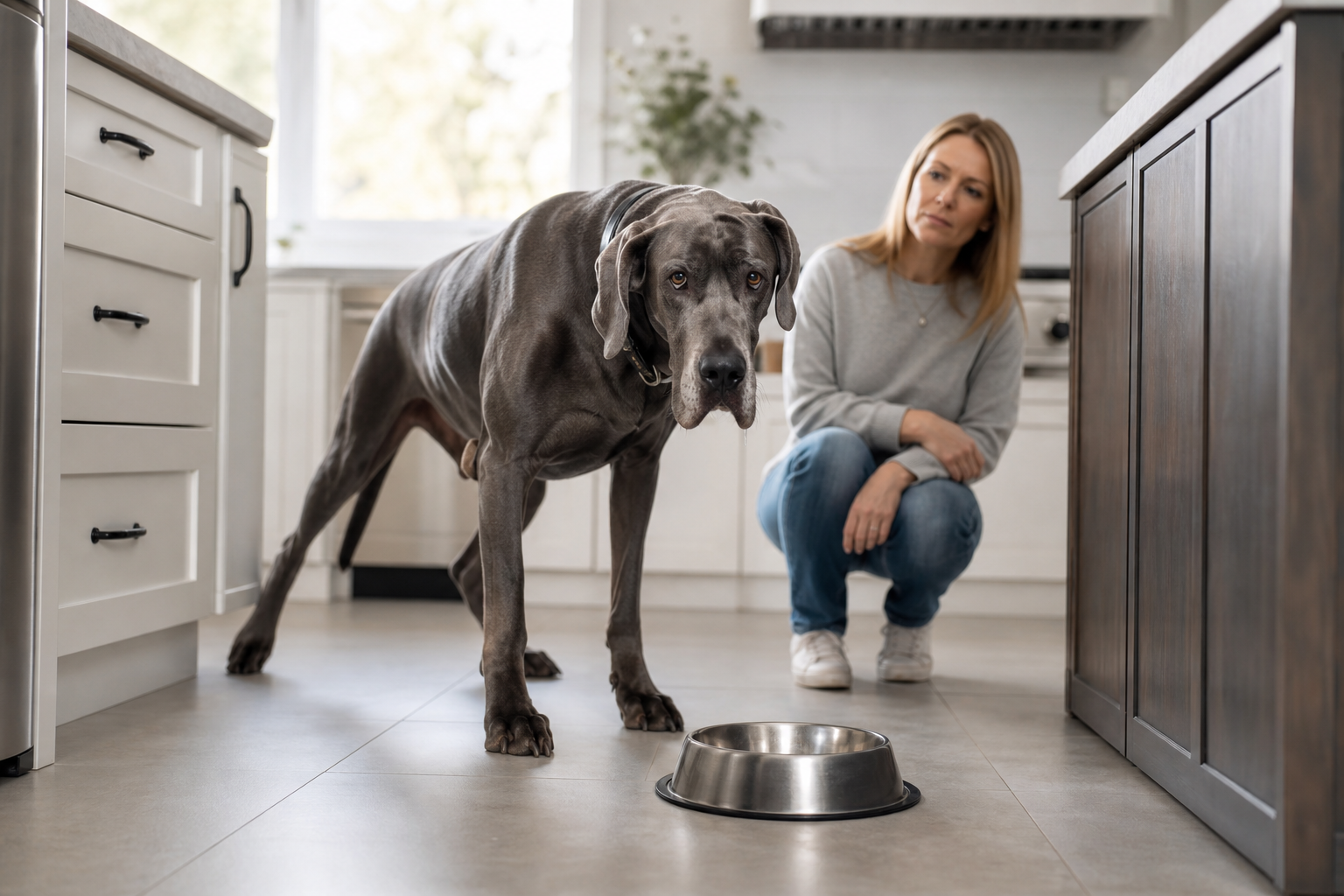
Great Dane bloat can kill in hours—not days. Danes rank among the highest-risk breeds for stomach twist (GDV). Moreover owners who know the signs save minutes that matter. This guide is for info only. A swollen painful belly dry heaving or collapse mean go to ER now—call ahead if you can.
For example a Dane who paces after dinner may be bloating—not anxious. Therefore this Great Dane bloat guide covers prevention emergency steps and vet options in 2026.
First read our Great Dane health problems guide for full breed context. After that see our bloat in large breed dogs guide for GDV basics all giants share.
Additionally keep ER cues handy from our emergency signs guide and lifespan habits from our Great Dane lifespan guide.
Furthermore the AKC Great Dane health page lists bloat as a top breed emergency.
Why Great Dane bloat risk is so high
Disclosure: This post has affiliate links. Grey Snout Guide may earn a small fee when you buy through our links. You pay nothing extra.
Great Danes have deep narrow chests. However bloat is not only a Dane issue—many giants share risk. In addition fast eating one huge meal and post-meal wrestling raise odds.
Similarly lean weight does not remove risk. Therefore meal habits and vet planning still matter for every deep-chest Dane.
As a result you treat bloat like a fire drill—not a maybe someday topic.
Bloat vs GDV: what Great Dane owners should know
Gas alone vs stomach twist
Generally bloat means the stomach fills with gas and fluid. Moreover GDV adds volvulus—the stomach twists and traps gas while cutting blood supply.
Therefore GDV is always an emergency. Also simple bloat can worsen fast—do not wait overnight on a tight belly.
Early signs of Great Dane bloat
Before the belly looks huge
Moreover watch for these early clues after meals or stress:
- Restlessness pacing or repeated standing up
- Dry heaving with little or no vomit
- Excessive drool or lip licking
- Whale eye and anxious look
- Tight abdomen that feels like a hard drum
Therefore any Dane with these signs after eating needs an ER vet—not a wait-and-see morning call.
Emergency steps for Great Dane bloat
What to do in the first minutes
First call your nearest ER vet and say you suspect bloat or GDV in a Great Dane. Also leave now—minutes count.
Generally do not give food water or home remedies by mouth. Moreover do not force walks to make the dog vomit.
On the drive:
- Keep the car cool and calm
- Have a second person watch breathing if possible
- Bring vaccine records if you have them handy
- Know your dog’s last meal time and symptoms
Consequently surgery is often needed for GDV—plan for emergency funds or insurance.
Prevention of Great Dane bloat
Daily habits that lower risk
First split food into two smaller meals per day. Also avoid one giant bowl once a day.
Prevention checklist:
- No hard play or stairs for one hour after eating
- Use a slow feeder if your dog gulps food
- Limit huge water gulps right after meals
- Keep weight lean to ease breathing if belly swells
- Reduce stress around meal times in multi-dog homes
Therefore talk to your vet about preventive gastropexy—often done during spay-neuter or as a standalone surgery for high-risk Danes.
Great Dane bloat and prophylactic surgery
Gastropexy in plain language
Generally gastropexy tacks the stomach to the body wall. Moreover it does not stop gas but greatly lowers twist risk.
Therefore discuss timing with your surgeon—many owners choose it during planned sterilization. However emergency gastropexy during a GDV crisis is harder and more costly.
Great Dane bloat myths to ignore
What does not help enough alone
Moreover raised bowls alone are not proven prevention for all dogs. Also exercise right after eating is never a safe habit for deep-chest Danes.
Instead meal size rest and vet-approved surgery plans beat internet quick fixes.
After Great Dane bloat surgery
Recovery and long-term care
Generally hospital stays monitor heart rhythm and healing. Also your vet will set strict rest and gradual food reintroduction.
Therefore follow discharge instructions exactly—re-bloat risk is higher in survivors without gastropexy.
FAQs on Great Dane bloat
Can bloat happen on an empty stomach?
Generally risk is highest around meals. However stress and activity can still trigger issues—any acute belly signs need ER care.
Does raised feeding prevent Great Dane bloat?
Instead ask your vet—studies vary. Meal splitting and post-meal rest are proven habits.
Cost and planning
How much does GDV surgery cost?
Therefore costs vary by region. Moreover pet insurance or an emergency fund prevents delayed care.
Should I keep simethicone at home?
However never delay ER care to give gas drops. Call your vet first—do not treat GDV like mild gas.
Final recap: Great Dane bloat step by step
First know Danes are high risk. Also split meals and rest one hour after eating. Moreover learn dry heaving and tight belly as ER signs. Similarly discuss gastropexy with your vet. However if bloat signs appear drive to ER now—do not wait. Therefore smart Great Dane bloat planning saves the minutes that matter.
Therefore post your ER clinic number on the fridge tonight. Also split tomorrow’s meals into two feeds. If your Dane paces after dinner with a tight belly—leave for ER now.
Disclosure: This post has affiliate links. Grey Snout Guide may earn a small fee. You pay nothing extra.