
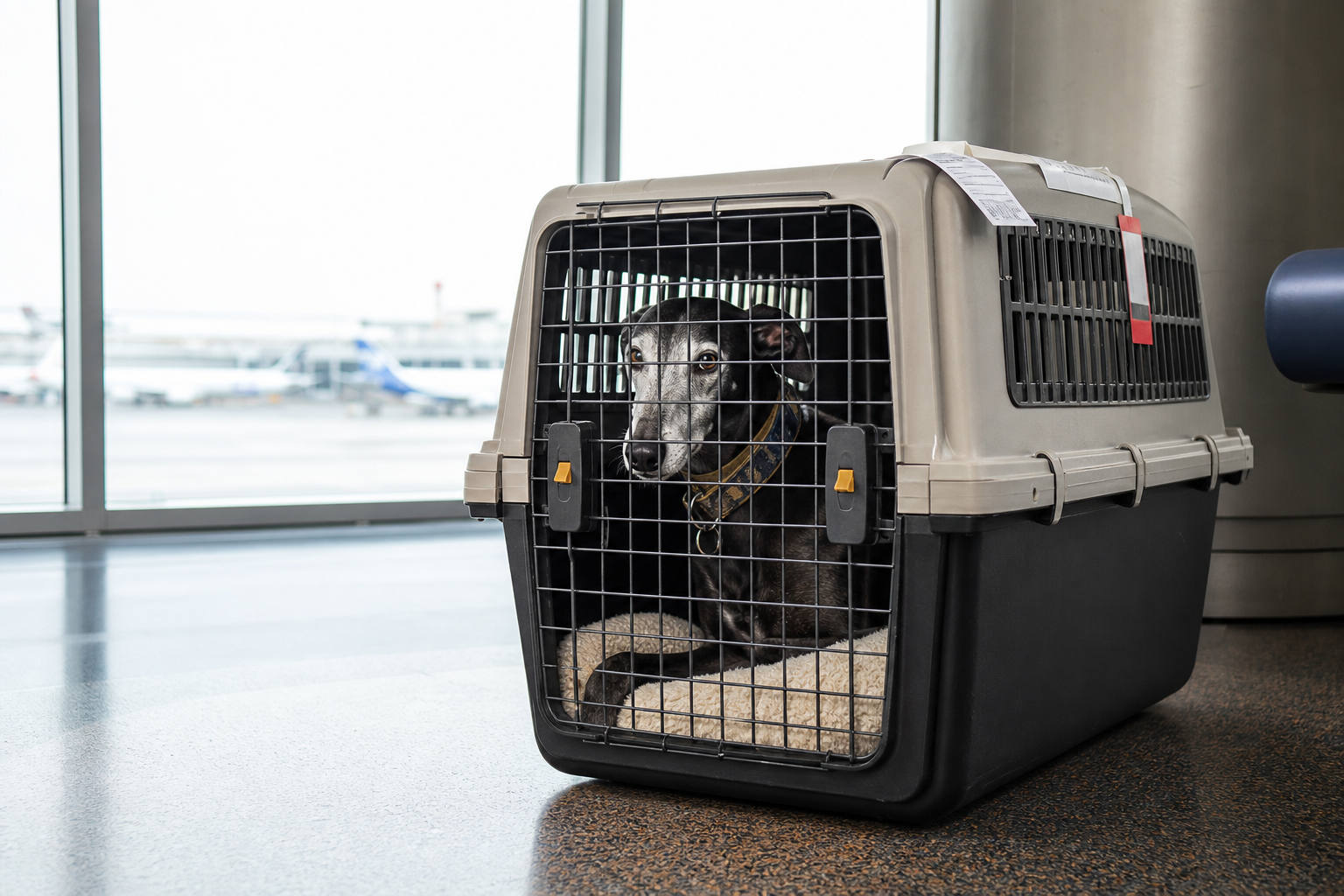
Safe dog plane travel for large breeds starts with one hard truth—most big dogs fly in cargo, not the cabin. Labs Danes and Shepherds need airline-grade crates and vet papers before you book any ticket.
Airline rules change often. Confirm pet policies with your carrier before you pay for flights.
For instance a 70 lb Golden exceeds nearly every cabin weight cap. Therefore cargo booking and crate fit come first—not seat selection.
In addition summer tarmac heat kills cargo dogs fast on delay days. Similarly winter layovers chill thin-coated breeds on long connections.
This guide covers dog plane travel basics—from airline rules and IATA crates to vet certs, calm-flight prep, and gear links across our travel hub.
For ground legs before or after your flight see our dog car travel guide.
Why dog plane travel differs for large breeds
Disclosure: This post has affiliate links. We may earn a small fee if you buy. It costs you nothing extra. We only share gear we trust.
First cabin limits cap combined pet-plus-carrier weight near 20 lb on most U.S. airlines. After that only service dogs—not pets—ride in the cabin at full size.
For example a solid dog plane travel plan covers cargo booking, crate training, health certs, and ground transport in one checklist.
The USDA pet travel hub lists entry rules many countries enforce at arrival gates.
To sum up follow the sections below in order before you buy plane tickets.
Step 1: Prep for dog plane travel trips abroad
Vet check health certs and microchip before booking
To begin with schedule a vet visit at least one month before international legs. Furthermore ask about rabies titers, tapeworm tabs, and breed-specific flight risks.
Similarly stash our first aid kit in your carry-on for post-flight checks at baggage claim.
The AVMA pet travel page notes that health papers must match destination rules—not just departure city rules.
Pre-booking checklist:
- For instance confirm microchip number matches every vet form exactly
- Also print airline pet contract and crate dimension limits in inches
- Lastly note cargo desk hours—many hubs accept pets only at set windows
Step 2: Dog plane travel cabin versus cargo reality
Why large breeds almost always fly in cargo holds
Namely three flight zones exist—and large pet dogs rarely qualify for two of them.
Cabin: Under-seat carriers only. Most caps sit near 20 lb combined weight—too small for adult large breeds.
Checked baggage hold: Some airlines allow mid-size pets in climate-controlled baggage zones on select routes.
Cargo: Required for most large dogs. Book live-animal cargo slots early—space sells out on holiday routes.
The AKC flying with dogs guide also warns that cargo rules vary sharply by airline and aircraft type.
In contrast never assume your last flight’s pet policy still applies—airlines update pet bans after heat incidents every summer.
Step 3: Choose an IATA-compliant crate for dog plane travel
Hard crate sizing ventilation and bolt locks
By comparison soft carriers work for car bench rides—not airline cargo approval. However rigid crates with bolt locks pass most IATA live-animal checks.
Size rule: Your dog must stand, turn, and lie flat without touching the roof or door.
Ventilation: Openings on at least three sides—many airlines reject two-sided vent panels.
Food and water: Attach spill-proof bowls inside the door gate before check-in.
Compare our hard crate guide and soft crate guide—only hard IATA-style units qualify for cargo holds.
Train crate naps at home for two weeks before flight day—never first-load a dog at the airport curb.
Step 4: Book dog plane travel slots with your airline early
Pet fees embargoes and breed restriction checks
Clearly every airline sets its own pet fees, embargoes, and banned breeds list. Likewise some block snub-nosed breeds entirely during warm months.
When you call the airline ask:
- In particular max crate dimensions for your aircraft type—not just the airline generic chart
- Beyond that temperature embargoes at your connection hubs in summer
- Similarly whether live-animal cargo accepts your breed and weight on that exact route
Furthermore book direct flights when possible—each transfer adds tarmac time in unknown weather.
Step 5: Calm-flight prep for anxious dog plane travel days
Anxiety gear crate training and vet calm options
In practice airport noise and conveyor belts spike stress before wheels even leave the ground. Hence calm prep beats last-minute sedatives alone.
Anxiety wrap: See our anxiety wrap guide for pressure-fit options you can use in the crate pre-check.
Crate training: Feed meals inside the travel crate daily for two weeks before departure.
Vet consult: Ask about calm aids—but many airlines discourage heavy sedatives that slow breathing in cargo holds.
Nevertheless never fly brachycephalic breeds in cargo during peak heat—many vets advise against it entirely.
Step 6: Airport day dog plane travel checklist
Check-in timing labels and last potty breaks
Above all arrive at the cargo desk early—live-animal intake often closes before passenger check-in ends. Finally walk your dog hard before you enter the terminal.
At the airport:
- Leash before any automatic door—busy hubs spook even steady dogs
- Similarly tape LIVE ANIMAL labels on crate top and sides per airline specs
- Also attach your phone number and destination address on the crate door card
- Lastly offer water—not a full meal—within four hours of check-in
As a result your dog enters the hold calmer and your paperwork clears faster at the cargo desk.
Step 7: Ground transport after dog plane travel legs
Car links GPS and post-flight health checks
In other words the flight ends at baggage claim—not at your hotel door. Consequently plan ground transport before wheels touch down.
Read our dog car travel guide for harness crate and heat tips on rental-car legs.
Post-flight tips:
- Use ramps—not jumps—if your dog is stiff after long crate time
- Therefore offer water at baggage claim before the parking-lot walk
- Similarly clip our GPS tracker on in unfamiliar arrival cities
Step 8: Senior and health-limited dog plane travel rules
When flying is not worth the risk for large breeds
On balance a 12-year-old Dane with heart murmur faces higher cargo stress than a four-year-old Lab. Hence vet clearance matters more than ticket price.
Read our senior care guide and arthritis guide before you book seniors in cargo.
Skip or delay flights when:
- Your vet flags breathing heart or seizure risks for cargo holds
- Forecast highs exceed airline summer embargoes at any layover hub
- Similarly your dog has never slept calmly in a crate for even two hours
Quick gear checklist: dog plane travel essentials
Core items at a glance for large breed flights
| Need | Gear Type | Our Guide |
|---|---|---|
| Cargo flight | IATA hard crate | Hard crate guide |
| Calm prep | Anxiety wrap | Anxiety wrap guide |
| Health papers | First aid kit | First aid guide |
| Ground legs | Car travel plan | Car travel guide |
| Arrival safety | GPS tracker | GPS guide |
| Hydration | Travel water bottle | Water bottle guide |
FAQs – dog plane travel for large breeds
Can a large dog fly in the cabin?
For example most U.S. airlines cap cabin pets near 20 lb combined with the carrier—adult large breeds almost always fly cargo instead.
How early should I book cargo space?
Book live-animal cargo as soon as you buy your ticket—holiday routes sell pet slots weeks ahead.
Sedatives heat embargoes and international papers
Sedatives?
Ask your vet—but heavy sedatives can slow breathing in cargo holds and many airlines discourage them.
International trips?
In short start USDA or destination-country paper work eight weeks early—some routes need rabies titers and waiting periods.
Final recap: dog plane travel done right
Overall anyone planning dog plane travel with a large breed should start with airline rules—not luggage shopping.
Next IATA crate fit and two-week crate training cut airport panic on flight day.
Then vet certs direct routes and heat embargoes protect cargo dogs on delay days.
Still anxiety wraps and calm routines beat last-minute sedatives alone.
As another option pair flights with our car travel guide for full door-to-door trips.
On balance a calm large dog in an approved crate beats any shortcut when cargo is the only safe option.
For example print this checklist and tape it inside your travel folder before booking tickets.
Similarly bookmark our travel hub as you add gear across flight and ground legs. Above all airline confirmation plus vet clearance plus crate training beat hope on every dog plane travel route.
Disclosure: This post has affiliate links. Grey Snout Guide may earn a small fee. You pay nothing extra.