
Car ramp vs steps is the SUV entry fork when your 90 lb Shepherd still loves rides but hesitates at the tailgate jump. Moreover ramps offer one gradual slope while steps break height into hops. Therefore this guide compares both for large breed dogs in 2026.
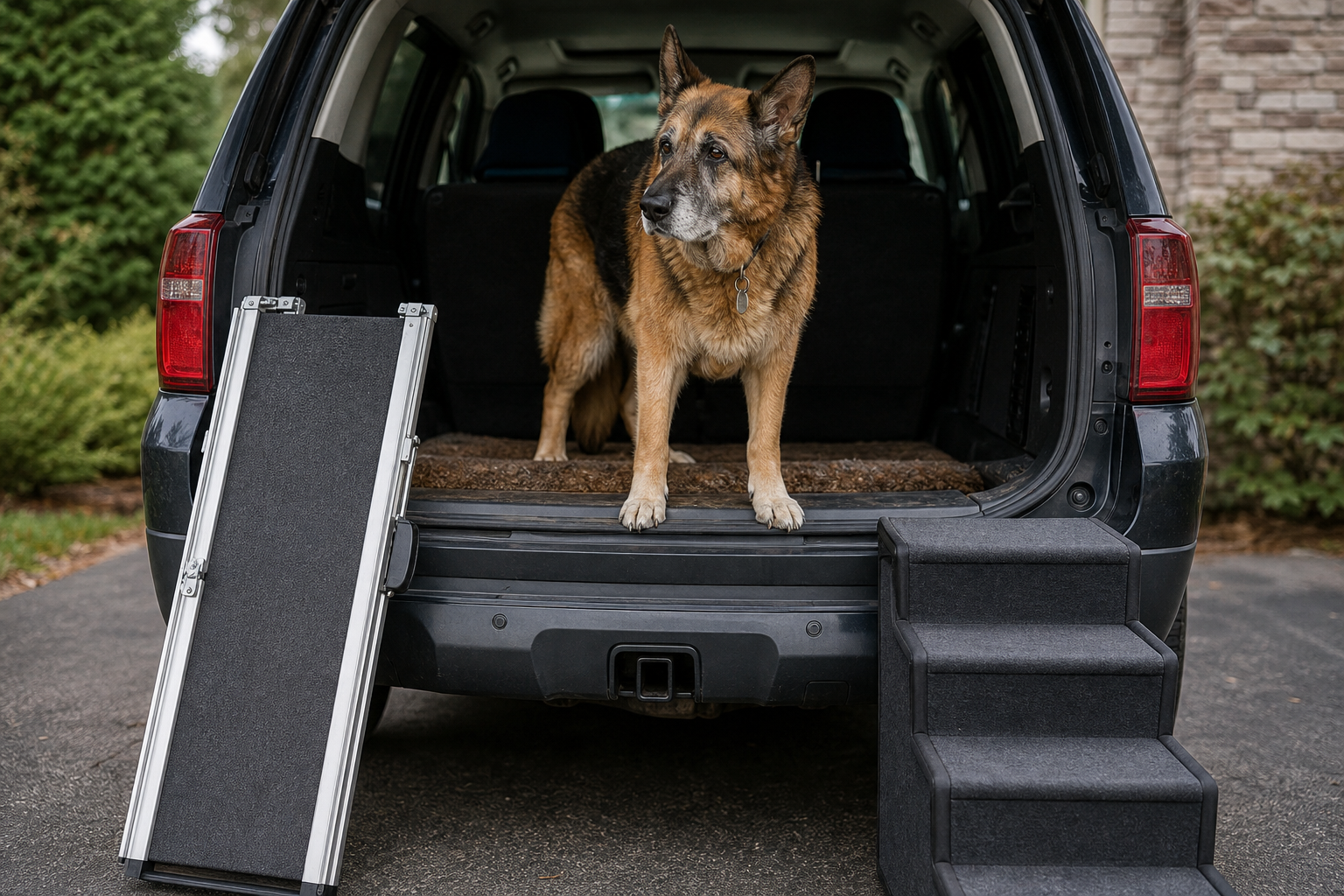
Moreover car ramp vs steps debates often skip vehicle math—a short ramp on a tall SUV can feel steep as stairs anyway. In addition XL dogs need rated weight caps wide treads and grip—not cat-sized gear relabeled large. This guide is for info only. Collapse refusal to stand or acute lameness needs a vet—not only a new ramp.
For example your Dane may prefer wide steps with pause landings. Meanwhile the right car ramp vs steps pick depends on hip pain jump habit and cargo height in 2026.
Additionally see our dog car ramp Top 6 guide for folding aluminum picks.
After that read our dog car steps guide for SUV stair sets with wide treads.
Furthermore our ramp vs stairs guide covers home furniture—not this vehicle fork alone.
Similarly the AKC ramp training tips note treat ladders and low angles before real entries.
Overall the AVMA pet care basics stress joint-safe mobility as dogs age.
Short answer: car ramp vs steps for giants
Disclosure: This post has affiliate links. Grey Snout Guide may earn a small fee when you buy through our links. You pay nothing extra.
Generally choose a car ramp when your dog needs one smooth path and you can store a long fold-out slope. Meanwhile pick car steps when your dog hops confidently but fails on steep ramps or tight cargo wells. Consequently many XL homes test both before road-trip season—not one guess online.
Car ramp vs steps comparison table
Side-by-side for large breed SUV entry
Meanwhile use this chart before you order. In addition measure cargo lip height and your dog’s shoulder height today.
| Factor | Car ramp | Car steps |
|---|---|---|
| Entry style | Single continuous slope | Two to four separate hops |
| Joint load | Lower peak impact when angle is gentle | Repeated push-off each step |
| Storage in SUV | Folds flat—needs cargo length | Often more compact folded stack |
| XL weight need | 150–250 lb rated frames common | Wide treads for deep chests |
| Training time | Angle and surface trust builds slowly | Familiar hop motion for some dogs |
| Rain and grip | Carpet or grit surface critical | Rubber tread on each step |
| Best default for XL seniors | Long ramps on moderate SUVs | Hop-comfort dogs on tall trucks |
Therefore the car ramp vs steps choice is vehicle height and gait—not Amazon stars alone. Moreover pair either tool with our car travel guide for full ride-day plans.
Car ramp vs steps: when ramp wins
Smooth entries and sore hips elbows
Moreover a long ramp cuts the single big jump into a walk-up grade. Also one path suits dogs who fear gaps between steps. In addition aluminum folding models store in many SUV cargo areas between trips.
Car ramp pros on senior giants:
- Less peak impact than tailgate leaps
- One continuous route for arthritic dogs
- Works when steps feel too narrow or wobbly
- Handler can spot and treat on the slope
- Common choice after ACL or hip flare recovery
Consequently ramps suit many aging XL dogs on moderate-height SUVs. Nevertheless a too-short ramp on a tall truck feels like a ladder.
Car ramp cons:
- Needs length—steep angles scare big dogs
- Heavy steel units hard to lift solo
- Slippery surfaces in rain without grit
- Some dogs refuse any moving flex feel
- Takes cargo space even when folded
Therefore browse our car ramp guide for 60-inch-plus picks. Similarly train on flat ground before the first highway trip.
Car ramp vs steps: when steps win
Hop-comfort dogs and very tall vehicles
Generally car steps break height into familiar hop patterns. Meanwhile wide tread models fit broad chests better than narrow pet stairs. In addition some dogs trust rigid steps more than long flex ramps.
Car steps pros on senior giants:
- Natural hop motion for dogs who still jump beds
- Often shorter storage than longest ramps
- Easier to position on uneven parking lots
- Pause landings between hops reduce rush fear
- Good when ramp angle cannot get gentle enough
As a result steps excel when your dog already uses home stairs well. Furthermore they can fit tight side doors on some SUVs.
Car steps cons:
- Each hop loads stifle and hip joints
- Narrow treads fail on deep-chest breeds
- Light units tip if dog rushes down
- Not ideal post major orthopedic surgery
- Still need rated weight above 120 lb
Meanwhile see our car steps guide for fold-flat SUV sets. In addition add our lift harness guide when you assist the last inch.
Car ramp vs steps by scenario
Pick the right SUV entry tool today
Therefore match gear to vehicle lip height and dog gait—not only what worked years ago. Similarly revisit after weight change or new SUV. In addition film one entry from the side to check angles.
| Scenario | Better pick |
|---|---|
| Moderate SUV with cargo lip ~24–28 in | Long folding car ramp |
| Tall truck tailgate over 30 in | Wide car steps or extra-long ramp |
| Post-TPLO or hip surgery recovery | Gentle ramp per surgeon timing |
| Dog hops beds but refuses long ramps | Stable wide car steps |
| Handler lifts alone without help | Light aluminum ramp plus harness assist |
| Rainy climate slick paws | Grit ramp or rubber-tread steps |
| Small cargo area when traveling packed | Compact folding steps if dog accepts hops |
Additionally read our arthritis guide when entry pain drives gear swaps. Consequently less jumping keeps senior XL dogs riding longer.
Setup checks for car ramp vs steps
Angle grip and weight ratings without guesswork
Moreover follow these steps before the first road trip:
- Weigh your dog—buy above real weight not wishful label
- Measure cargo lip to ground on your usual parking surface
- Aim for gentle ramp angle—roughly 18–25 degrees when possible
- Check tread width against your dog’s paw stance
- Secure ramp or steps so they do not slide on pull-out
- Practice dry runs with treats before vacation departures
Therefore bad angle or grip ruins any car ramp vs steps trial with one scary slip. In addition never rush entries when ice or oil sits on parking lots.
Similarly our senior care guide ties mobility gear to home ramp plans too.
Can you use ramp and steps together?
Train on one path first
Generally pick one primary entry tool per vehicle. Meanwhile some handlers keep a backup ramp in the garage and steps in the SUV for different parking heights.
Consequently switching tools without training confuses anxious dogs. However a trained ramp dog may accept steps on vacation rentals if angles are similar.
Furthermore pair either option with non-slip anti-slip socks when paw grip is weak on wet days.
FAQs on car ramp vs steps
Are steps ever OK for Great Danes?
Moreover only with wide stable treads and low hop height. Therefore measure each step depth—not mini-pet stair labels.
How long should a car ramp be?
Generally longer is gentler. Meanwhile tall SUVs often need 65-inch-plus folding ramps for safe angles.
Health and seniors
Still refusing both?
Consequently try a lift harness assist and slow treat training. Similarly ask your vet about pain blocking entries.
Slipped once and now refuses?
Instead reset with flat plank training—never force a scared 100 lb dog up a wobbly slope.
Final recap: car ramp vs steps checklist
Moreover measure SUV lip height and dog weight before you buy. Also pick long grippy ramps for smooth arthritic entries. Furthermore choose wide stable steps when hops beat steep slopes. Consequently train with treats before trip day. However stop if limping or panic rises after slips. Therefore smart car ramp vs steps choices keep large breed dogs riding safer in 2026.
Meanwhile see our senior care guide and large breed dog care hub for full travel mobility stacks.
Disclosure: This post has affiliate links. Grey Snout Guide may earn a small fee. You pay nothing extra.