
Heated vs self warming is the winter sleep fork when your 90 lb Saint Bernard stiffens on tile but chews every cord in the house. Moreover electric beds add steady heat while reflective beds bounce body warmth back with no plug. Therefore this guide compares both for large breeds in 2026.
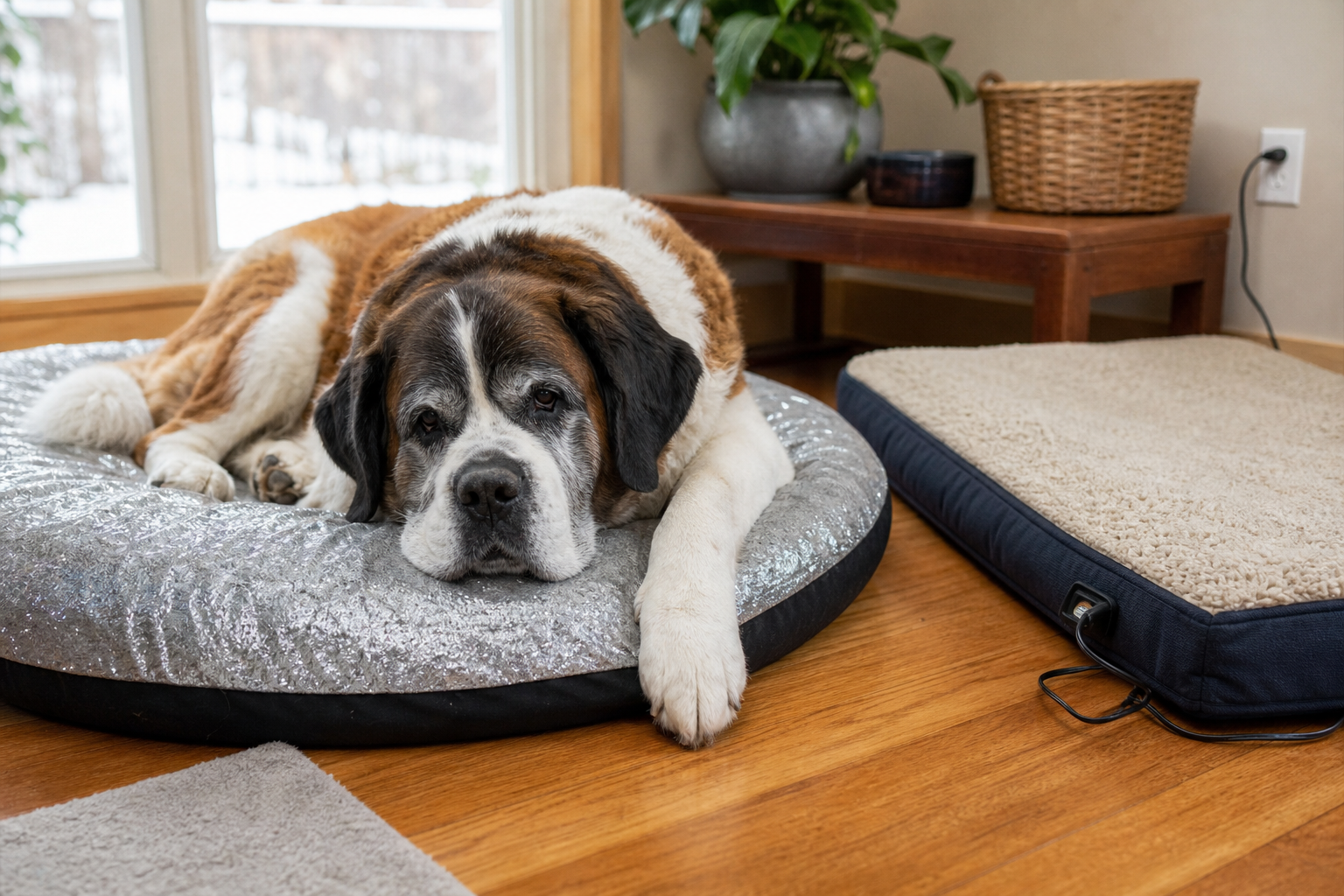
Moreover heated vs self warming debates often skip chew math: a warm cord can burn gums or start a fire on anxious chewers. In addition drafty rooms may need more heat than foil cores can return. This guide is for info only. Chewing cords, burns, or sudden lethargy needs a vet—not only a new bed.
For example your Newfoundland may love a plugged bed in January but reject it in a mild March. Meanwhile the right heated vs self warming pick depends on room temp arthritis pain and cord safety in 2026.
Additionally see our heated dog bed Top 6 guide for electric warm picks with auto shutoff.
After that read our self-warming bed guide for cord-free reflective loungers.
Furthermore our heating pad guide covers flat mats under beds you already own—not this full-bed fork.
Similarly the AVMA pet care basics stress safe bedding and hazard-free rest zones.
Overall the ASPCA cord safety guidance warns that chewed wires can shock pets and start fires.
Short answer: heated vs self warming for giants
Generally choose a heated dog bed when your home runs cold and your dog does not chew cords. Meanwhile pick a self-warming bed when plugs are unsafe chewers are active or you want wash-only warmth on mild nights. Consequently many XL homes run electric beds in winter and reflective beds in spring—not one tool for every season.
Heated vs self warming comparison table
Side-by-side for large breed dogs
Meanwhile use this chart before you buy. In addition measure your dog nose-to-tail while resting and note chew habits today.
| Factor | Heated (electric) bed | Self-warming bed |
|---|---|---|
| Heat source | Plug-in element or insert | Reflective foil or fiber core |
| Steady warmth | Yes—even when dog is still | Builds as body rests on pad |
| Cord risk | Real—route and supervise | None |
| Senior arthritis | Strong on cold stiff mornings | Gentle add-on on mild days |
| XL sizing | Check wattage and mat size | Need 40″+ length for sprawlers |
| Wash care | Remove heater before laundry | Often fully machine washable |
| Best default for XL seniors | Cold rooms plus non-chewers | Chewers plus drafty mild nights |
Therefore the heated vs self warming choice is safety and climate—not brand hype alone. Moreover pair either bed with our orthopedic bed guide for joint support layers.
Heated vs self warming: when heated wins
Cold rooms stiff joints and safe cord setups
Moreover electric beds hold a set warm surface even when your dog sleeps still for hours. Also auto shutoff timers cut risk if the unit runs too long. In addition thermostatic inserts warm only to a pet-safe cap on many XL models.
Heated bed pros on senior giants:
- Steady warmth on sub-50°F nights
- Helps arthritic dogs loosen on first rise
- Works when thin coats lose heat fast on tile
- Some units pair with orthopedic foam decks
- Cheaper than cranking whole-home heat nightly
Consequently heated beds suit cold climates and calm non-chewers. Nevertheless cords need routing behind furniture and daily chew checks.
Heated bed cons:
- Chewers can shock or burn on exposed wire
- Outdoor or damp use is unsafe on most units
- Wrong size leaves cold edges on 100 lb sprawlers
- Wash cycles take longer—remove heater first
- Power outages end warmth mid-night
Therefore browse our heated dog bed guide for chew-safe cord picks. Similarly ask your vet before heat on fresh wounds or fever.
Heated vs self warming: when self-warming wins
Cord-free warmth and easy laundry
Generally self-warming beds use reflective layers that return body heat to the dog. Meanwhile there is no plug to gnaw or trip over in a dark hallway. In addition most shells toss straight into the washer after muddy paw season.
Self-warming bed pros on senior giants:
- No electrical hazard for chronic chewers
- Light enough to move crate to living room
- Good trial bed before you commit to electric
- Works in RVs and rentals with few outlets
- Often cheaper upfront than full heated loungers
As a result reflective beds excel when safety beats max heat. Furthermore they layer well on existing foam you already own.
Self-warming bed cons:
- Weak when the room is very cold
- Heat fades if the dog sprawls half off the pad
- Not a substitute for clinic heat on hypothermia
- Thin pads compress under heavy XL weight
- Less help for dogs who stay still without trapping heat
Meanwhile see our self-warming bed guide for lounge and bolster picks. In addition add our large breed bed guide when you need a thicker base first.
Heated vs self warming by scenario
Pick the right warmth today
Therefore match bed type to room and behavior—not only last winter’s habit. Similarly revisit this list after weight loss or new chew phases. In addition note whether cold joints or cord risk is the bigger daily worry.
| Scenario | Better pick |
|---|---|
| Senior arthritis on cold tile mornings | Heated bed with auto shutoff |
| Puppy or adult who chews cords | Self-warming bed only |
| Mild fall nights in a warm house | Self-warming topper on orthopedic foam |
| Garage or drafty mudroom sleep zone | Heated bed plus raised platform |
| Post-surgery crate rest | Per vet—often self-warming first |
| 100 lb sprawler leaves pad edges cold | Oversize heated mat or dual pads |
| Frequent bed washing after accidents | Self-warming shell plus waterproof liner |
Additionally read our arthritis guide when stiffness drives sleep swaps. Consequently warm rest keeps seniors moving—not gear shame alone.
Safety checks for heated vs self warming beds
XL sizing cords and burn prevention
Moreover follow these steps each season before you plug in or launder:
- Measure resting length and add 6–10 inches for sprawlers
- Inspect cords daily for teeth marks or fraying
- Route cables behind furniture—not across walk paths
- Use only pet-rated units with listed auto shutoff
- Remove electric inserts before any wash cycle
- Stop use if skin redness odor or restlessness rises
Therefore bad setup turns any heated vs self warming plan into shock or burn risk. In addition photograph cord routing for sitters and family.
Furthermore our heating pad guide shows flat insert rules under foam you already own. Similarly never stack two electric heat sources without maker approval.
Can you layer heated and self-warming?
Stack warmth without doubling electric risk
Generally yes—but only one electric layer at a time. Meanwhile a self-warming topper on a non-heated orthopedic base adds reflectivity without a second cord.
Consequently many XL homes run orthopedic foam plus a reflective shell year-round. However add a heated insert only when the dog ignores cords and the maker allows it under foam.
Furthermore pair either setup with our large breed bed guide for waterproof liners. Similarly rotate a cozy blanket from our blanket picks when you need extra loft—not another plug.
Heated vs self warming vs heating pads
Three warm tools—not interchangeable
Moreover full heated beds include walls or thick decks with built-in elements. Meanwhile flat heating pads slide under crates or foam per our heating pad guide.
Additionally self-warming beds never replace electric heat on freezing nights—they reflect what the body already makes. Therefore choose electric when steady warmth matters most. In addition choose reflective when cords are the deal breaker.
Consequently the heated vs self warming fork is about whole-bed design—not every warm product in the aisle.
FAQs on heated vs self warming
Are self-warming beds enough for winter?
Moreover they help in cool—not freezing—rooms. Therefore add electric heat when arthritis flares on cold mornings and cords are safe.
Can heated beds cause burns?
Generally pet-rated units cap temperature. Meanwhile chewed cords or wrong human heating pads can burn. In addition stop use on red skin and call your vet.
Health and seniors
Best for arthritic large breeds?
Consequently steady electric heat often wins in cold homes. Similarly pair with our arthritis guide for full pain plans.
Still stiff after a warm bed?
Instead ask your vet about meds weight and floor grip—not only a hotter mat.
Final recap: heated vs self warming checklist
Moreover measure your XL dog at rest and audit chew habits before you buy. Also pick heated beds for cold rooms when cords stay safe. Furthermore choose self-warming beds for chewers mild nights and easy wash cycles. Consequently route cables behind furniture and use auto shutoff units only. However stop if skin redness or restlessness appears. Therefore smart heated vs self warming choices keep senior large breeds warmer and safer in 2026.
Meanwhile see our senior care guide and large breed dog care hub for full sleep stacks.
Disclosure: This post has affiliate links. Grey Snout Guide may earn a small fee. You pay nothing extra.