
Elevated bowl vs floor is the feeding fork when your 90 lb Dane cranes his neck to the tile or your vet asks about bloat risk. Moreover raised stands cut neck bend while floor bowls keep a natural grazing posture. Therefore this guide compares both for large breeds in 2026.
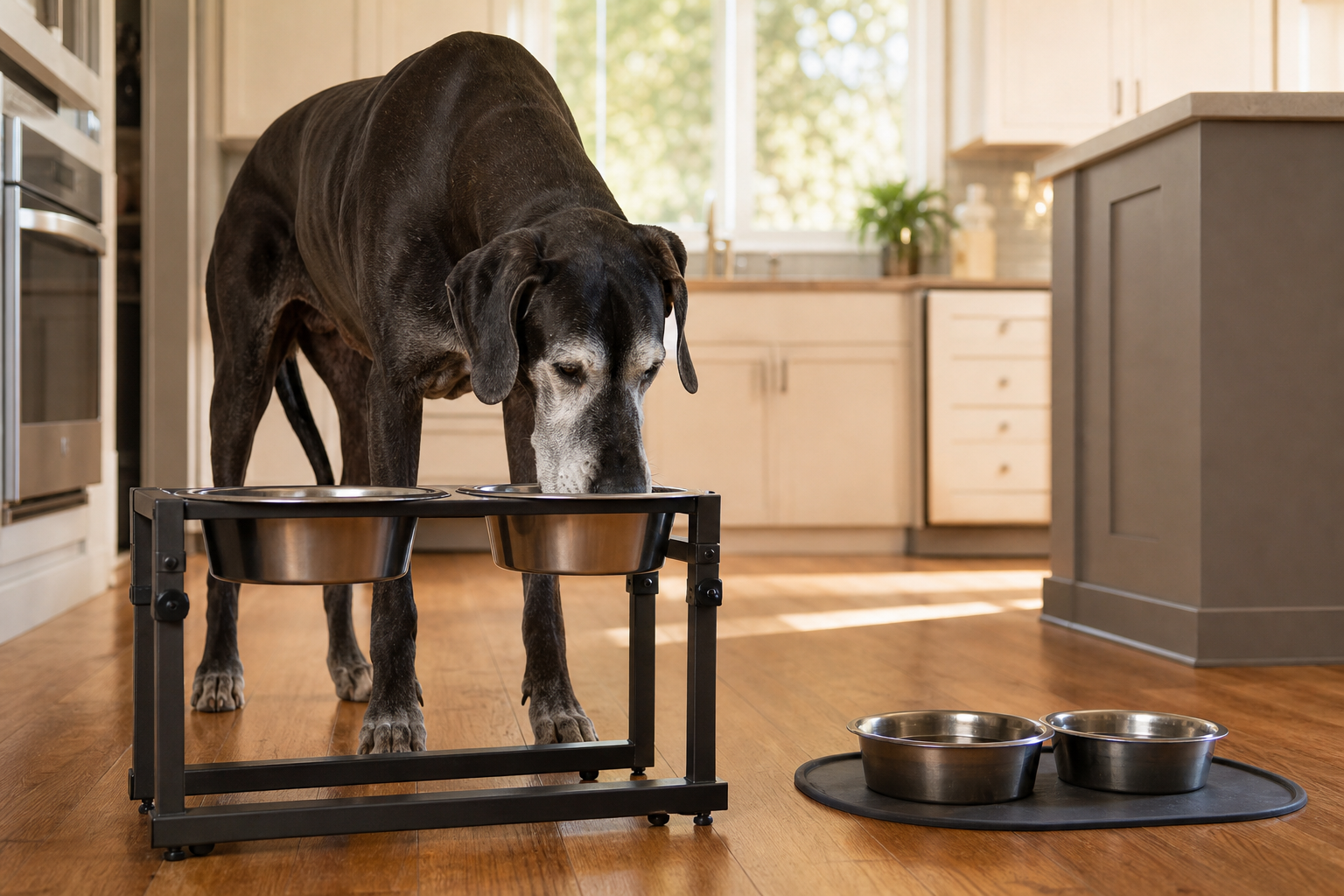
Moreover elevated bowl vs floor debates often skip shoulder math: too-high stands can strain the spine while floor bowls tire stiff seniors. In addition deep-chest breeds need vet input before big height jumps. This guide is for info only. Bloat-prone dogs need a clinic feeding plan—not only a new stand.
For example your Shepherd may eat faster on a tall stand. Meanwhile the right elevated bowl vs floor pick depends on neck pain breed risk and meal pace in 2026.
Additionally see our elevated dog bowl Top 6 guide for stable stand picks.
After that read our elevated bowl senior guide for height habits on aging joints.
Furthermore our bloat guide covers deep-chest feeding safety.
Similarly the AKC bloat overview notes meal pace and posture both matter.
Overall the AVMA pet care basics stress vet clearance for large breed diets.
Short answer: elevated bowl vs floor for giants
Generally choose an elevated bowl when neck or front-leg stiffness makes floor reach painful. Meanwhile keep a floor bowl when your vet flags bloat risk or your dog gulps faster on a stand. Consequently many XL homes test modest lift—not extreme TikTok heights.
Elevated bowl vs floor comparison table
Side-by-side for large breed dogs
Meanwhile use this chart before you move bowls. In addition measure shoulder height and note meal speed today.
| Factor | Elevated bowl | Floor bowl |
|---|---|---|
| Neck angle | Less downward crane | Natural grazing bend |
| Senior arthritis | Often easier on stiff necks | May tire front legs on tile |
| Bloat debate | Some vets caution deep chests | Traditional default for many clinics |
| Meal pace | Can speed gulping if too high | Often slower natural posture |
| Megaesophagus | Vet may require raised feed | Usually wrong for this condition |
| Setup cost | Stand plus bowls $25–$90 | Bowl only $10–$30 |
| Best default for XL seniors | Modest lift with vet OK | Bloat-prone breeds per clinic |
Therefore the elevated bowl vs floor choice is medical and practical—not influencer hype. Moreover pair either setup with slow eating habits.
Elevated bowl vs floor: when elevated wins
Neck relief and medical lift needs
Moreover elevated stands raise food to a calmer neck line. Also wide bases stop tip-over when a heavy dog leans in.
Elevated bowl pros on giants:
- Less neck crane for tall deep-chest breeds
- Easier reach when front legs are stiff
- Adjustable diners grow with puppy-to-senior shifts
- Spill trays help messy XL eaters
- Required for some megaesophagus plans
Consequently modest lift helps many seniors eat longer without pain. Nevertheless too much height can speed gulping or strain the back.
Elevated bowl cons:
- Bloat debate for Great Danes and similar breeds
- Wrong height causes awkward spine angle
- Light stands tip on slick floors
- Costs more than a simple floor dish
Therefore see our elevated dog bowl guide for wide-base picks. Similarly ask your vet before post-surgery feeding changes.
Elevated bowl vs floor: when floor wins
Natural posture and bloat caution
Generally floor bowls keep the head down in a grazing line. Meanwhile many clinics still default here for deep-chest dogs at bloat risk.
Floor bowl pros on giants:
- Traditional posture many vets prefer
- No stand to tip or chew
- Often slows fast eaters vs tall stands
- Cheap easy swap for trials
- Good when elevated height was wrong
As a result floor feeding stays the safe baseline until your vet approves lift. Furthermore it pairs well with puzzle mats on tile.
Floor bowl cons:
- Heavy neck bend on very tall dogs
- Front-leg splay on slick surfaces
- Harder reach for severe neck arthritis
- Less spill control than diner trays
Meanwhile add our slow feeder bowl guide when gulping stays high on the floor. In addition use non-slip mats under front paws.
Elevated bowl vs floor by scenario
Pick the right feeding height today
Therefore match bowl height to diagnosis—not only breed memes. Similarly revisit this list after annual exams.
| Scenario | Better pick |
|---|---|
| Senior neck pain at mealtime | Modest elevated bowl |
| Great Dane with bloat history in family | Floor bowl per vet |
| Megaesophagus diagnosis | Vet-prescribed elevated angle |
| Fast gulper on tall stand | Lower or return to floor |
| Puppy growing into XL frame | Adjustable elevated diner |
| Slick tile front-leg splay | Floor bowl plus grip mat |
| Post-TPLO first weeks | Per surgeon—often floor or low |
Additionally read our arthritis guide when pain drives feeding changes. Consequently weight control beats bowl swaps alone for joint load.
How high should an elevated bowl be?
Height math without guesswork
Moreover follow these steps before you set stand height:
- Measure shoulder height at the withers
- Start with bowl rim near mid-chest—not chin level
- Watch neck angle—neutral beats extreme lift
- Raise or lower one inch per week while you observe pace
- Stop if gulping speeds up or front paws splay
Therefore bad height hurts more than floor reach in any elevated bowl vs floor trial. In addition photograph your dog from the side for vet review.
Furthermore our senior care guide ties meals to weight and walk plans. Similarly lean dogs put less load on stiff joints at any bowl height.
Bloat-safe feeding rules for large dogs
Vet-backed habits beyond bowl type
Generally bloat risk blends genetics meal size and stress—not only stand height. Meanwhile these habits help every elevated bowl vs floor setup:
- Split daily kibble into two or more meals
- Limit vigorous play one hour before and after food
- Keep water available but avoid huge chug right after meals
- Track family history of GDV with your clinic
- Discuss preventive gastropexy with your vet on at-risk breeds
Consequently bowl height is one variable in a bigger safety plan. Nevertheless never skip vet talks on deep-chest breeds.
Therefore revisit our bloat guide before big feeding experiments. In addition note any dry heave or tight belly as an emergency.
Can you use both setups?
Rotate elevated and floor smartly
Generally keep floor feeding as default when bloat risk is high. Meanwhile trial a low elevated stand for stiff-neck seniors with clinic approval.
Furthermore some homes run floor kibble and raised water—or the reverse per PT advice. Consequently rotation beats forcing one height when symptoms shift.
However do not stack multiple stands or odd angles without a vet or rehab plan. Instead change one variable per week and log meal pace.
FAQs on elevated bowl vs floor
Do all large dogs need elevated bowls?
Moreover no—many giants eat fine on the floor for life. Therefore let pain signs and vet input guide lift—not social media charts.
Will elevation cause bloat?
Generally research is mixed. Meanwhile deep-chest breeds should follow clinic rules first. In addition slow meals and split feeds matter more than stand brand.
Health and seniors
Best for arthritic seniors?
Consequently modest lift often helps neck comfort. Similarly pair with our arthritis guide for full pain plans.
Still struggling to eat?
Instead ask your vet about dental pain nausea or esophagus issues—not only a taller stand.
Final recap: elevated bowl vs floor checklist
Moreover measure shoulder height and note gulping before you buy. Also pick elevated bowls for stiff-neck seniors with vet OK. Furthermore keep floor bowls when bloat risk or fast eating flares. Consequently use wide stable stands and grip mats. However stop if pace or posture worsens. Therefore smart elevated bowl vs floor choices keep senior XL dogs eating safer in 2026.
Meanwhile see our senior care guide and large breed dog care hub for full feeding stacks.
Disclosure: This post has affiliate links. Grey Snout Guide may earn a small fee. You pay nothing extra.