
Lift harness vs sling is the assist fork when your 90 lb senior struggles on porch steps or SUV tailgates. Moreover harnesses add structured handles while slings wrap the belly for quick rear lifts. Therefore this guide compares both for large dogs in 2026.
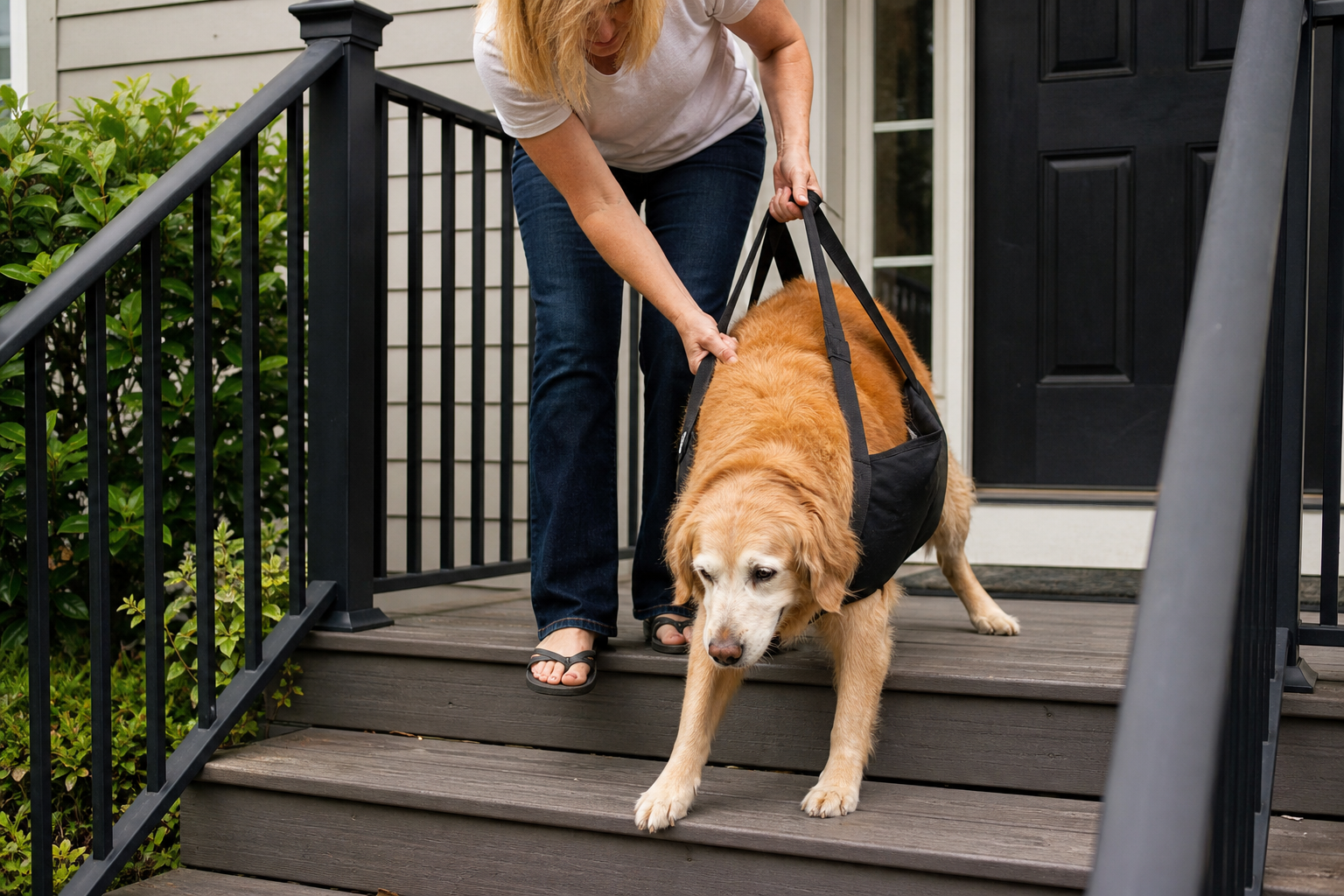
Moreover lift harness vs sling debates often skip fit math: a sling alone may pinch while a full harness spreads load across chest and hips. In addition two handlers beat solo lifts on steep stairs. This guide is for info only. Sudden paralysis or severe pain needs a vet—not only new gear.
For example your Lab may need rear help after a hip flare. Meanwhile the right lift harness vs sling pick depends on which legs fail and how many hands you have in 2026.
Additionally see our lift harness guide for Top 6 structured rigs.
After that read our support sling guide for belly-wrap picks.
Furthermore our rehab stairs guide cuts jump strain indoors.
Similarly the AKC mobility issues overview notes safe assist habits.
Overall the AVMA pet care basics stress vet clearance before lifting injured dogs.
Short answer: lift harness vs sling for giants
Disclosure: This post has affiliate links. Grey Snout Guide may earn a small fee when you buy through our links. You pay nothing extra.
Generally choose a lift harness when front and rear need support on walks and stairs. Meanwhile choose a support sling for short rear-only assists and car entries. Consequently many homes keep both—a harness for outings and a sling for quick porch steps.
Lift harness vs sling comparison table
Side-by-side for large breed dogs
Meanwhile use this chart before you buy either tool. In addition weigh your dog and note which legs drag today.
| Factor | Lift harness | Support sling |
|---|---|---|
| Support zone | Chest + hips on full-body rigs | Belly and rear mainly |
| Wear time | Can stay on short walks | Assist bursts mostly |
| Handler count | One or two on labels | Often two over 70 lb |
| Front leg weakness | Better full-body options | Rear-only may fail |
| Car tailgate load | Good with multi handles | Fast sling slide-under |
| Best default for XL seniors | Daily mobility aid | Quick rear assist add-on |
Therefore the lift harness vs sling choice is medical and practical—not brand hype. Moreover pair either tool with ramps when possible.
When a lift harness wins
Full-body support and repeat outings
Moreover lift harnesses add padded handles to structured straps. Also full-body rigs spread weight across chest and hips—not one thin belly band alone.
Lift harness pros on giants:
- Front and rear handle sets on many models
- Can support potty walks with assist
- Stays steadier on wobbly seniors
- Pairs with vet rehab plans
- Brand options like Help ‘Em Up and Kurgo Lift
Consequently harnesses suit dogs who need help on every outing. Nevertheless they cost more and take longer to fit than simple slings.
Lift harness cons:
- Higher price than basic slings
- More straps to adjust on deep chests
- Still not enough when both rear legs fail fully
Therefore see our lift harness Top 6 guide for sizing charts. Similarly ask your vet before post-surgery lifts.
When a support sling wins
Rear-only bursts and fast load help
Generally support slings slide under the belly for hind-end lift. Meanwhile front paws stay on the ground on rear-only designs.
Support sling pros on giants:
- Fast on for porch and tailgate assists
- Lower cost for trial mobility plans
- Wide pads on GingerLead and Labra styles
- Good when front legs stay strong
- Lightweight backup in a second car
As a result slings excel for quick reps—not all-day wear. Furthermore they store flat in a closet between flare-ups.
Support sling cons:
- Less chest support for front weakness
- Can rub groin if fit is wrong
- Two handlers often needed on stairs
Meanwhile browse our support sling Top 6 guide for XL girth picks. In addition measure belly width before checkout.
Lift harness vs sling by scenario
Pick the right assist tool today
Therefore match gear to the task—not only the diagnosis. Similarly revisit this list after vet visits.
| Scenario | Better pick |
|---|---|
| Daily slow walk with hip pain | Lift harness |
| One porch step at potty time | Rear support sling |
| SUV tailgate on shopping day | Sling or harness with handles |
| Weak front and rear legs | Full-body lift harness |
| Both rear legs cannot bear weight | Wheelchair—not sling alone |
| Post-TPLO first two weeks | Per surgeon—often sling bursts |
Additionally see our wheelchair guide when rear legs fail fully. Consequently stack ramp plus assist—not one tool alone.
Safe lifting rules for large dogs
Handler form and vet clearance
Moreover follow these steps on every lift:
- Get vet OK for spine hip or knee pain first
- Bend knees and lift with legs—not your lower back
- Use two people over 70 lb on steep stairs
- Support chest and hips together on full-body rigs
- Stop if your dog yelps or stiffens mid-lift
Therefore bad form hurts you and your dog in any lift harness vs sling setup. In addition add our ramp guide to cut lift count.
Can you use both tools?
Stack harness and sling smartly
Generally keep a harness for longer walks and a sling in the car for tailgate loads. Meanwhile do not double-wrap both at once unless your vet or PT says yes.
Furthermore read our arthritis guide for pain plans beyond gear.
Consequently many XL seniors run harness daily plus sling for emergencies—rotation beats forcing one tool to do everything.
FAQs on lift harness vs sling
Which is easier to put on?
Moreover slings win for speed. Therefore harnesses take practice but stay steadier on walks.
One person enough?
Generally dogs over 70 lb need two handlers on stairs. Similarly use ramps to reduce solo lifts.
Health and limits
All-day wear?
Consequently harnesses may allow short wear; slings are assist bursts. Meanwhile check skin for rub spots.
Still falling?
Instead ask your vet about wheelchairs or floor traction—not only stronger slings.
Final recap: lift harness vs sling checklist
Moreover measure girth and note weak legs before buy. Also pick harness for full outings and sling for rear bursts. Furthermore use two handlers on heavy stairs. Consequently pair with ramps and vet plans. However stop if pain spikes. Therefore smart lift harness vs sling use keeps senior XL dogs moving safer in 2026.
Meanwhile see our senior care guide and large breed dog care hub for full mobility stacks.
Disclosure: This post has affiliate links. Grey Snout Guide may earn a small fee. You pay nothing extra.