
Harness vs head halter is the fork many giant owners hit when a 90 lb dog drags them off the sidewalk. Moreover neither tool trains alone—but each changes pressure points and control differently. Therefore this guide compares both for large breeds in 2026.
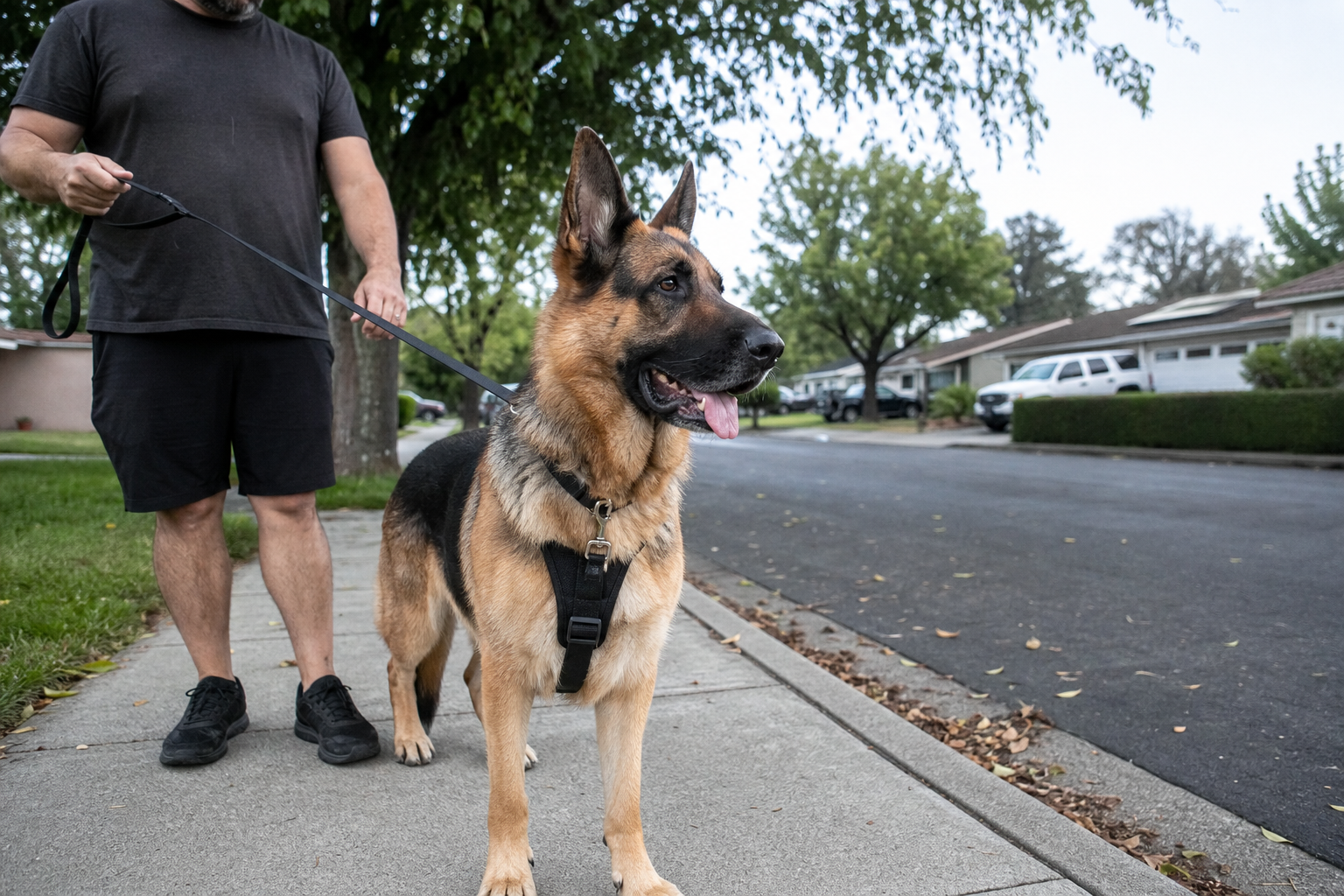
Moreover Harness vs head halter debates often miss one truth: harnesses spread force across the chest and shoulders while halters redirect the head. In addition, seniors with stiff necks need extra care with halter fit. This guide is for info only. Lunging aggression needs a certified trainer—not only gear swaps.
For example your Shepherd may pull less on a front-clip harness but still lunge at bikes. Meanwhile the right harness vs head halter pick depends on pull style age and handler strength in 2026.
Additionally start our leash pulling guide for reward-based drills.
After that see our mobility harness guide if joints need lift support too.
Furthermore our training collar guide covers Gentle Leader and Halti picks.
Similarly the AKC stop pulling tips stress training plus gear.
Overall the AVMA pet care basics note humane handling on every walk.
Short answer: harness vs head halter for giants
Disclosure: This post has affiliate links. Grey Snout Guide may earn a small fee when you buy through our links. You pay nothing extra.
Generally choose a front-clip harness for daily walks training and most seniors. Meanwhile add a head halter for short training blocks when pulling stays extreme and your trainer approves. In addition many large breed owners keep both and switch by scenario.
Harness vs head halter comparison table
Side-by-side for large breed dogs
Meanwhile use this table to compare control fit and daily use. In addition weigh your dog before you choose either tool.
| Factor | Harness | Head halter |
|---|---|---|
| Control style | Redirects body at chest clip | Redirects head and nose |
| Pull reduction | Moderate with front clip | Strong when fit well |
| Senior neck safety | Usually safer default | Needs careful fit |
| Acceptance time | Often faster | Needs slow intro |
| Car travel | Easy clip-in | Remove for crate rest |
| Best default for XL dogs | Yes for most homes | Training aid add-on |
Therefore the harness vs head halter choice is situational—not moral. Moreover pair either tool with treats and stop-start walking.
When a harness wins for large breeds
Daily walks and senior joints
Moreover harnesses spread leash pressure across the chest—not the throat. Also front-clip designs turn the shoulders back toward you on pulls.
Harness pros on giants:
- Less neck strain for seniors and deep-chest breeds
- Easier acceptance on first fitting
- Works with car clips and long-line training
- Pairs with mobility lift handles on some SKUs
- Back clip option for calm loose-leash dogs
Consequently many XL dogs start on harnesses before any halter trial. Nevertheless back-clip-only setups can still fail on hard pullers.
Harness cons:
- Back-clip only can increase pulling like a sled harness
- Poor fit still allows shoulder slip on barrel chests
- Extreme lungers may need halter assist sessions too
Therefore compare front-clip and dual-ring models first. Meanwhile keep a halter in mind for training weeks.
Top harness picks for large breeds:
- Freedom No-Pull Harness — front and back ring combo
- Ruffwear Front Range — padded daily walker
- Rabbitgoo No-Pull — budget front-clip option
Similarly Freedom No-Pull and Ruffwear Front Range are common giant-home picks. Check Freedom No-Pull on Amazon · Check Ruffwear Front Range on Amazon
When a head halter wins for large breeds
Hard pull emergencies and training blocks
Generally head halters like Gentle Leader and Halti steer the nose down and back toward you. Meanwhile control feels stronger on sudden lunges when fit is correct.
Head halter pros on giants:
- Strong steering on heavy pull bursts
- Less handler arm fatigue on steep hills
- Useful for structured training reps with a pro
- Compact backup in a pouch for reactive moments
- Can complement a harness on separate walks
As a result halters shine on short training loops—not as an all-day default. Furthermore slow treat pairing builds acceptance faster.
Head halter cons:
- Dogs may paw face off without slow conditioning
- Wrong fit can rub eyes or slip over the nose
- Not ideal 24/7 wear or rough dog play
- Senior neck pain needs vet clearance first
Nevertheless those limits matter on seniors. Therefore always confirm neck comfort with your vet first.
Top head halter picks for large breeds:
- Gentle Leader — wide size range for big dogs
- Halti Headcollar — padded nose band options
- Blue-9 Balance Harness — hybrid options some trainers use
Meanwhile Gentle Leader and Halti dominate most big-dog halter lists. Check Gentle Leader on Amazon · Check Halti on Amazon
Fit harness vs head halter on XL dogs
Measure chest and muzzle before buy
Moreover follow these fit rules:
- Harness: measure girth behind front legs; two fingers under straps
- Head halter: nose band sits behind nostrils—not on cartilage tip
- Harness: front clip sits mid-chest—not riding up the throat
- Head halter: neck strap sits high behind ears per label art
- Finally practice indoors with treats before busy sidewalks
Therefore bad fit ruins both tools in the harness vs head halter debate. In addition retest fit after weight change or coat blowout. Similarly recheck clips after every wash cycle.
Training plan: use both tools smartly
Sample week for large breed pullers
Generally run daily walks on a front-clip harness. Meanwhile use a halter on short training loops twice weekly with high-value treats. In addition keep sessions under ten minutes at first.
Additionally follow our positive reinforcement guide for heel and check-in games. Therefore skills—not gear alone—carry the long-term win.
Consequently gear rotates while skills build—halter is not a forever crutch for most dogs. Overall patience beats swapping tools every week.
Harness vs head halter by scenario
Pick the right tool today
Therefore match gear to the walk you face today—not last month. Similarly revisit this chart after training gains.
| Scenario | Better pick |
|---|---|
| Daily neighborhood walk | Front-clip harness |
| Senior with neck arthritis | Padded harness default |
| Sudden bike or squirrel lunge | Head halter training sessions |
| Car ride to vet | Harness with seatbelt loop |
| Puppy first leash month | Harness—intro halter later |
| Handler with shoulder pain | Head halter plus training plan |
Meanwhile match leash length to tool—see our dog leash guide for width and length picks. Furthermore pair a wider leash with halter training weeks.
FAQs on harness vs head halter
Is a head halter cruel?
Moreover no when fit right and introduced with treats. Also it is gentler than choke chains that keep tightening. Therefore many trainers prefer halters over correction collars.
Will a harness make pulling worse?
Generally back-clip only can on strong dogs. Therefore use front-clip for training phases. Meanwhile add heel games from our pulling guide.
Safety and seniors
Can seniors wear halters daily?
Consequently ask your vet on neck arthritis. Similarly default to harness for long outings. In addition watch for rub marks each week.
Both at once?
Instead no—pick one tool per walk. Meanwhile alternate on different outings if your trainer agrees. Furthermore never stack halter over a tight collar.
Final recap: harness vs head halter checklist
Moreover default to a well-fit front-clip harness for most large breeds. Also add a head halter for short training blocks when pulls stay dangerous. Furthermore measure chest and muzzle before checkout. Consequently pair gear with rewards—not jerks. However call a pro for aggression. Therefore smart harness vs head halter use makes giant walks safer in 2026.
Meanwhile see our large breed dog care hub and recall guide for more walk skills.
Disclosure: This post has affiliate links. Grey Snout Guide may earn a small fee. You pay nothing extra.