
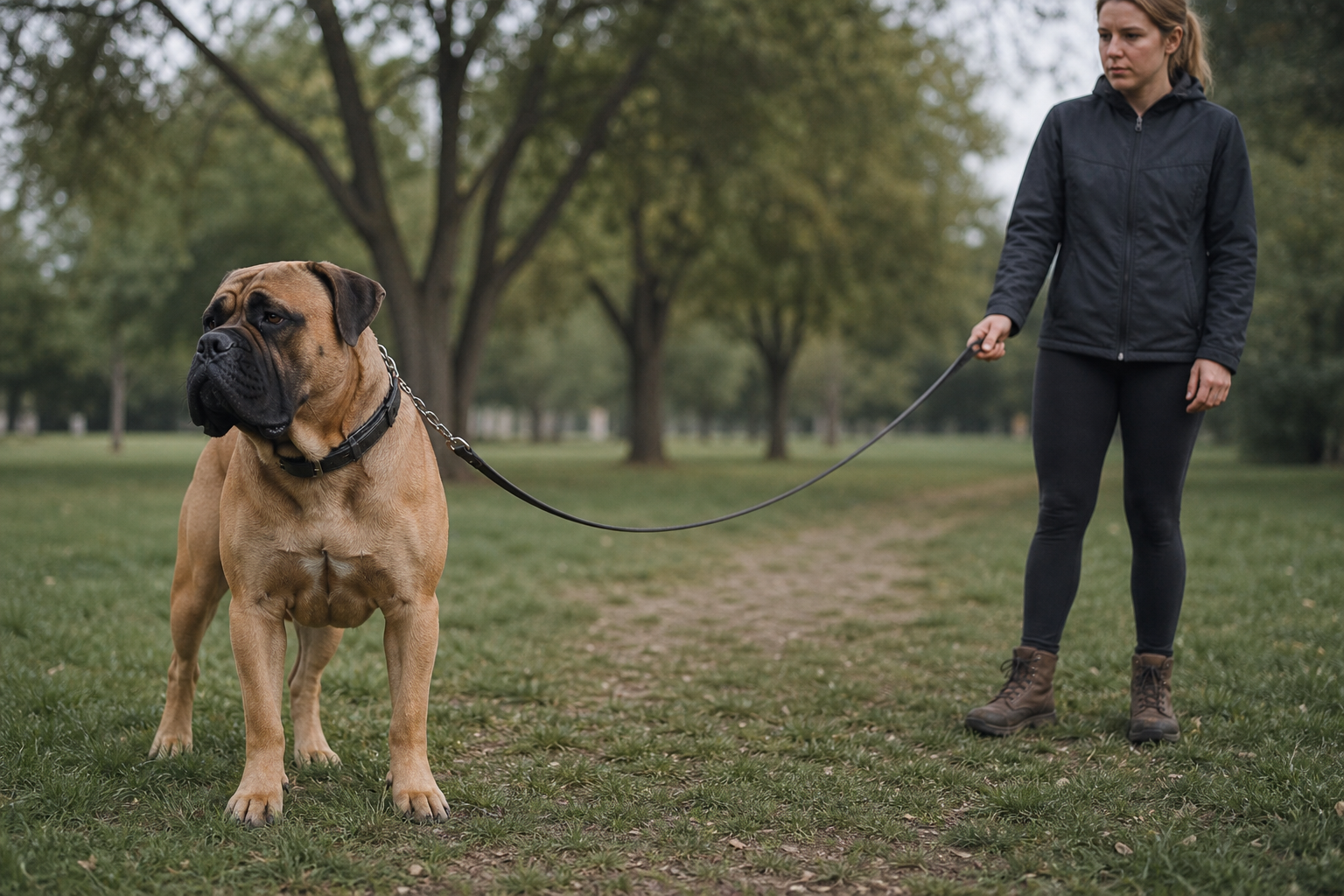
Large breed aggression scares owners and neighbors. Moreover a big dog can turn a warning into an ER visit fast. Most giants are not born dangerous. In addition fear pain and poor social skills stack up until a growl becomes a bite. This guide is for info only. Bites to kids strangers or rising fights need a vet behaviorist or certified trainer now—not DIY drills alone.
For example a Bullmastiff who lunges at bikes may be leash-frustrated—not dominant. Therefore this large breed aggression overview covers causes safe steps and when to stop handling it alone in 2026.
First book a vet exam to rule out pain thyroid issues and vision loss. After that review social gaps in our socialization guide. Also add leash skills from our leash pulling guide.
The AVMA dog behavior resources call aggression a health-and-behavior issue. You cannot punish it away.
Why large breed aggression needs a safety-first plan
Disclosure: This post has affiliate links. Grey Snout Guide may earn a small fee when you buy through our links. You pay nothing extra.
Weight adds force to teeth and shoulders. In addition one bite can mean breed bans lost insurance or legal trouble. However owners who ignore growls because the dog is sweet at home wait too long. Consequently someone gets hurt.
Similarly read pain signs and arthritis tips when fights start after age seven. Hip pain often looks like grumpiness first.
Meanwhile muzzles and distance keep people safe while pros train. Using them is not failure.
Common causes behind large breed aggression
Fear frustration and guarding
Generally many fear-based dogs lunge to get space. They are not trying to dominate. Moreover leash frustration hits when a giant wants to greet but cannot. As a result barrier rage is common on sidewalks.
Cause checklist:
- Too little puppy social time or a hard rescue past
- Guarding food beds or doorways
- Pain when touched or when dogs bump hips
- Chase drive toward runners bikes or small animals
Additionally door panic can stack with separation stress. See our separation anxiety guide when exits trigger bites.
Signs before bites in large breed aggression
Learn the ladder
Instead do not wait for teeth. Watch lip licks head turns and stiff freezes. In addition many giants give warnings owners miss. The dog already looks huge.
Early warnings:
- Whale eye and a hard stare with a closed mouth
- Low growl on rest spots
- Blocking doorways or food bowls
- Not letting guests pass in hallways
After one bite the dog learns it works. Therefore tighten management right away and book a pro.
Safe management for large breed aggression daily life
Distance muzzle and predictable routes
First cross the street before triggers stack. Also train a basket muzzle with treats. Consequently vet visits and walks stay calmer and often legal.
Management toolkit:
- Front-clip harness and fixed leash from our leash Top 6—skip flexi near triggers
- Walk at quiet hours until training improves
- Separate the dog during kid parties and deliveries
- Post yard signs and double-gate if escape is a risk
Long-line sniff work from our long-line guide helps only after a behaviorist clears outdoor drills.
What not to do with large breed aggression
Punishment makes fear worse
Avoid:
- Alpha rolls choke chains or yelling at growls
- Forcing nose-to-nose hellos to fix fear
- Letting strangers pet a frozen stiff dog
- Off-leash parks with any bite history
Similarly tug rules from our tug toy guide do not replace a plan when guarding shows.
Recall from our recall guide helps escape risk. It does not fix people-directed aggression alone.
Professional help for large breed aggression
Vet behaviorist vs trainer
Your vet may refer you to a board-certified veterinary behaviorist. In addition meds plus training often run together. Meanwhile positive trainers can support leash work under that plan.
Bring to the consult:
- Phone video of three home triggers—not only the worst bite
- Bite log with dates places and who was hurt
- Current diet meds supplements and labs
- Walk map where reactions happen
The ASPCA behavior resources list directories to find qualified help.
Red flags: when large breed aggression is an emergency
Stop DIY and get urgent help
Therefore skin-breaking bites bites to kids repeat housemate fights or new aggression after head trauma need urgent pro and medical review.
Emergency signs:
- Bites with little or no warning
- Worse behavior week after week despite management
- You cannot safely feed or leash the dog
- Animal control contact or public incidents
Moreover some behaviorists discuss humane euthanasia when risk cannot drop. Guilt is normal. Above all public safety comes first.
FAQs – large breed aggression
Is aggression breed destiny?
No. Instead history training health and daily management matter more than myths.
Will neutering fix lunging?
Sometimes it helps hormone cases. However most dogs still need a behavior plan.
Living with triggers
Can we keep the dog with kids?
Only after a behaviorist risk review. Many plans use gates separate rooms and no child-only dog duty.
Are muzzles cruel?
Basket muzzles allow panting drinking and treats. They prevent tragedy while you train.
Final recap: large breed aggression managed safely
First see your vet and map triggers. Also use distance a muzzle and calm routes while pros train. However never punish growls force greetings or use off-leash parks with bite history. In addition get urgent help for bites to people or unsafe handling. Honest large breed aggression plans protect your dog guests and you—not hope alone.
Film your next walk on phone. Next email a behaviorist if growls rose this month. Until the plan starts widen distance and muzzle on every outing.
Disclosure: This post has affiliate links. Grey Snout Guide may earn a small fee. You pay nothing extra.