
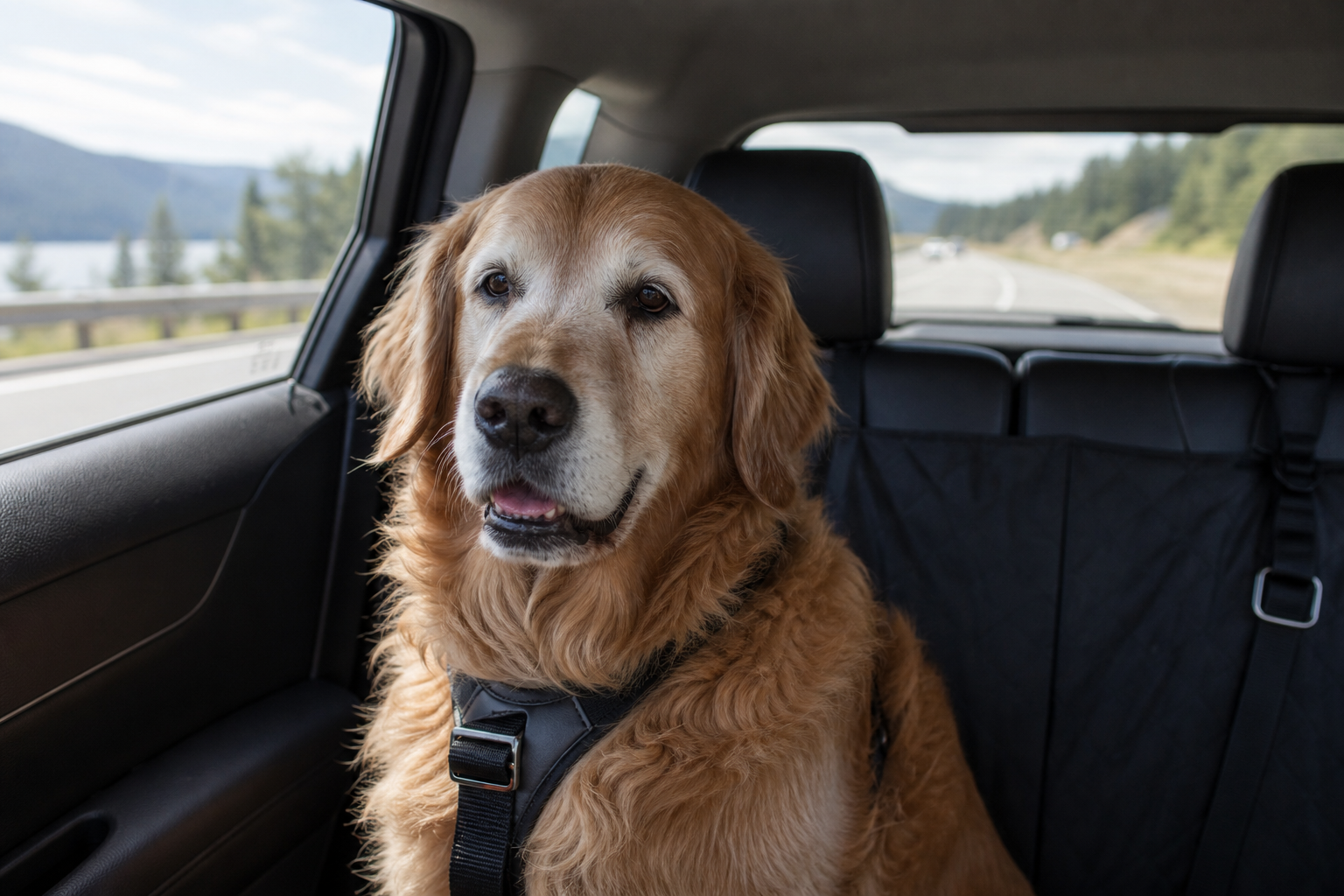
Safe dog car travel trips start with a clear plan every time you hit the road. Big dogs need more space, stronger restraints, and smarter break plans than small breeds ever do.
Never leave a large dog alone in a closed car on a warm day. Heat kills fast—even with windows cracked.
For instance a 90 lb Labrador in the back seat needs a crash-tested harness—not a loose collar. Therefore restraint choice comes before you pack the first bag.
In addition senior dogs with stiff hips struggle at SUV tailgates. Similarly a ramp or steps cut loading pain on hot asphalt.
This guide covers dog car travel basics—from prep and safety to breaks, heat, anxiety, and gear links across our full car travel hub.
Why dog car travel needs a different plan
First large dogs throw harder in a crash—unrestrained pets become projectiles above 30 mph. After that loose dogs distract drivers and block pedals in panic stops.
For example a dog car travel plan covers restraint, loading, heat, and cleanup in one checklist—not just a leash in the glove box.
To sum up follow the sections below in order before your next highway leg.
Step 1: Prep for dog car travel trips
Vet check and ID before long drives
To begin with schedule a vet visit if your dog has not traveled far in months. Furthermore update microchip details and pack vaccination records for border crossings. The AVMA pet travel page lists health papers many states require on long routes.
Similarly stash our first aid kit in the glove box before any trip over two hours.
Pre-trip checklist:
- For instance confirm flea and tick meds if you cross into new regions
- Also pack two days extra food in case traffic delays return
- Lastly note the nearest 24-hour vet along your route
Step 2: Dog car travel restraint picks for large breeds
Harness versus crate versus barrier for large dogs
Namely three setups dominate large-breed car travel—and each suits a different dog. The AKC car travel guide also stresses back-seat restraint over loose bench rides.
Crash-tested harness: Best for calm dogs who ride on the bench. See our dog car harness picks for clip-in belt slots.
Hard or soft crate: Best for anxious dogs and cargo setups. Compare our soft crate and home crate guides.
Barrier: Best when dogs ride in cargo behind a divider. See our dog car barrier picks for SUV layouts.
In contrast never rely on a regular leash clipped to a seat belt alone—those clips fail in real crash tests.
Step 3: Load your dog safely into the car
Ramps steps and senior joint care at the tailgate
By comparison healthy young dogs may hop into SUVs without help. However senior Goldens and Danes often refuse hot asphalt after one painful jump.
Ramps: Suits long-stride dogs and deep cargo wells. See our dog car ramp guide.
Steps: Suits dogs who plant feet between hops. See our dog car steps picks.
Additionally read our arthritis guide if loading pain returns every trip.
Train loading at home first—never force a scared dog onto a moving ramp on trip day one.
Step 4: Protect your car interior
Seat covers hammocks cargo liners and door guards
Clearly mud nails and drool destroy resale value fast on SUV benches. Likewise the right cover cuts cleanup time at every rest stop.
Flat seat cover: See our dog car seat cover for bench-only protection.
Hammock cover: Blocks front-seat jumpers. See our hammock seat cover guide.
Cargo liner: Covers trunk mats behind barriers. See our cargo liner picks.
Seat extender: Bridges footwell gaps for calmer naps. See our seat extender guide.
Furthermore pair covers with our door protectors when nails scrape trim on entry.
Step 5: Heat safety for dog car travel days
Cooling mats fans shades and water on hot days
In practice back-seat dogs miss front AC vents on long summer legs. Hence heat management is not optional for thick-coated breeds.
Window shade: Cuts UV before the cabin bakes. See our window shade picks.
Cooling mat: Gives a cold surface on hot benches. See our car cooling mat guide.
Clip-on fan: Moves air when AC lag hits the rear row. See our dog car fan picks.
Water: Offer drinks every two hours. See our portable water bottle guide.
Nevertheless fans and shade never make a parked car safe—always take your dog with you when you exit. The ASPCA hot weather safety tips warn that cabin temps spike fast even on mild days.
Step 6: Handle car sickness and travel anxiety
Calm gear and slow training before long trips
Meanwhile drooling and vomiting hit many large breeds on winding roads. Therefore start with short neighborhood loops before eight-hour legs.
Anxiety wrap: Applies gentle pressure during panic rides. See our anxiety wrap guide.
Mirror check: Lets you glance at rear dogs without twisting. See our car mirror picks.
In addition ask your vet about motion-sickness meds before you rely on gear alone on mountain routes.
Feed lightly two hours before departure—full stomachs worsen nausea on curves.
Step 7: Rest stops on dog car travel routes
Break rhythm leash rules and paw checks on long drives
Above all large dogs need longer walks at stops—not just a quick grass patch. Finally plan pet-friendly rest areas on your route before you leave.
At each stop:
- Leash before opening any door—excited dogs bolt into traffic fast
- Similarly check paw pads for hot asphalt burns in summer
- Also offer water even if your dog seems fine—dehydration hides well
- Lastly wipe muddy paws before re-entry—see paw cleaner picks below
As a result your dog arrives calmer and your seats stay cleaner across multi-day drives.
Step 8: Senior large breed adjustments
Joint support shorter legs and softer surfaces
In other words a 10-year-old Mastiff is not the same traveler as a 3-year-old Lab. Consequently shorten drive blocks and add joint support.
Read our senior care guide and exercise guide for pace limits.
Senior car travel tips:
- Use ramps—not jumps—at every loading stop
- Therefore add an orthopedic pad on the bench for long naps
- Similarly keep cabin cool—senior dogs overheat faster than adults
Step 9: Keep the car clean between trips
Vacuums deodorizers and organizers
On balance fur and wet-dog smell build fast on weekly commute dogs. Hence a cleanup kit lives in the trunk year-round.
Vacuum: See our dog car vacuum for crease and seat fur.
Deodorizer: See our dog car deodorizer picks after lake days.
Organizer: See our car organizer for leash bowl and wipe stash.
Step 10: Extend the trip—lakes camping and multi-day routes
Water safety and overnight gear beyond the highway
Overall many car trips end at lakes or campsites. Next add water and overnight gear before you leave pavement.
Life jacket: Required on open water even for strong swimmers. See our life jacket guide.
Camping gear: See our camping gear picks for pads bowls and GPS on trail nights.
GPS tracker: See our GPS tracker guide for forest rest-stop zones.
Quick gear checklist: dog car travel
Essential items at a glance
| Need | Gear Type | Our Guide |
|---|---|---|
| Crash safety | Harness or crate | Harness guide |
| Easy loading | Ramp or steps | Ramp guide |
| Seat protection | Cover or hammock | Seat cover guide |
| Heat control | Shade mat fan | Cooling mat guide |
| Travel anxiety | Wrap and mirror | Anxiety wrap guide |
| Cleanup | Vacuum and deodorizer | Vacuum guide |
FAQs – dog car travel
How often should we stop?
For example plan a break every two to three hours on highway days—large dogs need stretch time and water.
Front seat or back seat?
Back seat or cargo is safer. Airbags deploy toward front passengers and can injure dogs in the front row.
Food motion sickness and cross-border notes
Feed before driving?
Light meal two hours before departure beats a full bowl right before curves.
Cross borders?
In short pack rabies certs and health records—rules vary by country and state.
Final recap: dog car travel done right
Overall anyone planning dog car travel trips regularly should start with prep, vet records, and restraint.
Next loading gear and seat protection cut pain and cleanup.
Then heat shade water and fans protect thick coats on summer legs.
Still anxiety wraps and short training loops beat panic on day one.
As another option extend the plan with life jackets and camping gear for lake weekends.
On balance a calm large dog in a safe setup makes every mile easier—for you and for them.
For example print this checklist and tape it inside your glove box before your next trip.
Similarly bookmark our full car hub as you add gear over the seasons. Above all restraint plus breaks plus heat awareness beat any single product on every dog car travel route.
Disclosure: This post has affiliate links. Grey Snout Guide may earn a small fee. You pay nothing extra.