
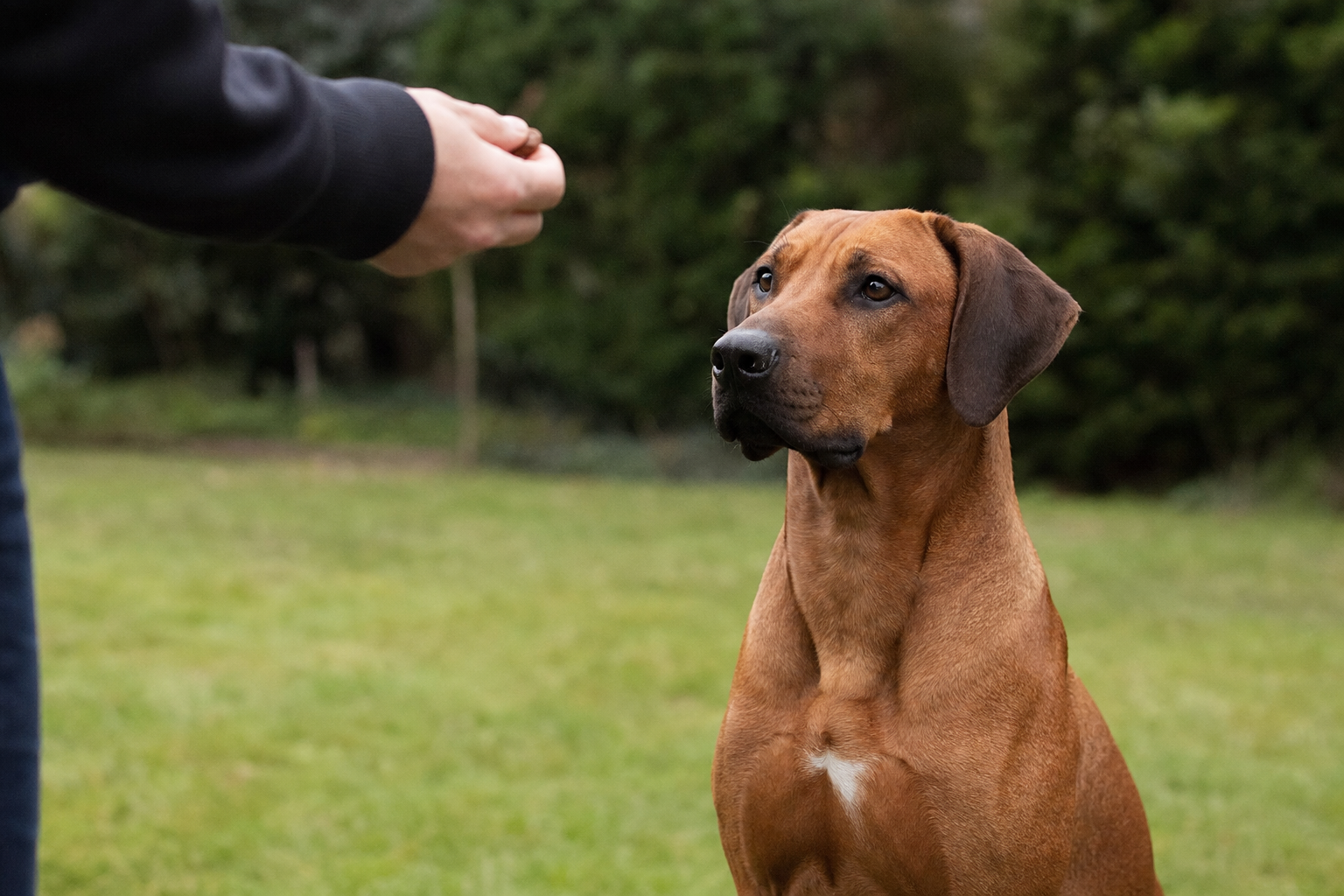
Positive reinforcement dogs learn fastest when good behavior pays better than mistakes. Giants need clear timing pea-size rewards and the same rules from every family member. This guide is for info only. Bite risk or panic needs a vet behaviorist—not treats alone.
For example a Rhodesian Ridgeback who sits for chicken at the door will repeat that choice at the next guest visit. Therefore this positive reinforcement dogs plan fits large breeds from puppies to seniors in 2026.
First load treats in our treat pouch guide. After that pair skills with our recall guide and calm greetings from our jumping guide.
The Humane Society positive reinforcement overview matches what force-free trainers use on powerful breeds.
Why positive reinforcement dogs need giant-sized habits
Disclosure: This post has affiliate links. Grey Snout Guide may earn a small fee when you buy through our links. You pay nothing extra.
Large dogs repeat what worked last time. Moreover one jackpot treat at the right second beats ten repeats of a loud no. In addition harsh corrections can worsen fear on big dogs who already intimidate people.
Similarly gear from our training collar guide supports walks—but rewards teach the behavior. However read aggression management before training around triggers.
As a result short daily sessions beat one long weekend drill that fries both of you.
Timing and markers for positive reinforcement dogs
Pay for the right split second
Generally reward while the behavior happens—not ten seconds later. Also use yes or a clicker the instant paws hit the floor or the leash goes slack.
Timing rules:
- Mark first then reach for the treat—order matters
- Keep treats pea-size for 80 lb dogs—you need volume not bulk
- Fade lures into hand signals over two weeks
- End sessions before your dog checks out
Consequently sloppy timing is the top reason giants look stubborn when they are simply confused.
Pick rewards that motivate positive reinforcement dogs
Rank pay by what your dog chooses
Instead of guessing run a treat test at dinner. In addition offer chicken cheese and a kibble piece—see which he snatches first.
Reward ladder:
- Chicken or turkey for hard outdoor recalls
- Cheese cubes for new guest greetings indoors
- Regular kibble for easy hallway sits at home
- Tug or sniff breaks as life rewards after success
Meanwhile subtract training calories from meals so weight stays steady on deep-chest breeds.
Lure capture and shape for large breeds
Three ways to build new skills
First lure with food to guide a sit or down. Next capture when your dog offers the move alone. Finally shape by rewarding small steps toward a goal like mat relaxation.
See our leash pulling guide for loose-leash work. Use our recall guide for come-when-called. Check our separation anxiety guide for calm alone time.
Additionally crate calm from our crate training guide pairs well with mat rewards between outings.
Daily positive reinforcement dogs routine
Five minutes that compound
Before breakfast run five sits at the back door. Also practice one recall on leash in the driveway. Moreover reward four-on-the-floor when you grab your keys.
Household agreement:
- Same marker word for every person
- No petting when paws are on guests—only when feet are down
- Kids toss treats to the floor not to the mouth
- Log wins in a notes app so progress stays visible
Social skills from our socialization guide grow faster when every hello pays calm behavior.
Mistakes that break positive reinforcement dogs training
What to stop this week
Common errors:
- Bribing with visible food before the dog offers the behavior
- Repeating cues five times before paying
- Mixing leash pops with treat training on the same skill
- Training only when you are angry after an accident
However skipping rewards because the dog did it yesterday stalls progress—pay for reliability too.
Red flags beyond positive reinforcement dogs
When treats are not enough
Therefore call your vet or a certified behaviorist if growling escalates despite management. In addition panic alone-time or bites need medical-behavior plans—not louder commands.
Get help when:
- Your dog shuts down and will not take food near triggers
- Food guarding spikes during training sessions
- Children cannot follow the reward rules safely
- Aggression history returned after a break from training
FAQs – positive reinforcement dogs on giants
Can positive training work on adult rescues?
Yes. However go slower and use higher-value pay at first.
Are prong collars part of positive training?
No. Force-free plans use rewards management and pros—not pain.
Treats and weight
How many treats per day?
Moreover ask your vet. Many giants train on up to one-third cup split across ten reps.
My dog only works for me—not my partner.
Also have your partner run short sessions with the same marker and jackpot pay.
Final recap: positive reinforcement dogs step by step
Mark the instant then pay with ranked rewards and keep sessions short. Also link door sits recalls and calm greetings into daily life. However stop bribing repeating cues or mixing punishment on the same skill. When fear or bites show call pros. Steady positive reinforcement dogs habits turn powerful breeds into partners people trust.
Run five yes-mark sits before tomorrow’s walk and stock your pouch with chicken tonight. When your giant offers calm without being asked—pay big once.
Disclosure: This post has affiliate links. Grey Snout Guide may earn a small fee. You pay nothing extra.