
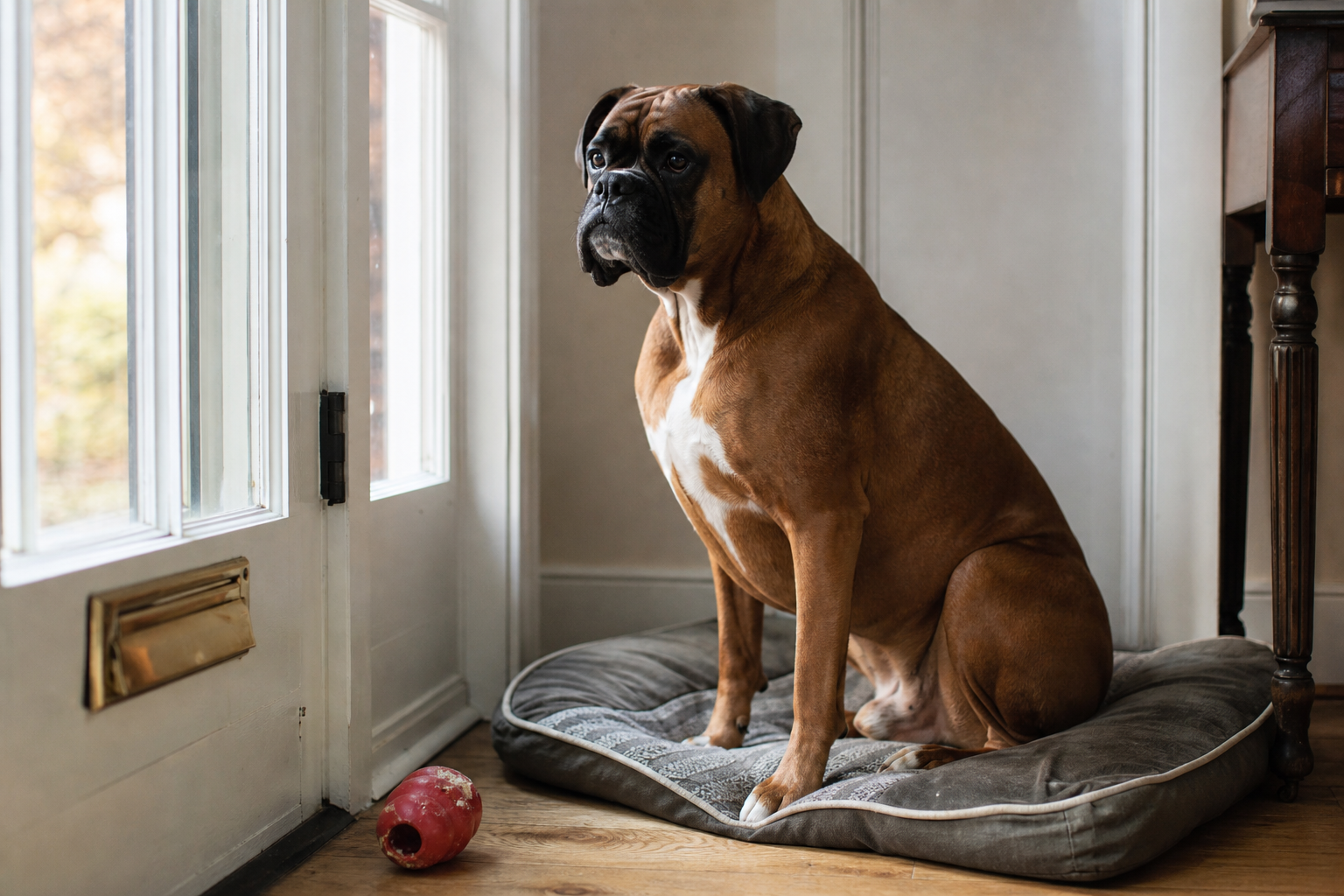
Dog separation anxiety is not boredom whining for five minutes—it is panic when your large breed cannot reach you. Giants may crack teeth on crates scratch doors bloody or howl until neighbors call. This guide is for info only. Self-injury or aggression when blocked needs your veterinarian and a certified behavior professional—not only longer crate time.
For example a Boxer who follows you room to room may melt down the first time you close a bathroom door for twenty minutes. Therefore this dog separation anxiety plan helps puppies and adults—not only grey-muzzle dogs.
First rule out pain and cognitive decline with your vet. After that pair calm crate skills from our crate training guide and short alone reps—not all-day lock-up.
Seniors with new panic need our senior separation anxiety guide for arthritis pacing and night circling overlap.
The AVMA separation anxiety overview notes true separation distress is a medical-behavior condition—not a discipline problem.
Why dog separation anxiety hits large breeds hard
Disclosure: This post has affiliate links. Grey Snout Guide may earn a small fee when you buy through our links. You pay nothing extra.
Mass turns panic into splintered door frames and torn nails. Neighbors hear deep barks through walls. Handlers struggle to safely guide a 90 lb dog in full flight mode at the threshold.
Under-exercise and zero brain work raise arousal before you leave—burn energy with our puzzle toy guide and structured walks from our leash guide before absence training days.
One predictable leave-and-return script for the whole family beats emotional goodbyes that teach giants every exit is a crisis.
Signs of dog separation anxiety vs boredom
What true panic looks like
Generally destruction only when alone drooling pools at the door or refusal to eat high-value food without you points to anxiety. However a dog who naps two hours then chews a shoe may simply need more enrichment.
Watch for:
- Distress within minutes of you leaving—not hours later only
- Following you intensely between rooms on off days
- Vocalizing that does not stop when a neighbor knocks
- Self-injury at crate bars or windowsills
Video from our pet camera guide shows timing—owners often underestimate how fast panic starts on giants.
Departure routine to ease dog separation anxiety
Make leaving boring and returning calm
First desensitize keys shoes and coat grabs without walking out. Also keep greetings low-key for three minutes after you return.
Calm exit habits:
- Random pick-ups of keys ten times daily with no departure
- Stuff a frozen Kong on the dog bed—not at the door you exit
- Ignore demand barking for attention five minutes before leave
- Same short phrase like I will be back—no long emotional speeches
Recall practice from our recall guide builds trust that you return—it does not replace alone-time training but supports bond security.
Alone-time training for dog separation anxiety
Seconds before hours
Instead close a baby gate one room away while you cook—reward quiet glances. In fact build to bathroom doors then front door exits measured in seconds.
Absence progression:
- Step outside for 5 seconds return before whining starts
- Increase to 30 seconds only when calm repeats three times
- Reach five-minute absences on grass sniff breaks between reps
- Add real errands only after calm twenty-minute stays on camera
The ASPCA separation anxiety guide outlines gradual absence many trainers adapt for large dogs.
Crate confinement and safe zones
Den not prison
Meanwhile a crate is a tool—not a fix for untreated panic. Size and positive entry come from our crate training guide and our crate sizing guide.
Safe zone rules:
- Never crate eight hours straight while still building tolerance
- Cool room with water and no direct sun on wire crates
- Consider a dog-proofed room with camera when crate panic persists
- Gate off carpet if diarrhea stress appears on departures
Similarly storm or noise fear can stack—see our thunderstorm anxiety guide when panic spikes only on loud days.
Puppies adults and new rescues
Different starting points
Puppies need alone reps early after vet clearance—not 24/7 human shadowing for twelve weeks. Adult rescues may panic from shelter loss—go slower than you think.
Social routines from our socialization guide lower general fear but do not replace measured departures. Jumping on return from our jumping guide keeps reunions calm.
Your veterinarian may suggest medication for severe cases while you train—meds plus behavior plans beat meds alone.
Mistakes that worsen dog separation anxiety
Stop these today
Common errors:
- Punishing destruction found after you return
- Getting another dog as a cure without professional assessment
- Leaving TV loud hoping it replaces training
- Jumping from zero to eight-hour workdays too fast
Crating a dog who has not eaten all day because you feel guilty feeds more panic—not calm.
Red flags for dog separation anxiety
Call your vet or behaviorist now
Blood on crate bars repeated vomiting when alone or aggression at the door when you leave need urgent professional plans.
Get help when:
- Self-injury appears even once
- Neighbors report daily hour-long howling
- Your dog stops eating or drinking for a full day
- Escape attempts break windows or doors
FAQs – dog separation anxiety on large breeds
Will getting a second dog fix it?
Sometimes—but many anxious dogs transfer panic to the new dog. Ask a behaviorist before adopting.
Are calming chews enough?
They may take the edge off for mild cases—severe panic still needs training and vet plans.
Time and seniors
How long to see progress?
Small gains in weeks are normal—full workday calm may take months of measured reps.
My old dog just started panicking?
Book a senior exam—pain hearing loss and cognitive change mimic anxiety; use our senior guide.
Final recap: dog separation anxiety step by step
Confirm true panic on camera, boring departures, and second-by-second absence builds before long errands. Use crates and safe rooms as tools with positive training—not punishment. Stack vet care for pain meds when needed and call pros for injury or aggression. Steady dog separation anxiety work turns a giant who cannot function alone into a dog who rests while you live your life.
Film ten minutes alone with a pet camera this week. Run three five-second door exits tomorrow with a frozen Kong on the bed. If panic starts in under thirty seconds, reset shorter—success is calm not speed.
Disclosure: This post has affiliate links. Grey Snout Guide may earn a small fee. You pay nothing extra.