
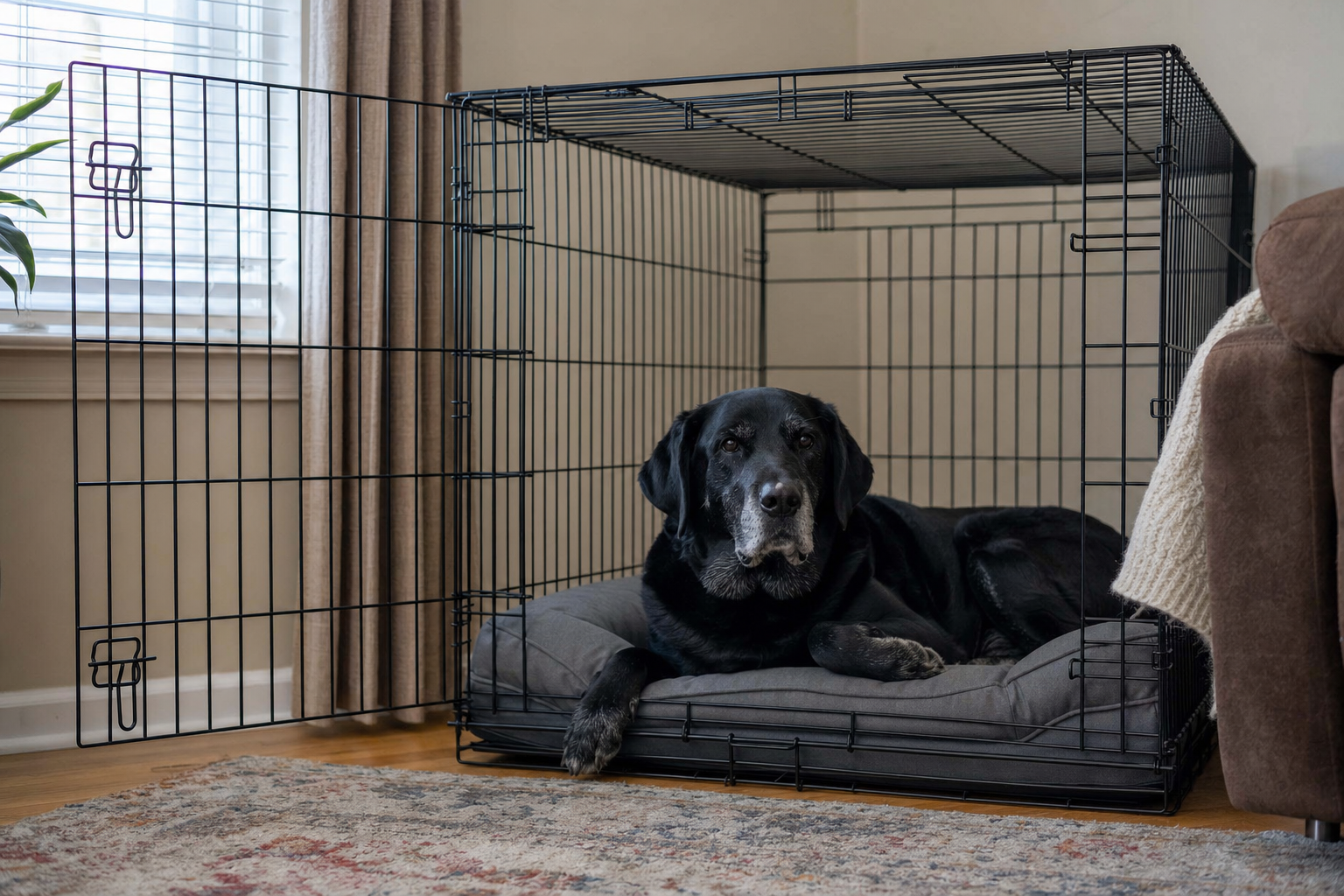
Large breed crate training only works when the crate fits your dog. Plans fail when the box is too small or the only time your 90 lb giant sees the crate is during panic departures. Giants need room to stand turn and lie flat—and large breed crate training should make the crate a calm den not a jail. This guide is for info only. Ask your vet before crating after surgery or when anxiety causes injury.
For instance a Labrador who will reach 80 lb still starts in a crate with a divider—not a lifetime 36-inch box. Therefore this large breed crate training schedule works for puppies and adults you are retraining in 2026.
First pick size from our large breed crate guide. After that pair with our playpen guide when you need a bigger daytime zone than a crate allows.
The AVMA pet care resources remind owners that dogs need exercise social time and rest balance—crates support rest they do not replace walks.
Why large breed crate training routines differ from small dogs
Disclosure: This post has affiliate links. A small fee may apply when you buy. You pay nothing extra.
Moreover heavy puppies should not jump in and out of high crates—lift or use a low entry. In addition deep-chest breeds need calm post-meal rest—read our bloat guide and avoid vigorous play right before or after meals. However a properly sized crate still helps house training travel and safe recovery when introduced slowly.
To sum up you will teach enter stay and relax—not lock and hope.
Step 1: Choose the right crate size
Measure before you buy
Namely measure nose to tail base while standing and add 4–6 inches for length. Moreover measure shoulder to floor for height—your dog must stand without ducking.
Common large-breed crate lengths:
- 42–48 inch: many adult Labs Goldens and female Shepherds
- 48–54 inch: large male Shepherds Rotties and tall Goldens
- 54 inch plus: Great Danes Newfoundlands and other giants per our crate sizing guide
Therefore use a divider panel for growing puppies—expand space as shoulders rise. However never keep a full-grown giant in a crate he cannot stand up inside.
Step 2: Set up the large breed crate training zone
Location bedding and safety
By comparison place the crate in a quiet corner still visible to family traffic—total isolation spikes anxiety on big sensitive dogs.
Setup checklist:
- Non-slip mat under the crate so it does not slide when your dog enters
- Washable bed thick enough for elbow pressure—not paper-thin pads on wire
- Two safe chew toys only—no rope that shreds unsupervised
- Water in crate only when your vet approves long confinement—otherwise offer water at breaks
- Remove collars with tags that snag on wire doors
Clearly block direct sun on black-coated giants—crates can heat like greenhouses.
Step 3: Six-week large breed crate training schedule
Week-by-week goals for puppies and new adoptees
In practice move slower if your dog is an adult with crate fear—repeat weeks as needed.
| Week | Goal | Daily practice |
|---|---|---|
| 1 | Crate = treats | Toss treats inside open door 5–10 reps; no closing |
| 2 | Voluntary entry | Say cue enter feed meals inside open crate |
| 3 | Short door closed | Close door 30–60 sec while you sit nearby |
| 4 | Room alone | Leave room 2–5 min with chew toy |
| 5 | House routine | Crate during chores 15–30 min twice daily |
| 6 | Real departures | Short errands 20–40 min; calm exit no drama |
Meanwhile never let whining rush the timeline—wait for quiet three seconds before you open the door during training.
Step 4: Crate training large breed adults with fear
Rebuild trust on adult timelines
For example rescued Danes may panic if past owners used crates as punishment. Instead run weeks 1–3 for two full weeks before any door close.
Adult retraining rules:
- Feed every meal inside the open crate for seven days
- Use stuffed Kongs from our chew toy guide only when calm
- Practice at the same time daily—giants thrive on routine
- Consider an indoor playpen first if full crate panic shows
Nevertheless panting drooling or self-injury at the door means pause and call your vet or a certified trainer—do not power through.
Step 5: Daily time limits and exercise
How long can a large breed stay crated
In contrast puppies hold bladder hours roughly equal to age in months plus one—up to a practical cap your vet sets. Meanwhile healthy adult giants should not spend full workdays in crates without walker breaks.
Guidelines many trainers use:
- Puppies under six months: short bursts plus potty trips—not eight-hour shifts
- Adults: four to six hours max without a break for most large breeds—breed health and age change the math
- Seniors: more frequent potty breaks even when house trained
Therefore exercise brain and nose before crate time—our puzzle toy guide helps rainy-day calm.
Common large breed crate training mistakes
What slows progress
Still using the crate only when you leave teaches the dog that your exit equals trap. Next using a crate that is too small causes standing stress on joints. Then crating right after wild play on a full stomach risks bloat on deep-chest breeds.
Avoid:
- Letting children tease through the bars
- Forcing a struggling dog inside by dragging
- Letting the crate rock on slick tile
- Leaving harnesses or collars on inside
- Using crate as punishment after accidents
Moreover pair house training with our baby gate guide to limit rooms between potty trips.
Red flags: when to stop and get help
Call your vet or trainer if you see
Likewise separation panic may need a behavior plan beyond this article—see our separation anxiety guide for large breeds when it is live on the site.
Get professional help when:
- Blood on teeth or broken nails from crate bars
- Repeated vomiting or diarrhea only in crate
- Refusal to enter for a week despite food rewards
- Escalating aggression at the crate door
FAQs – large breed crate training
Is crating cruel for giants?
For example a sized-right crate with training is a den. Conversely all-day crating without breaks is neglect—not training.
Soft or wire crate?
Instead see our crate comparison—many large breeds need wire airflow and size options.
Puppies and travel
Crate in the car?
Meanwhile secure crates stop 80 lb projectiles in crashes—introduce car crate after home crate is calm.
Two dogs one crate?
In short no—each giant needs space; overcrowding causes fights and heat stress.
Final recap: large breed crate training step by step
Overall size the crate right run a six-week positive plan and never skip exercise before rest. Also rebuild slowly for fearful adults. Moreover link playpens gates and vet rules for bloat and seniors. However panic injury or refusal means professional help—not longer lock-ins. Finally a calm large breed crate training routine makes travel vet stays and daily life safer for everyone.
Measure your dog and order the correct length this week. Toss ten treats in the open crate tonight. Above all patience beats forcing a 100 lb dog where he does not feel safe.
Disclosure: This post has affiliate links. Grey Snout Guide may earn a small fee. You pay nothing extra.