
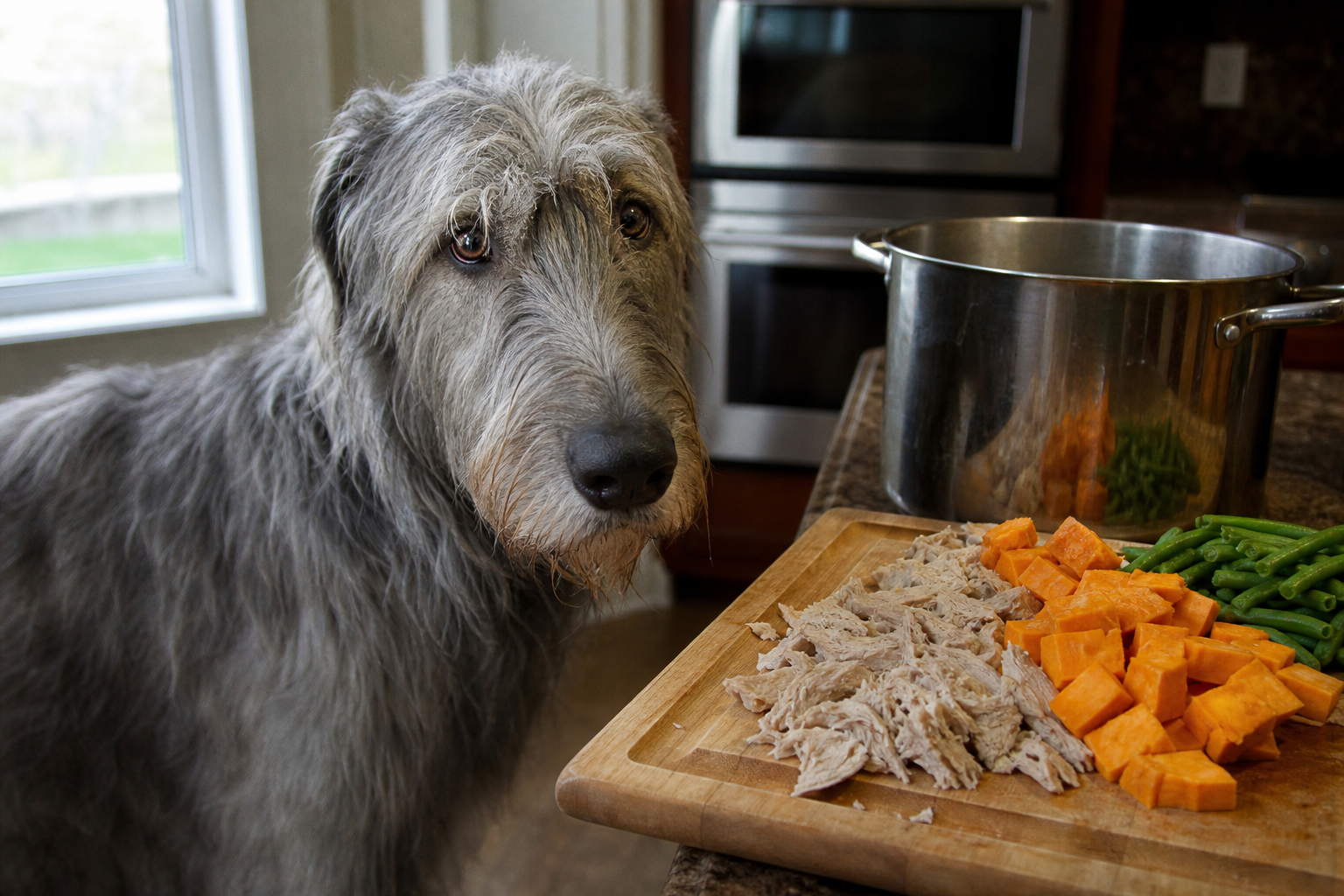
Home cooking dog food can feel healthier than bags. Giants still need balanced calcium, phosphorus, and trace minerals every week. A 120 lb Irish Wolfhound does not thrive on chicken and rice alone. That diet fails long term without balance. Run homemade plans past your vet first. See a board-certified nutritionist before you replace commercial food.
For instance short bland meals help upset stomachs for a few days. Therefore this home cooking dog food guide covers safe recipes and foods to avoid. It also explains when premixes matter in 2026.
In addition weigh portions with our daily feeding guide and transition using slow switch steps.
Similarly compare commercial raw when you want raw-style feeding without DIY mineral math.
Read our bloat guide. Rich fatty home meals plus fast eating still threaten deep-chested breeds.
When home cooking dog food makes sense
Disclosure: This post has affiliate links. A small fee may apply when you buy. You pay nothing extra.
First home batches help picky seniors and short GI recovery windows. They also help owners managing protein allergies under vet plans. After that long-term diets need measured recipes. Do not rely on random kitchen leftovers.
The FDA guidance on discussing pet food with your vet stresses vet oversight. Get that help whenever you move off AAFCO-complete bags.
To sum up treat these recipes as frameworks. Balance them with approved premixes. They are not standalone forever diets unless a nutritionist signs off.
Home cooking dog food balance basics for large breeds
What home cooking dog food must include for giants
Namely large breeds need controlled calories and lean muscle. They also need correct mineral ratios—especially while puppies grow.
Work with your vet on:
- Lean protein target (often 25–35% of calories for adults—your dog may differ)
- Calcium and phosphorus totals—especially for dogs under 18 months
- EPA/DHA omega-3 sources for skin and joint support
- Vitamin D zinc copper iodine—easy to miss in meat-only mixes
- Total daily calories tied to body condition—not recipe volume alone
Therefore many owners use a vet nutrition premix. They add it to weighed meat and carb bases. However premix brands differ—follow the label tied to your dog’s weight class.
Recipe framework #1 – turkey rice bland bowl (short-term)
For vet-approved GI rest days only
By comparison bland mixes calm diarrhea flares. They are not complete maintenance for months.
Ingredients (adult giant frame—adjust with vet):
- Lean ground turkey cooked and drained of fat
- Plain white rice cooked soft
- Optional vet OK: small amount of plain pumpkin puree
Method: Cook turkey thoroughly. Mix roughly equal parts turkey and rice by volume. Use the short window your clinic suggests. Split across two calm meals. Stop if vomiting returns.
Clearly return to AAFCO-complete food once stool normalizes for 48 hours. Or use a signed homemade plan from your vet.
Recipe framework #2 – beef sweet potato green bean pot
Base stew plus nutrition premix
In practice slow-cooker stews batch well for 80–110 lb dogs when grams stay consistent.
Ingredients:
- Lean beef stew meat trimmed of fat—or lean ground beef drained
- Sweet potato peeled and cubed
- Green beans plain frozen or fresh
- Vet-selected mineral-vitamin premix per package math for your dog’s weight
Method: Slow-cook meat and sweet potato until soft. Cool completely. Weigh your dog’s daily total grams on a scale. Stir premix into the cooled portion right before serving. Refrigerate up to three days. Or freeze meal packs.
Meanwhile skip onions garlic grapes seasoning blends and fatty pan drippings entirely.
Recipe framework #3 – chicken pumpkin oat mix
Softer texture for senior mouths
For example shredded chicken thigh without skin can tempt weak seniors. It helps when kibble hurts teeth. Still balance minerals with a premix.
Ingredients:
- Boneless skinless chicken breast or thigh cooked
- Plain pumpkin puree (not pie filling)
- Rolled oats cooked soft
- Premix or vet-prescribed fish oil dose
Method: Poach chicken until 165°F internal. Cook oats in water. Blend ratios your nutritionist provides. Large adults often need more protein than carbs. Portion into two meals. Use slow feeding if your dog gulps stew.
Foods to avoid in home cooking dog food
Likewise the ASPCA people foods to avoid list overlaps many kitchen staples.
Never use in dog meals:
- Onions garlic chives leeks—in any form
- Grapes raisins currants
- Xylitol sweetener in peanut butter or baked goods
- Chocolate caffeine alcohol
- Cooked bones—splinter risk on giants
- Nutmeg macadamia nuts
- Excessive salt fatty bacon grease and fried skins
- Raw yeast bread dough
- Avocado pits and heavy pits/seeds
Still fatty trim and pan drippings trigger pancreatitis on big dogs fast. This is true even on “natural” meat scraps.
Home cooking dog food pitfalls for large breeds
Common mistakes we see
Next owners underfeed calcium on meat-heavy mixes. Some overshoot on puppies. Both harm bone development.
Avoid these habits:
- Feeding only muscle meat without premix or bone balance
- Rotating proteins daily without recalculating totals
- Adding multivitamins made for humans on top of dog premix
- One mega meal daily because batch cooking is easier
- Ignoring sudden thirst or weight swing after starting home food
Furthermore pair home cooking with scheduled weigh-ins. Also get annual bloodwork your vet recommends.
Storage and food safety for big batches
Kitchen rules that scale with volume
Clearly giants eat more food each day. Bacterial load grows fast in warm pots.
Safe prep habits:
- Cool stews before refrigerating—shallow pans speed chilling
- Label containers with date and daily gram weight
- Thaw frozen packs in the fridge—not the counter
- Wash bowls after every meal—especially with wet textures
- Discard leftovers past three days refrigerated unless your vet says otherwise
FAQs – home cooking dog food for large breeds
Can I skip commercial food entirely?
For example only with a board-certified nutritionist recipe. It must match your dog’s age and labs—not blog ratios alone.
Are eggs and dairy OK?
Instead many dogs tolerate cooked eggs. Dairy varies by dog. Ask your clinic if pancreatitis history exists.
Puppies and seniors
Home food for large breed puppies?
Meanwhile growth minerals are unforgiving. Use puppy formulas unless a nutritionist designs growth recipes.
Senior with kidney issues?
In short phosphorus and protein targets tighten. Home cooking without labs risks harm. See senior nutrition with your vet first.
Final recap: home cooking dog food safely
Overall home cooking dog food works when vets balance minerals. Keep portions lean. Keep toxic foods out of the pot. Also use premixes or formal recipes—not goodwill alone. Moreover split calm meals and watch bloat risk on rich stews. However bland turkey rice is a short bridge—not a year-long diet. Finally the best homemade plan is one your vet team approves in writing.
Book a nutrition consult before you drop kibble completely. Weigh your dog before the first home batch. Above all giants need math—not just love in the kitchen.
Disclosure: This post has affiliate links. Grey Snout Guide may earn a small fee. You pay nothing extra.