
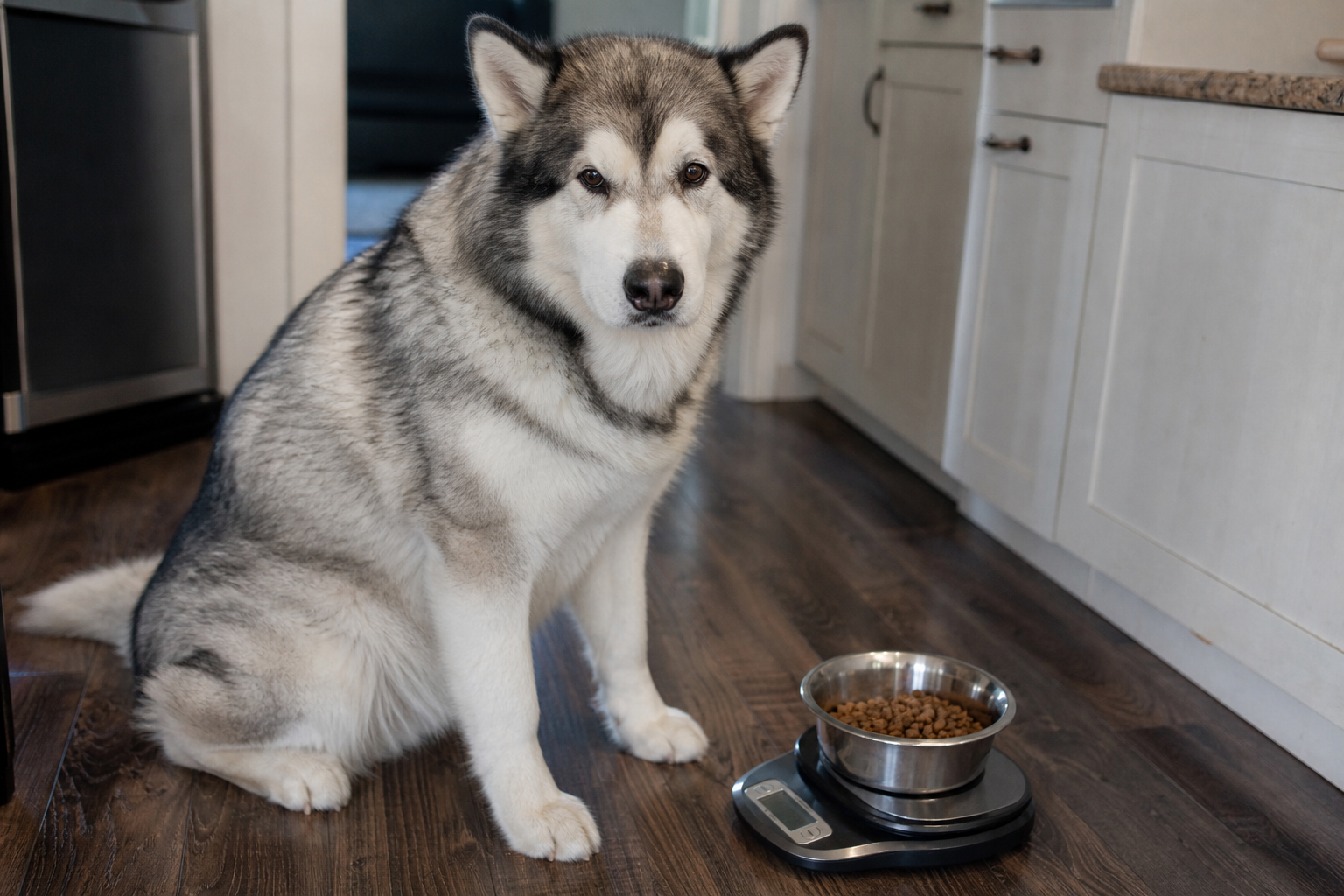
Large breed feeding math starts with body weight life stage and activity—not one magic cup count for every 80 lb dog. A lean Malamute on winter walks burns more than a stiff senior Dane on short potty breaks. Bag charts are a starting point. Your vet and rib checks finish the plan.
For instance two 90 lb Labs can need different grams per day. Therefore this large breed feeding guide gives ranges tables and adjustment rules for 2026.
In addition always read the calorie statement on your bag—kcal per cup varies 300–450 between brands. Similarly use our adult food guide to pick a formula before you lock portions.
When you change bags follow switch dog food steps so GI upset does not hide true portion needs.
Furthermore overweight giants need weight-management food plus fewer calories—not the same cups as maintenance.
Why large breed feeding amounts differ dog to dog
Disclosure: This post has affiliate links. A small fee may apply when you buy. You pay nothing extra.
First metabolic rate neuter status and muscle mass shift daily needs. After that puppies grow fast—adults stabilize—seniors often need fewer calories per pound.
For instance deep-chested breeds still need bloat-safe habits at any portion level. Read our bloat guide and split large breed feeding into two calm meals when possible.
To sum up weigh in grams adjust monthly and chase a visible waist—not a full bowl.
Daily calorie ranges for large breed feeding
Maintenance adults (typical spayed/neutered pets)
Namely many clinics use resting energy needs (RER) then multiply by activity factor. RER ≈ 70 × (body weight in kg)^0.75. The WSAVA Global Nutrition Guidelines also urge life-stage feeding and body condition scoring—not one cup chart for every dog.
Quick adult ranges (maintenance):
- 60 lb (27 kg) dog: roughly 1,200–1,500 kcal/day
- 80 lb (36 kg) dog: roughly 1,400–1,800 kcal/day
- 100 lb (45 kg) dog: roughly 1,700–2,100 kcal/day
- 120 lb (54 kg) dog: roughly 1,900–2,400 kcal/day
Therefore active intact working dogs may sit at the top of the range—or above—with vet oversight. However seniors and low-activity dogs often need the bottom half.
Cups per day: why bag charts mislead
Convert cups using your bag’s kcal/cup
By comparison a cup is not a standard calorie unit. Next find “kcal per cup” on your label—often 310–400 for large-breed adult kibble.
Example math for an 80 lb maintenance dog needing 1,600 kcal/day:
- Bag A at 350 kcal/cup → about 4.6 cups/day total
- Bag B at 400 kcal/cup → about 4.0 cups/day total
- Split either total into two meals for bloat-prone breeds
Clearly a kitchen scale measuring grams removes scoop guesswork during large breed feeding changes.
Large breed feeding by life stage
Puppies: portions per pound
In practice puppies eat multiple smaller meals with growth formulas. Use our puppy food guide and follow bag puppy charts tied to expected adult weight.
Puppy meal habits:
- 8–12 weeks: often 3–4 meals/day per vet plan
- 4–6 months: commonly 3 meals/day on large-breed puppy food
- 6–12 months: taper toward 2 meals as your vet directs
- Weigh weekly—ribs should not disappear under rapid gain
Meanwhile never free-feed giant puppies—joint growth and stool control suffer.
Adults: maintenance large breed feeding
For example most 70–110 lb spayed adults land near 3–5 cups/day of typical kibble—but only after kcal/cup math confirms it.
Additionally intact sport dogs may need 10–30% more calories than couch companions at the same weight.
Seniors: fewer calories often
Still seven-year-plus giants often slow down while appetite stays strong. Next read senior nutrition and trim 10–20% when ribs fade under coat.
Likewise dental pain may lower intake—soft wet food toppers can help per vet OK without blowing calories.
Body condition beats the bowl
Monthly rib and waist checks
Clearly ideal large breed feeding leaves ribs palpable with light pressure. In addition a waist visible from above on short coats means you are close—match the AVMA fitness guidance and adjust cups when shape slips.
Adjust portions when:
- Ribs hard to feel → reduce 10% for two weeks then recheck
- Visible hip bones and lost muscle → vet exam first then calorie bump
- Stool volume huge and weight climbs → measure grams not scoops
- Itch trials running → no extra treats—see allergy feeding rules
Nevertheless sudden thirst or hunger spikes warrant bloodwork—not only more kibble.
Sample daily cups by weight
Starting points—confirm on your label
| Adult weight | Low activity (cups/day) | Moderate activity | High activity |
|---|---|---|---|
| 60 lb | 3–3.5 | 3.5–4 | 4–4.5 |
| 80 lb | 3.5–4 | 4–4.5 | 4.5–5.5 |
| 100 lb | 4–4.5 | 4.5–5.5 | 5.5–6.5 |
| 120 lb | 4.5–5.5 | 5.5–6.5 | 6.5–7.5 |
Moreover weight-loss plans use diet formulas with vet-set targets—not this maintenance table.
Treats toppers and wet add-ons
Count extras toward the daily total
In short treats should stay near 10% of calories or less during weight control. For instance one large dental chew can equal a half cup of kibble.
Rules that protect large breed feeding goals:
- Subtract topper grams from dry totals the same day
- Measure peanut butter in teaspoons—not spoons heaped
- Log training treats during diet trials
- One feeder per dog in multi-pet homes
FAQs – large breed feeding amounts
My bag says 6 cups for 80 lb—still overweight?
For example charts assume active intact dogs sometimes. Cut 10–15% and recheck ribs in 14 days with vet input.
Free-feeding OK?
Instead rarely for giants—portion control prevents obesity and bloat risk patterns.
Special cases
Nursing or working dogs?
Meanwhile needs spike—use vet formulas not internet averages.
Switching to raw?
In short raw density differs—see raw guide and weigh portions in ounces.
Final recap: large breed feeding per day
Overall use kcal/cup math split meals and monthly body checks. Also adjust for age activity and neuter status. Moreover link food choice to our nutrition hub—not random cup folklore. However vet exams rule medical hunger changes. Finally smart large breed feeding keeps giants lean enough to move well for years.
For instance weigh your dog at the clinic this month. Similarly calculate today’s kcal from your bag label. Above all ribs tell the truth cups hide.
Disclosure: This post has affiliate links. Grey Snout Guide may earn a small fee. You pay nothing extra.