
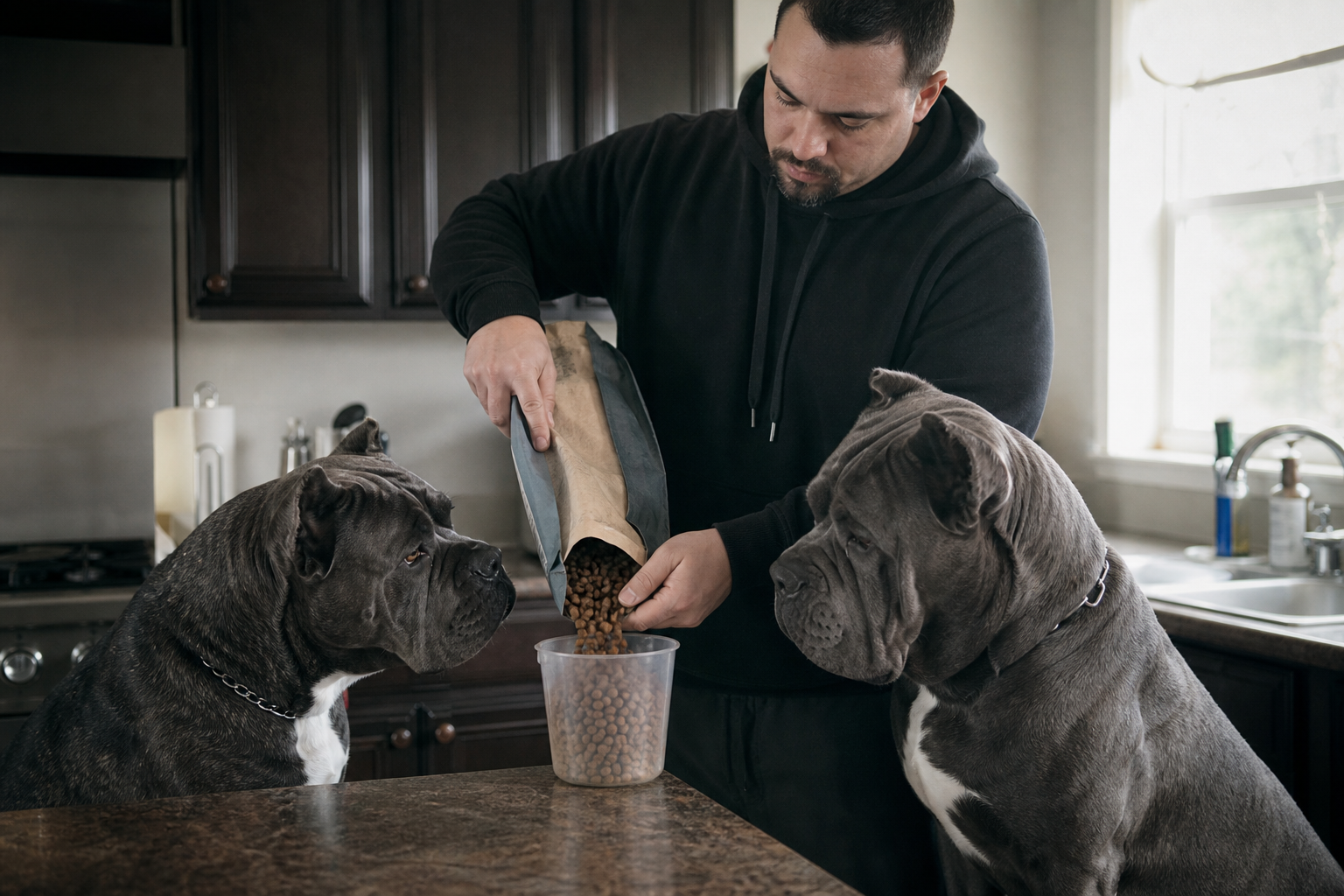
Switch dog food the wrong way and a 90 lb giant can hit diarrhea in 24 hours. Large breeds have big GI tracts and sensitive routines—sudden bag swaps overwhelm gut bacteria fast. This guide is for info only. It does not replace your vet when vomiting blood or refusal to drink appears.
For instance a Cane Corso on one chicken kibble for years needs a slow blend—not a full bowl of salmon overnight. Therefore this switch dog food plan uses a 7–10 day ramp you can measure in grams.
In addition the same steps work when you move from puppy to adult food or onto weight-management formulas. Similarly allergy trials on skin diets need even stricter rules—no cheats mid-transition.
Pick your target bag from our large breed food Top 6 or puppy food guide before you start the clock.
Why giants need a slower switch dog food plan
Disclosure: This post has affiliate links. A small fee may apply when you buy. You pay nothing extra.
First gut flora adapt to one protein and fat blend over months. After that a hard swap shocks digestion and can trigger gas loose stool or refusal to eat. The FDA tips on switching pet food also recommend gradual blends over several days—not same-day swaps.
For instance deep-chested breeds also face bloat risk when meals change and stress spikes. Read our bloat guide and keep two calm meals per day during any switch dog food trial.
To sum up measured blending beats “finish the old bag then open the new one” on Monday morning.
Standard 10-day switch dog food schedule
Daily old-to-new ratios for large breeds
Namely use a kitchen scale—scoops vary when kibble size changes. Moreover weigh total daily calories and split across two meals.
| Days | Old food | New food |
|---|---|---|
| 1–2 | 75% | 25% |
| 3–4 | 50% | 50% |
| 5–6 | 25% | 75% |
| 7–10 | 0% | 100% |
Therefore stay on each step two full days if stool stays firm. However soft stool means pause the ramp—details below.
7-day fast switch dog food option
When a shorter plan is OK
By comparison healthy young adults on similar formulas—chicken adult to chicken weight line from the same brand—sometimes tolerate a 7-day curve.
7-day ratios:
- On days 1–2: 70% old / 30% new
- By days 3–4: 50% / 50%
- From days 5–6: 30% old / 70% new
- On day 7: 100% new if stool stayed normal
Clearly skip the fast track when moving to raw food or wet-only meals—those swaps often need 14+ days.
When to slow down your switch dog food trial
Pause or stretch the timeline if you see
In practice senior dogs dogs with chronic GI disease and post-surgery pets need 14–21 days—not ten.
Slow down when:
- Soft serve stool or mucus on stool for more than one bowel movement
- Gas that lasts beyond 48 hours on a new step
- Refusal to eat the mixed bowl twice in a row
- Vomiting once or more—call your vet same day on giants
- Itch or ear flare during allergy trials—hold at last good ratio and call the clinic
Meanwhile return to the last ratio that produced normal stool for three days before you advance again.
Mixing kibble wet and raw during a switch
One change at a time
For example do not swap protein brand and add wet topper and probiotics on day one. Instead change one variable per week when possible.
Order we recommend:
- Start by stabilizing new dry kibble over 10 days
- Then add measured wet calories if needed—subtract dry grams
- Only after that consider raw trials with vet clearance and separate hygiene setup
In addition high-protein or grain-free jumps are not “similar” swaps—treat them as full transitions.
Treats supplements and meds during switch dog food
Hidden ingredients that break the trial
Still peanut butter dental chews and flavored heartworm chews carry old proteins. Next pause extras for the first ten days unless your vet says otherwise.
Common mistakes:
- Kids dropping table scraps while parents measure grams
- Two different bags open in the garage—label the active transition bag
- Automatic feeders dispensing old food while dinner uses new food
- Probiotic gummies plus new food on day one—add probiotics after stool is stable
Furthermore one person owns feeding during switch dog food weeks in multi-dog homes—isolate the dog on trial if others eat different formulas.
Red flags: call your vet
Stop the transition and get help when
Likewise giants dehydrate fast when vomiting pairs with diarrhea.
Call the clinic promptly if:
- Blood in vomit or stool
- Lethargy or collapse
- Painful bloated abdomen or repeated unproductive retching
- No water intake for 12 hours
- Black tarry stool
Nevertheless mild soft stool for one day on a 25% new mix often resolves when you hold the ratio—still log it.
FAQs – switch dog food for large breeds
Can I switch cold turkey if brands are similar?
For example similar labels still differ in fat fiber and processing. Giants rarely forgive same-day swaps.
Puppy to adult food timing?
Instead follow your vet’s breed-specific date—then run this 10-day plan onto adult large breed food.
Storage and freshness
New bag smells different—dog won’t eat?
Meanwhile warm water mash or vet-approved low-sodium broth on the mix can help—never force if refusal lasts 48 hours.
Old bag expired?
In short start fresh new food only—rancid fat causes GI upset even without a transition error.
Final recap: switch dog food without stomach upset
Overall use a 10-day gram-measured blend split across two calm meals. Also pause at soft stool and cut treats during the trial. Moreover change one food type at a time. However call your vet on blood vomiting or bloat signs. Finally a patient switch dog food plan protects your giant’s gut while you upgrade nutrition.
Weigh today’s breakfast before tomorrow’s mix. Label old and new bags in the pantry tonight. Above all slow wins on 80 lb digestive systems when you switch dog food with patience.
Disclosure: This post has affiliate links. Grey Snout Guide may earn a small fee. You pay nothing extra.